

Vivo recently launched the latest V30 series smartphones in India. They are available as the standard V30 and the pro model V30 Pro. Compared to its predecessors, the Vivo V30 series has a better design, better performance, a better battery and significantly better cameras.

The Pro model is equipped with Zeiss optics, which offer camera functions that were previously only available on the flagship smartphones of the X series. The standard Vivo 30 model gets a new ultra-wide-angle sensor, a larger battery, a better processor and a price increase of a thousand rupees. It is also missing a few important things.
The base variant of the Vivo V30 now starts at Rs 33,999, which comes with 8GB and 128GB of storage, and the higher variant comes with 12GB and 256GB and costs Rs 36,999. We have been using the Vivo V30 for over two weeks now and here is a review of our Vivo V30 smartphone.
Table of Contents
Vivo V30 Design and Looks: Slim and Stylish
Vivo smartphones are often known for their sleek and stylish designs, and the Vivo V30 continues this trend. The Vivo v30 offers a similar weight, although it is equipped with a 5000 mAh battery. In comparison, the Vivo v29 has a 4600 mAh battery and weighs around 186 grams.
Coming from an iPhone 14 Plus, which feels bulky and heavy with the case, the Vivo V30 felt like picking up a smartphone without a battery for the first time.

However, I had a slight problem when I held the smartphone while playing games. The phone feels like a thin sheet of paper, which makes it harder to grip securely when holding it in landscape mode. When I put the protective case provided in the box, it’s a bit more comfortable. At first it was very uncomfortable to hold and play with the phone in landscape mode, but after a week I got used to it and felt more comfortable.
Apart from that, the slim design of the phone is excellent. The phone fits compactly in one hand and the tall display provides space for more content, making it easy to scroll through websites and social media posts.
The Vivo V30 comes in three color variants: Andaman Blue, Peacock Green (with color-changing back cover) and Classic Black. We have the Peacock Green variant. It looks clean and classy. This is the only variant that comes with a color-changing back. It changes to a darker blue when you hold it in the sunlight.
The Vivo V30 has a glass body on the back with a textured surface that improves grip and hardly attracts fingerprints. It has a new camera module design on the back. The Vivo 30 and V30 pro look the same with the square camera module now housing two/three cameras depending on the model; the iconic Aura ring also follows the same camera design. The Aura ring now has a round square that matches the design of the camera module.
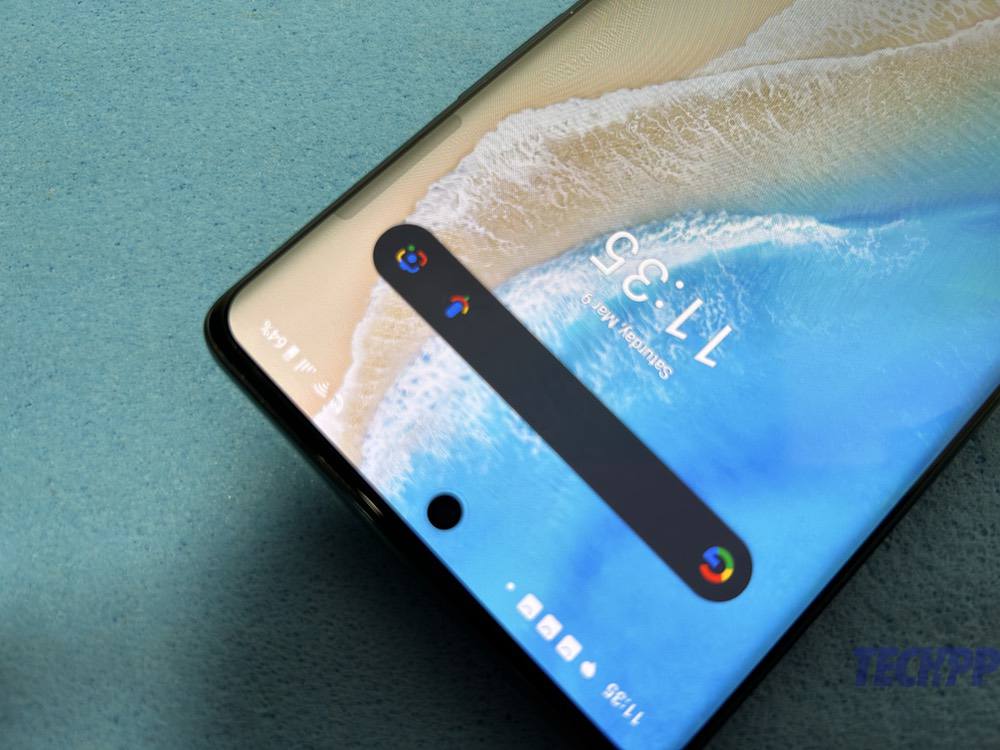
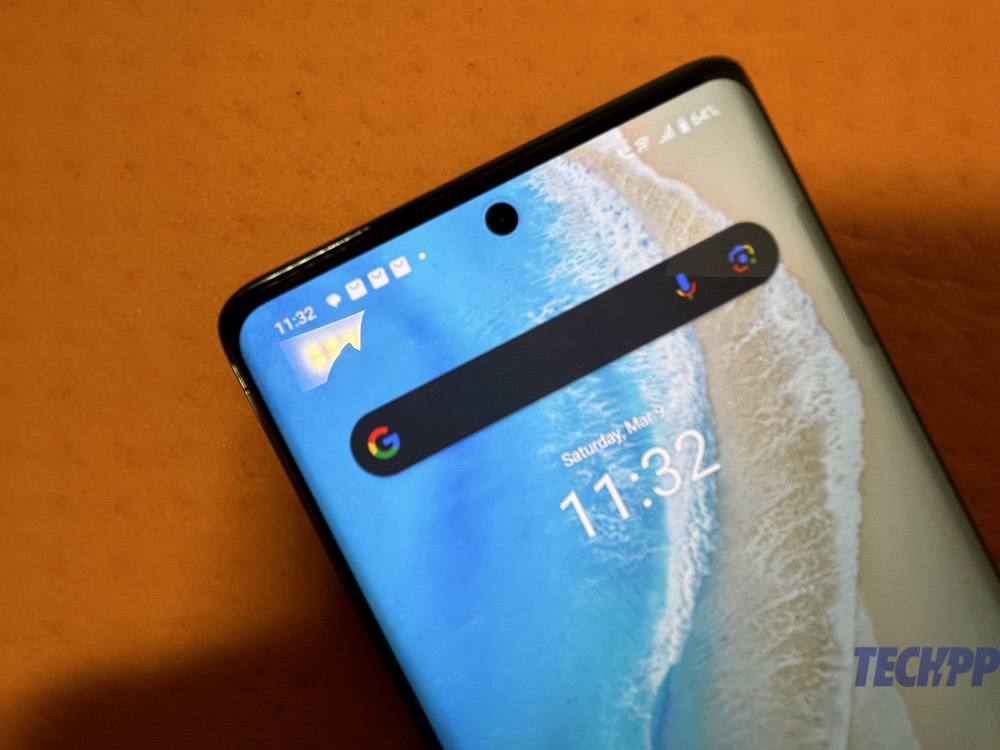
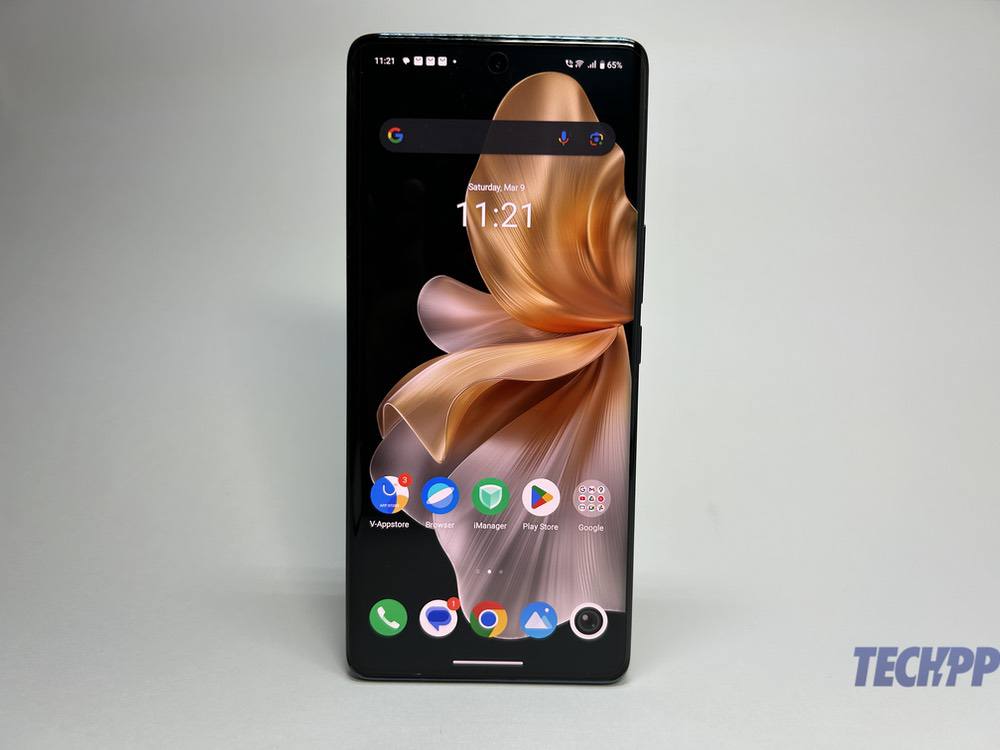
On the front, the Vivo V30 has a double-curved display with rounded corners on the left and right edges. The top and bottom edges are somewhat noticeable but can be easily avoided if you look closely at the phone. The high aspect ratio, the curved display, and the slim design make the smartphone look stylish.
It is equipped with a plastic frame on the sides. The power and volume buttons are located on the right-hand side. I often mistook the volume button for the power button. You can get used to it after using the phone for a while. But it still feels awkward to take a screenshot with this button layout.
There is a microphone and the words “PROFESSIONAL PORTRAIT” on the top. On the underside, there is a SIM slot with two nano-SIMs, a USB Type-C charging port, and a single mono speaker. It is IP 54 certified and splash-proof.
Vivo V30 Display: Bright and Vibrant
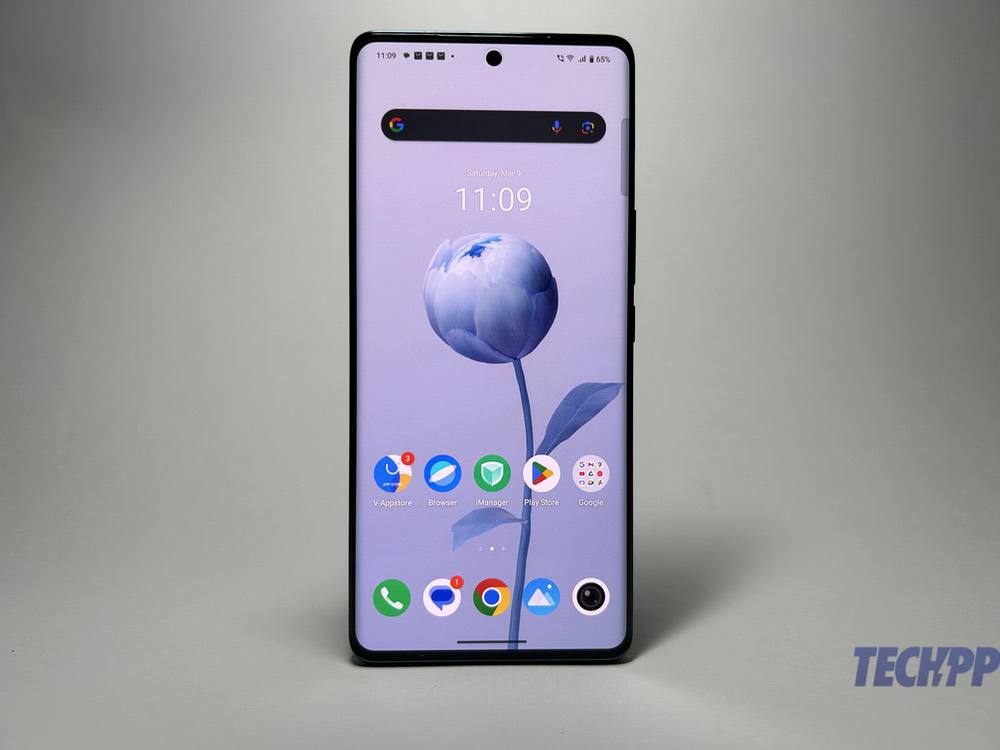
The Vivo 30 has a 6.78-inch Full HD AMOLED display with a resolution of 2800 x 1260 pixels, which is protected by Schott Alpha glass. The display is sharp and offers deep blacks and vivid colors.
You can increase the screen resolution to Quad HD (2800 x 1280). By default, the screen resolution is set to 2400 x 1080 pixels. If you increase the resolution, the sharpness of the screen improves. HDR10+ and Widevine l1 are supported. Popular apps such as Netflix and YouTube are supported and can play HDR10 content.
The display can reach a peak brightness of up to 2800 nits, providing a clear and sharp display even in direct sunlight. It can also be dimmed to a low level, so you can read comfortably even when the lights in your room are off. The viewing angles are also good; the colors and brightness remain the same at different viewing angles.
The Vivo v30 has a refresh rate of 120 FPS. By default, it is set to a bright switch, which automatically adjusts the refresh rate dynamically to the content displayed on the screen. It is not an LTPO panel. If you enable a smart switch, it can stay at 120 Hz and 60 Hz or dynamically switch between 60, 90, and 120 Hz.
Vivo V30 Performance: Powering Through With Style but Some Limitations
The Vivo V30 has a Qualcomm Snapdragon 7 Gen 3 (4nm) mobile platform with Adreno 720 GPU and two RAM variants: 8 GB and 12 GB RAM, with 128 GB and 256 GB storage. Our device is the 12 GB variant, which is equipped with 256 GB of internal storage.
The performance is good. The Snapdragon 7 Gen 3 is the successor to the Snapdragon 7 Gen 1, not the 7+ Gen 2. It has a Cortex-A715 core with 2630 MHz, three Cortex-A715 cores with 2400 MHz and four Cortex-A510 cores with 1800 MHz. It is a mid-range processor that can handle most everyday tasks and games well.
Everyday tasks such as surfing the Internet, using social media, and watching movies ran smoothly and without delays. However, there were occasional performance drops when the resolution was set to Quad HD and the refresh rate to 120 Hz FPS. This occurred when the battery life was below 30 percent. We only experienced this problem a few times in two weeks. This could also be due to the other apps and processes running in the background slowing down the phone.
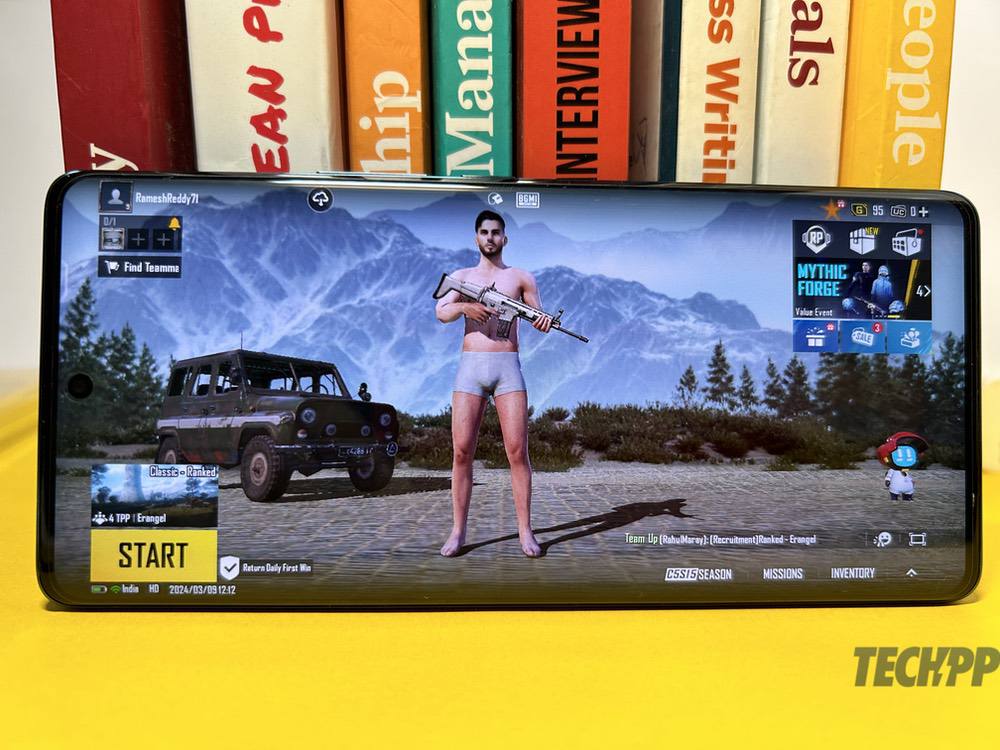
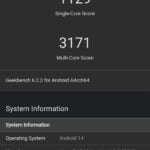
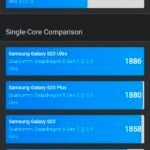
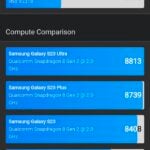
Gaming also works flawlessly with the Vivo V30. We played PUBG and Construction Simulator Game 3 with high graphics settings and the smartphone handled both games very well. It manages to stay at a constant 55-60 FPS. The smartphone does get a little warmer when you play for hours on end. We felt warm at the top of the back while gaming. The maximum temperature we measured while gaming was 43 degrees. Here are the results of the benchmarks from Geekbench and 3d Cinemark.



Vivo V30 Camera: Shining in Low Light and Portraits
The camera is the main focus of the Vivo 30 series. While the Pro model gets support for the Zeiss lens, the standard model gets a larger wide-angle camera, and the 2 MP depth camera is finally gone. The Vivo V30 has two rear cameras: a 50 MP camera with an f/1.88 aperture and a 50 MP ultra-wide-angle sensor with an f/2.0 aperture. The main camera supports OIS. On the front, there is a 50 MP autofocus camera with an aperture of f/2.0.
The camera performance is solid, especially in low light conditions and for portrait shots. The photos are sharp and have little noise. The color accuracy of the photos is good. The colors appear slightly saturated, and the processing makes the image a little brighter. Don’t get us wrong: the areas are not overexposed. It has a balanced brightness level that makes the images neither too dark nor too bright. Overall, it makes the scene brighter. You can reduce the brightness with the brightness slider.



The dynamic range is also good. It captures more details in both extreme situations without losing information. We compared the Vivo V30 and the iPhone 14 Plus, and here are the results. The Vivo V30 performs significantly better than the iPhone 14 Plus. Take a look at the details in these photos, for example. If you zoom in, you can see the logo, whereas on the iPhone 14 Plus the images are brightened and details are lost. The Auro Light on the back is also an advantage when taking photos in the semi-dark. Instead of bright light, it produces a soft flash that improves the image even in low light.


The Vivo 30 also makes good short films in daylight. The colors are a little more saturated. It offers a balanced exposure. The photos are also sharper and have more detail when you zoom in. The dynamic range is also good. The camera copes well with a bright, high contest ratio. Here we shot both indoor and outdoor lighting conditions.






Another segment in which the camera impressed us is the portrait mode. The camera takes good portraits in this light. It captures the perfect portrait shots with sharp edges, good colors and sharpness. Here are the examples of portrait shots we took with the Vivo V30’s cameras.



You have the 50 MP on the front. The pictures look good in good lighting conditions. It produces realistic-looking colors and almost natural skin tones. However, the skin is slightly blurred even in non-beauty mode. The images are sharp in bright daylight. In low light, there is a little more noise and as there is no soft flash on the front, you have to rely on the on-screen flash to get better light.


Speaking of video recording: The Vivo V30 can record 4k 30 FPs with its primary and selfie cameras. It also has an OIS on the back. The videos look stable. The colors look natural; they offer details and vibrant colors. You can also record videos with the ultra-wide-angle camera that shoots up to 1080p. The videos from the wide-angle lens look softer and are not as good as those from the main camera. The camera takes decent videos even in poor lighting conditions. However, there is noise in difficult situations.

All in all, the Vivo V30’s cameras are a real bang for their buck. And it lives up to the claim of being marketed as the best camera. It does a great job in low light conditions, especially in portrait shots. The smartphone also takes impressive pictures in daylight. The colors are a little saturated, which we really like.
Vivo V30 Battery: Lasts All Day
The Vivo V30 comes with 5000mAh and 80W fast charging. You get an 80W fast charger with the USB Type-A to Type-C cable in the box.
The battery life is excellent. In our test, the smartphone easily lasted a day with intensive use such as gaming, photography, video recording and browsing the internet. If you are an occasional user, you can quickly achieve a battery life of one and a half days.
The device also supports fast charging. You get an 80W charger that allows you to charge your device from 0-100 in less than an hour. In our test, the smartphone took 57 minutes to charge from 1-100% with the included 80-watt charger. It does not support wireless charging. With the excellent battery life and fast charging, you can easily charge for a whole day whenever you want.
Connectivity and Storage: A Downgraded Version

The Vivo v30 comes with dual-nano-sim support. It supports five 5G bands in India. It also supports Wifi 6. It does not support NFC. The call quality and connectivity are also excellent. The network reception is good. The smartphone also supports Volte and Wifi Calling for better call quality and reality.
In terms of storage space, the Vivo V30 is available in two variants. The basic variant starts at 128 GB and goes up to 256 GB. Both storage variants of the Vivo V30 are equipped with UFS 2.2 storage, which is a downgrade compared to the UFS 3.1 storage of the Vivo V29. There is a significant difference in performance between UFS 2.2 and 3.1, especially in terms of sequential read and write speeds. UFS 3.1 has a read speed of 2,100 MB/s and a write speed of 1,200 MB/s, which substantially increases compared to the write speed of UFS 2.2 with sequential read and write speeds of up to 850 MB/s and 260 MB/s respectively. UFS 3.1 also introduces several functions that can reduce power consumption.
In the real world, the differences between UFS 2.2 and UFS 3.1 may not be immediately apparent to the average user. But you can notice the difference in file transfer and app load times. We emphasize this point because it is a significant downgrade from UFS 3.1 on the Vivo V29 to UFS 2.2 on the Vivo V30.
Vivo V30 Software: Getting Better
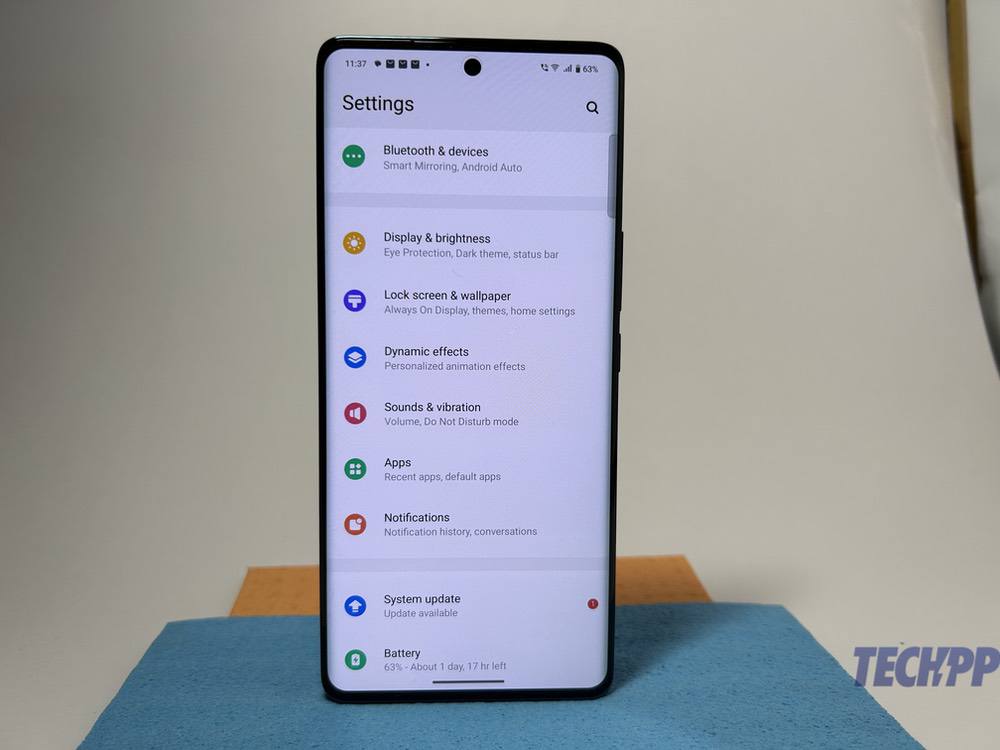
The Vivo V30 comes with FunTouchOS 14 based on Android 14 out of the box. I have been using Funtouch OS for almost 2 years and it has improved a lot in terms of looks and performance. The whole system runs smoothly. But the one thing that bothers me with most Chinese smartphone manufacturers is the app suggestions, bloatware and ads.
Vivo has removed the hot apps and hot games from the Funtouch 14 OS, which is a good step in the right direction, but even so, there are still suggestions in the app drawer search and also when you install an app from the Google Play Store, which ruins the experience for a moment. The design is so similar to Google ads that sometimes I even thought they were in-app ads and not ads in the operating system. Vivo pushes these ads aggressively.
Other than that, everything about the software is great. It also offers excellent customization options, such as for the lock screen and the look of the device. With the improved small windows feature, you can use 12 small windows in the background, customize the transitions on the home screen, change the style of recent tabs, and more.
Overall, the software experience is smooth and has less bloatware than previous versions. In terms of updates, the Vivo V30 receives two years of OS updates (up to Android 16) and 3 years of security updates.
Vivo V30 Sound: The Biggest Downside

The biggest downside of the Vivo V30 is that it doesn’t have stereo speakers. I use headphones most of the time. But I miss the stereo speakers on my V30 when I consume media. Vivo should reconsider its decision regarding stereo speakers. Smartphone stereo speakers have evolved from a nice-to-have feature to a must-have feature. Vivo should repurpose the earpiece as a secondary speaker to create a stereo effect.
The sound from the single speaker at the bottom is loud. But the quality leaves a lot to be desired. The Speaker Boost software function, which increases the volume to 150%, doesn’t fill the gap of a stereo speaker. The sound of the speaker could have been better. In addition, the smartphone doesn’t support Hi-Fi (High Fidelity), so you cannot enjoy a better listening experience and sound quality via different audio outputs.
What’s in the Box: You Get a Charger
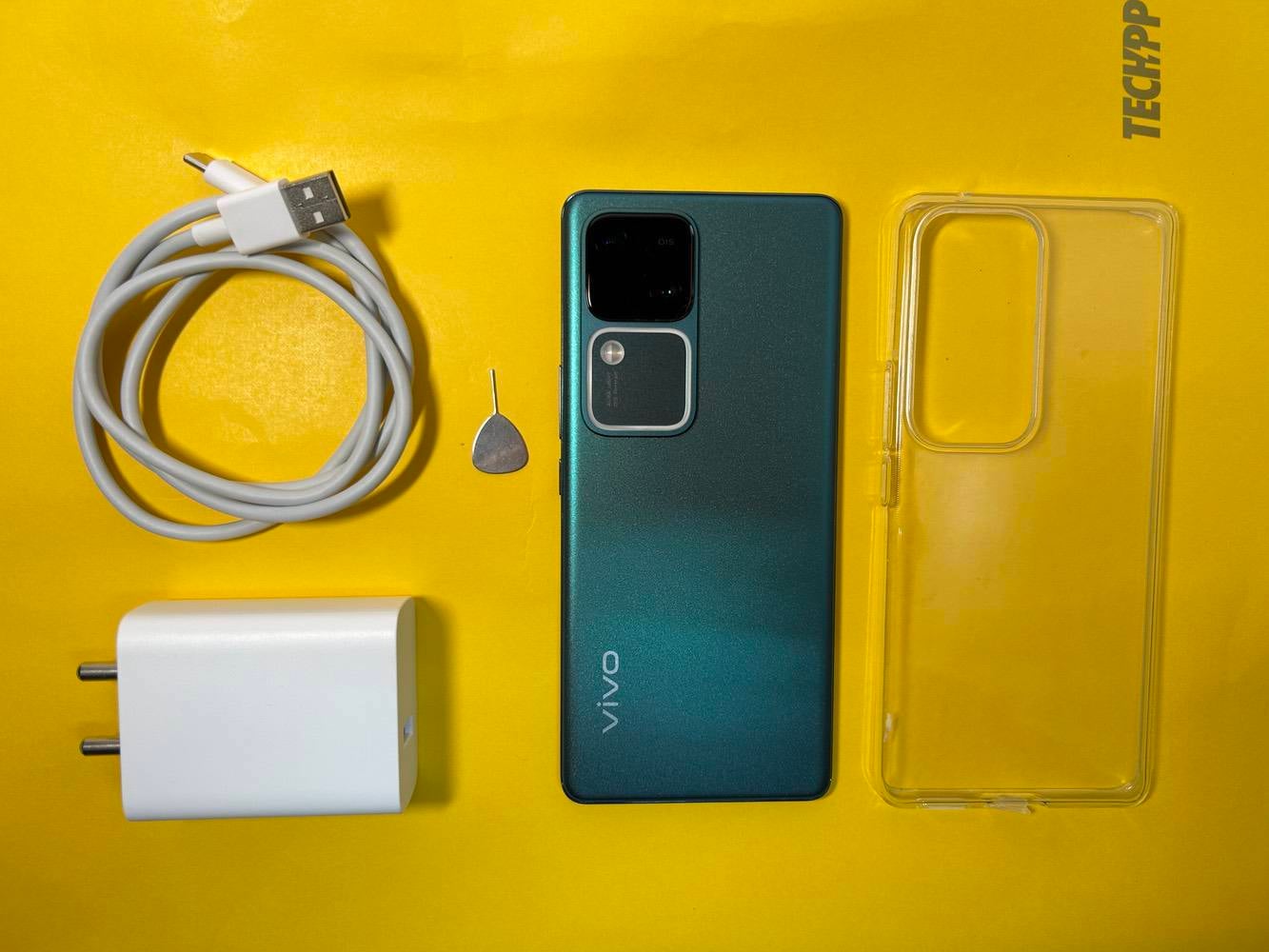
When you buy the Vivo V30, you get a basic tempered glass. You can use it for a few days to avoid scratches. You can swap it for higher-quality cases. The 80-watt charging brick with USB-A output and USB-A to Type-C cable, a sim-ejector pin, and a few documents.
Vivo V30 Review Verdict
The Vivo V series is best known for its cameras and slim body, and the Vivo v30 delivers. For Rs 33,999, the Vivo V30 offers solid camera performance, especially in portraits and low-light conditions. It features a slim, solid base in terms of camera and design. But it lacks a few things, such as no stereo speakers and less-than-solid performance. The Vivo V30 may appeal to people looking for a smartphone with a great design and a great camera. However, if you’re looking for alternatives, there are several good options. The iQOO Neo 9 Pro and the OnePlus 12R are good choices when it comes to overall performance.
- Impressively slim design, even with a large 5000mAh battery.
- Strong camera performance. Particularly in low light and portrait shots.
- Vibrant and bright display.
- Solid battery life. Lasts all day, even with heavy usage.
- Performance is good and offers smooth day-to-day tasks.
- No stereo speakers.
- Downgraded UFS storage.
- Price is on the higher side.
| Design |
|
| Performance |
|
| Cameras |
|
| Software |
|
| Price |
|
|
SUMMARY
Vivo V30 is the slimmest smartphone with stylish looks and solid cameras especially in the low light and portrait. It comes with a bright and vibrant display and all-day battery life. But it comprises the sound, uses a mid-range chipset, and downgrades the UFS storage version, making it less compelling for performance-centric users. It stands on the pillars of design and camera quality, making it a choice for users who only prioritize these aspects. |
3.7
|

