

In Summary
- The HDB 630 are the latest premium wireless headphones from Sennheiser.
- Although they come with a premium price tag ($499/Rs 43,990) and have ANC, they are not exactly mainstream headphones and are actually targeted at audiophiles, who prefer clean, unfiltered sound. Sennheiser has also bundled a Bluetooth USB dongle to improve sound quality from all sources.
- The Sennheiser HDB 630 try to do what many consider to be impossible – combining ANC and wireless connectivity with audiophile-level sound. But do they succeed enough to justify a rather stiff price tag?
Sennheiser is one of the few brands in the world whose headphones have a large number of followers in wireless mainstream audio as well as in the wired audiophile segment. While general users swear by the brand’s Accentum and Momentum series, the brand’s HD 600 series enjoys legendary status in audiophile circles. With the Sennheiser HDB 630, the brand tries to bridge these two very diverse worlds, trying to combine the features and convenience of mainstream ANC headphones with sound quality that audio purists love. Does it succeed?

Table of Contents
Quick Warning: Do NOT compare these with the Sony WH 1000 XM6 or the Bose QC series!
Before we start the review, there’s a quick warning we would like to give. Thanks to their price tag, many will be tempted to compare the Sennheiser HDB 630 with the likes of the Sony WH 1000 XM6, the Bose QC series, the JBL Tour Pro 3, and, of course, the AirPods Max. We would advise them not to do so.
The reason is simple: unlike those headphones, the Sennheiser HDB 630 are not designed for the general consumer. They are made to deliver sound that is almost neutral, with no particular stress on any frequency. Users will not get the slightly warm, bassy sound that we get from JBL, Sony, and Bose devices, or even the slightly detailed, at times sharper sound that the AirPods deliver. These are not meant to deliver pleasant sound but to deliver sound in its purest, unadulterated form.
Let’s make it simple: think of sound as coffee. Most of us have coffee with a number of additions, such as milk, sugar, flavours, cream, and much more. However, for the coffee purist, black coffee remains the standard. It might strike many of us as being bitter and not “tasty,” but it is what the purists love.
The HDB 630 is the black coffee of headphones – it is really meant for purists. Many mainstream users might not like the way they sound. Comparing the HDB 630 with the Sony WH 1000 XM6 is like comparing classic black coffee with a Starbucks Frappuccino.
Sennheiser HDB630 Design and comfort: Keeping it Simple and small-ish
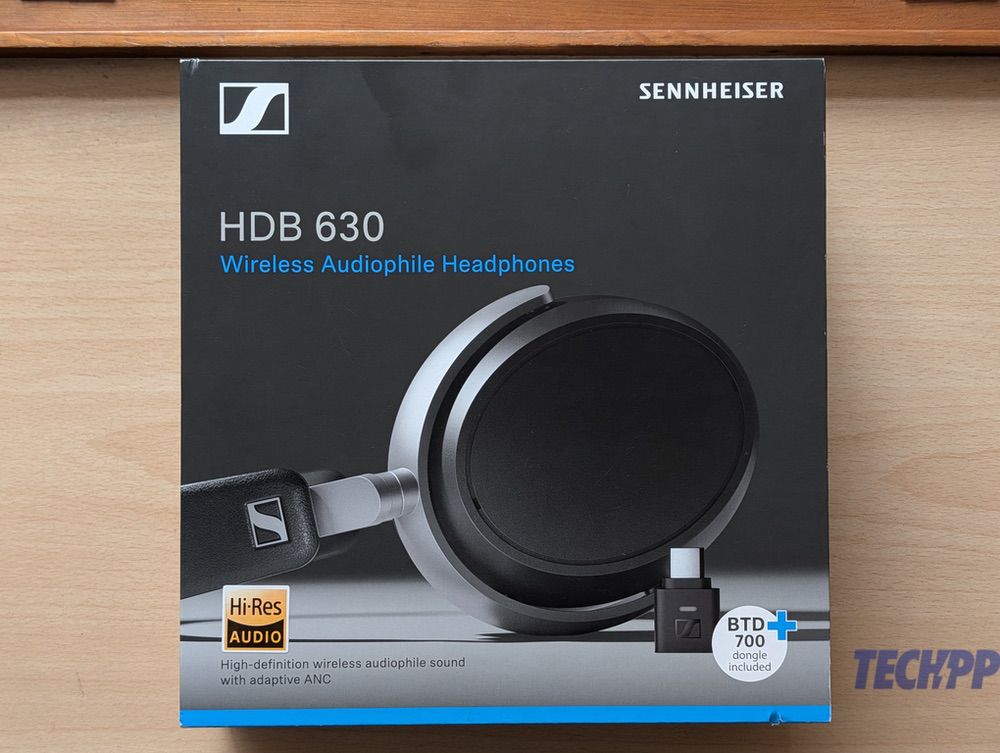
The Sennheiser HDB 630 are meant to sit comfortably on your head, rather than turn the heads of others. They have a very clean look about them and are not going to be noticeable in a crowd. There are no flashy colors (they come only in black) and there is none of the geeky edginess that some audiophile headphones have. On the surface, the HDB 630 look like a very normal pair of headphones, smart but not particularly stylish.
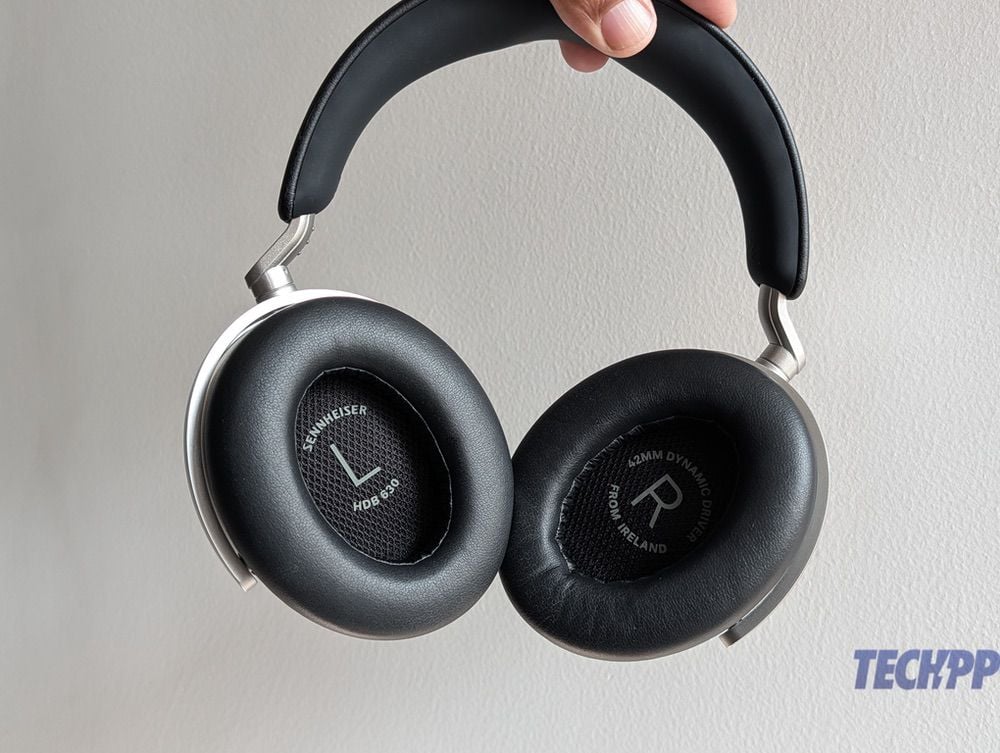
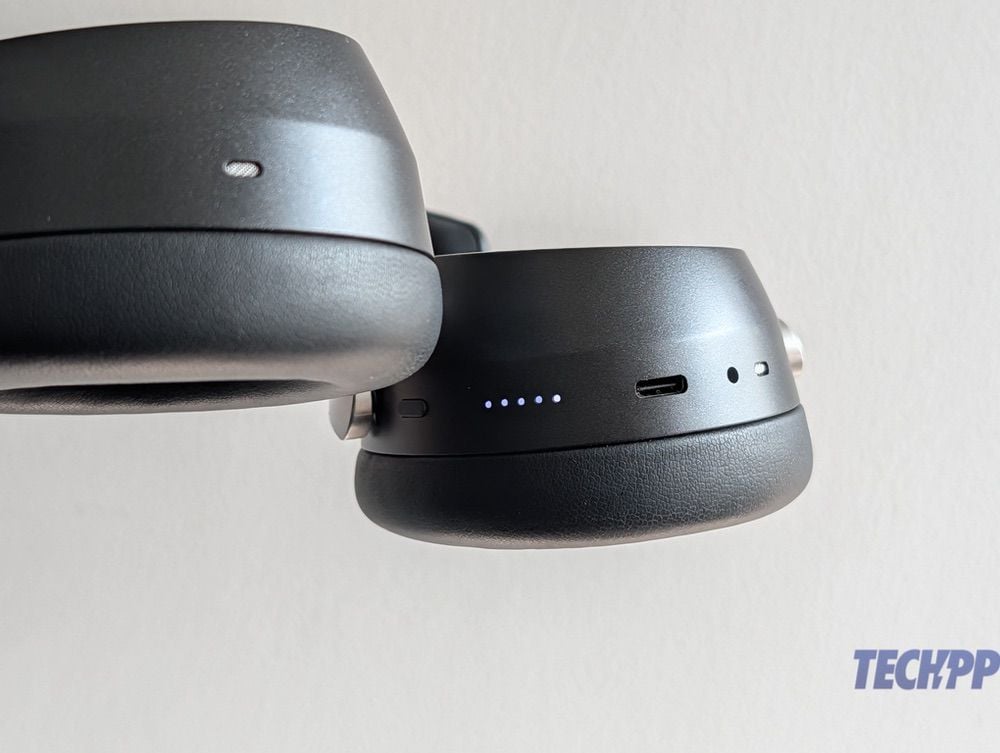
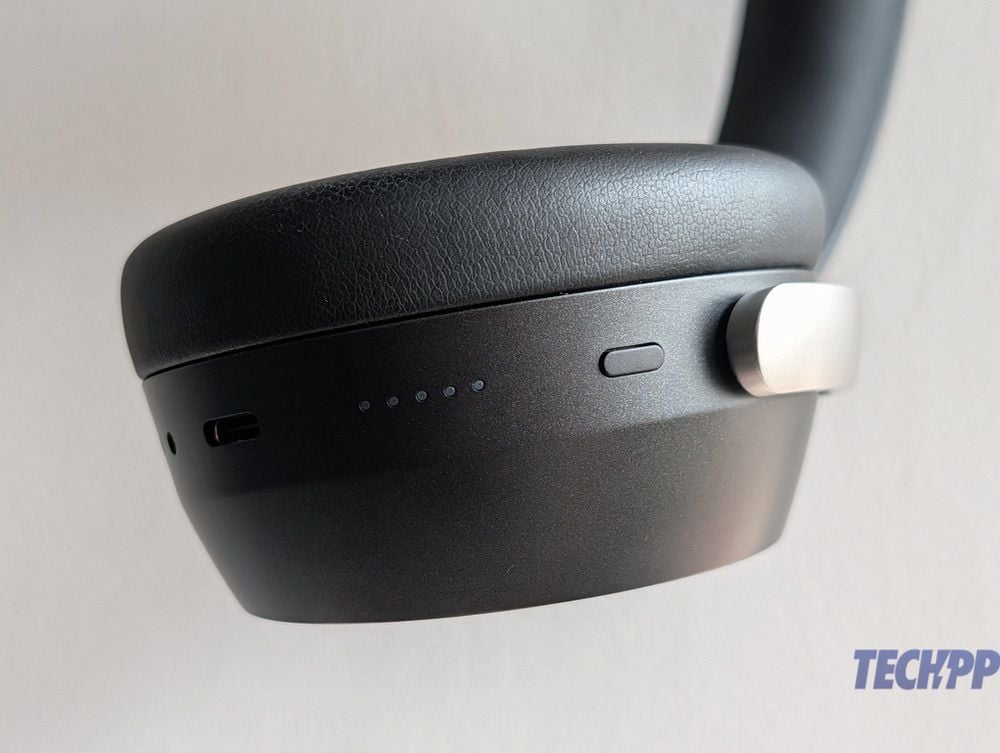
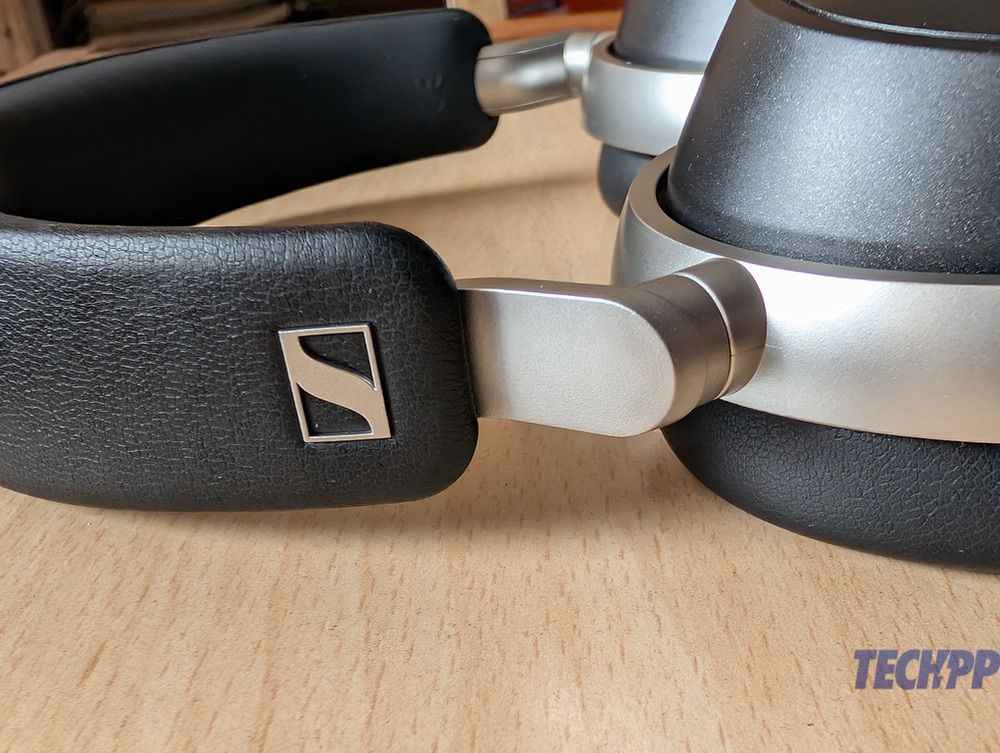
They are, in fact, very similar in appearance to the mainstream Momentum 4, minus the colorful options. The HDB 630 comprise two earcups attached to a padded headband with metallic connectors. Just as in the case of the Momentum 4, while the earcups can revolve in the vertical position, they cannot fold inwards. The ear cups come with substantial leather-like padding, with R and L marked clearly inside them. The inner part of the headband also comes with plenty of padding. At slightly more than 300 grams, the HDB 630 are definitely on the heavy side for a pair of ANC headphones (the Sony WH-1000XM6 weigh about 250 grams), although audiophiles used to larger headphones might not find them to be inconvenient. There is a single on/off button on the right earcup, with a row of LEDs to show battery life and a USB Type-C port with a 3.5 mm audio jack next to it. There is very little branding – just the Sennheiser logo on the right and left sides of the headphones.
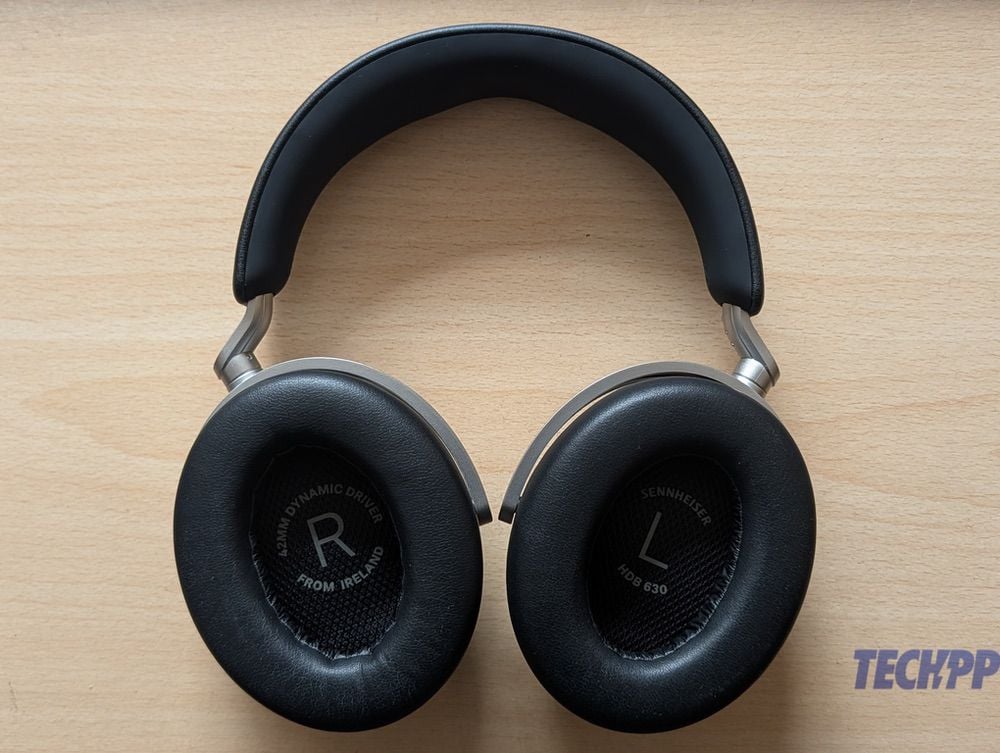
The earcups and headband are about the same size as the Momentum 4, which is good for mainstream listening, but the earcups might strike audiophiles as being a little on the smaller side, especially those who like headphones that totally envelop their ears like the ATH M50X. Even then, the HDB 630 are comfortable to wear thanks to all the padding on them, and come with adequate rather than excessive clamping force – they do not wobble on one’s head. We found them slightly heavy initially, but got used to them and were able to wear them for hours on end without any problems. They are slightly more thickly padded than the Momentum 4, so are more comfortable once you get used to the weight.
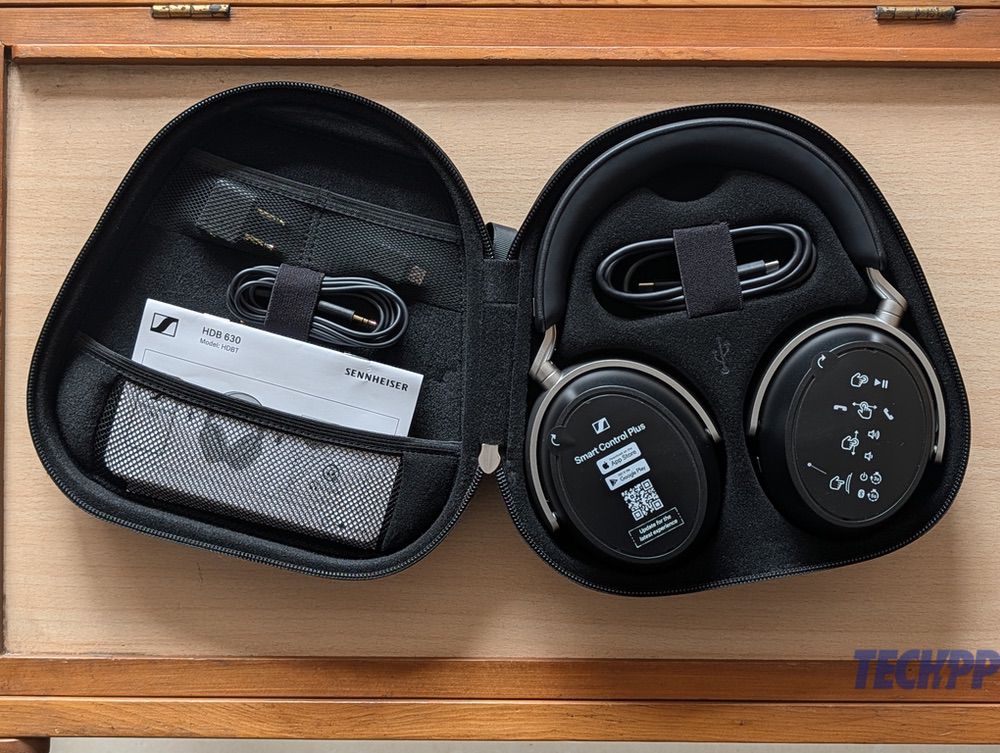
In terms of overall design, the HDB 630 are low profile but very comfortable. Sennheiser has added a hard case for carrying them in the box. It is a big one, with space not just for the headphones (which fold flat but do not fold inwards, so take up a lot of space), but also for the two cables (a Type C to Type C and a 3.5 mm), in-flight adapter, and a special Bluetooth dongle that accompany the headphones. It is a sturdy case, but it is bulky, although audiophiles will love the storage space and accessories. It also contains the BTD 700 dongle, which is small and sturdy and comes with a tiny button. We so wish there was a way to store it on the headphones themselves, as the number of times we misplaced it and then had a panic attack was simply not funny (while there is a Find Your Headphones option for the headphones, there is none for the dongle – now there’s an app opportunity!)
Sennheiser HDB 630 specs: A blend of mainstream and elite
The HDB 630’s biggest USP is its spec sheet. It is perhaps the only set of headphones out there that will please mainstream listeners as well as audiophiles. While the HDV 630 look a lot like the Momentum 4, they are very different in terms of hardware. They come with Sennheiser’s 42 mm transducer, but these have been tuned for neutral rather than mainstream sound. There is also support for lossless listening over not just the 3.5 mm audio jack but also the Type-C port. The box also has two cables – a 1.2-meter 3.5 mm audio cable and another 1.2-meter Type-C cable, which can be used for audio as well as charging. And in a very neat touch, there is also a BTD 700 Bluetooth USB-C dongle, which lets one get support for aptX HD and aptX Adaptive, by just plugging it into the device playing the audio. And before you ask, yes, you can plug it into an iPhone or iPad with a Type-C port and get aptX audio!
The headphones come with Bluetooth 5.2, support multi-point connectivity, and support aptX Adaptive, aptX HD, aptX, AAC, and SBC codecs, and can handle up to 24-bit / 96 kHz lossless audio over a wired connection. The frequency response is 6 Hz – 40 kHz over wired and 6 Hz – 22 kHz over wireless. Although Sennheiser has not mentioned the number of microphones on the HDB 630, the headphones come with support for ANC as well as calls. Battery life is an impressive 60 hours with ANC. They also come with ear detection and smart pause, so the audio pauses when you take them off and resumes when you put them on, and you can also take a call by simply putting them on your head.
Those specs would have been good on a premium pair of ANC headphones. On a pair of headphones designed for audiophiles, they are extremely impressive and almost unheard of.
Sennheiser HDB 630 UI, controls, and app: Mainly a matter of touch and patience
The Sennheiser HDB 630 are basically controlled by touch. They have a single button for switching the power on and off on the right earcup, but beyond that, it is all a matter of touch. All the controls are on the right ear cup, and while they work smoothly enough, they definitely take some time to get used to, especially when it comes to calls.
Things are relatively easy while listening to audio. Sliding our finger up and down controls the volume, while pinching our fingers inwards and outwards increases and decreases transparency levels. Tapping one play or pauses audio, swiping to the right takes one to the next track, swiping to the left takes one to the previous track, and a double tap turns transparency on and off.
It is a little more complex when one is in a call territory, though. Taking a call involves sliding our finger to the right, ending a call involves sliding our finger to the left, while rejecting a call involves a tap and hold. None of these is intuitive, and while they work smoothly, they take some getting used to. Perhaps Sennheiser could have kept the controls for calls on one earcup and controls for audio on the other.
Pairing the headphones is very simple – we just switched on the headphones and they went into pairing mode, and all that was left was to select them from the Bluetooth settings of the device with which we wished to pair it. Pairing with a new device involves simply long-pressing the power button, which puts the headphones in pairing mode. Switching between devices is as simple as stopping the audio on one and starting audio on the other – the headphones switch to the new device seamlessly. It is rare to see a feature like this on audiophile-quality headphones, as those are designed mainly for listening to a single device.
The BTD 700 dongle is plug-and-play. But one needs to put it in pairing mode by pressing a button on it and the headphones in pairing mode as well to connect them at first. After that, they detect each other automatically.
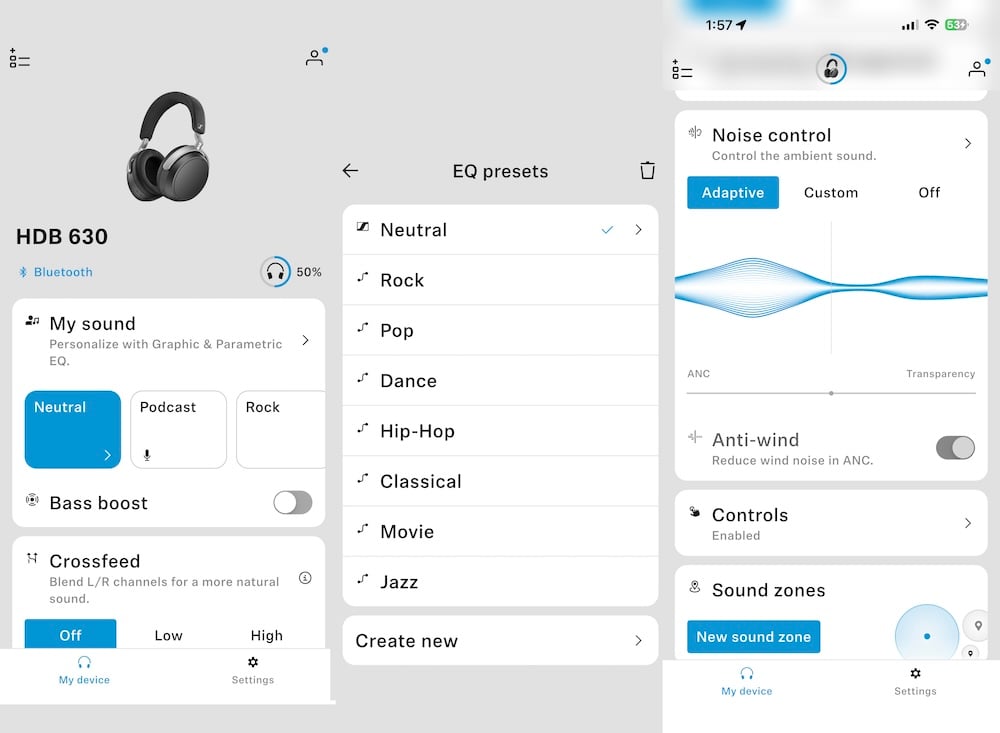
The Sennheiser HDB 630 have a companion app for Android and iOS, the Sennheiser Smart Control Plus. The app lets one tweak different settings and presets on the headphones, although there is no way of changing the controls. There are a number of equaliser settings (Podcast, Rock, Pop, Dance, Hip-Hop, Classical, Movie, and Jazz) and also the option to boost bass. We could also create a new EQ preset, and as these are audiophile headphones, we had the option to do this either through a very basic Graphic EQ or a highly detailed Parametric EQ. The app is easy enough to use for a mainstream user and seems to have enough depth to appeal to someone who is listening to music very analytically.
Sennheiser HDB 630 performance: Neutral but brilliantly detailed sound (esp. with the dongle), very good ANC and calls…and super battery life, too
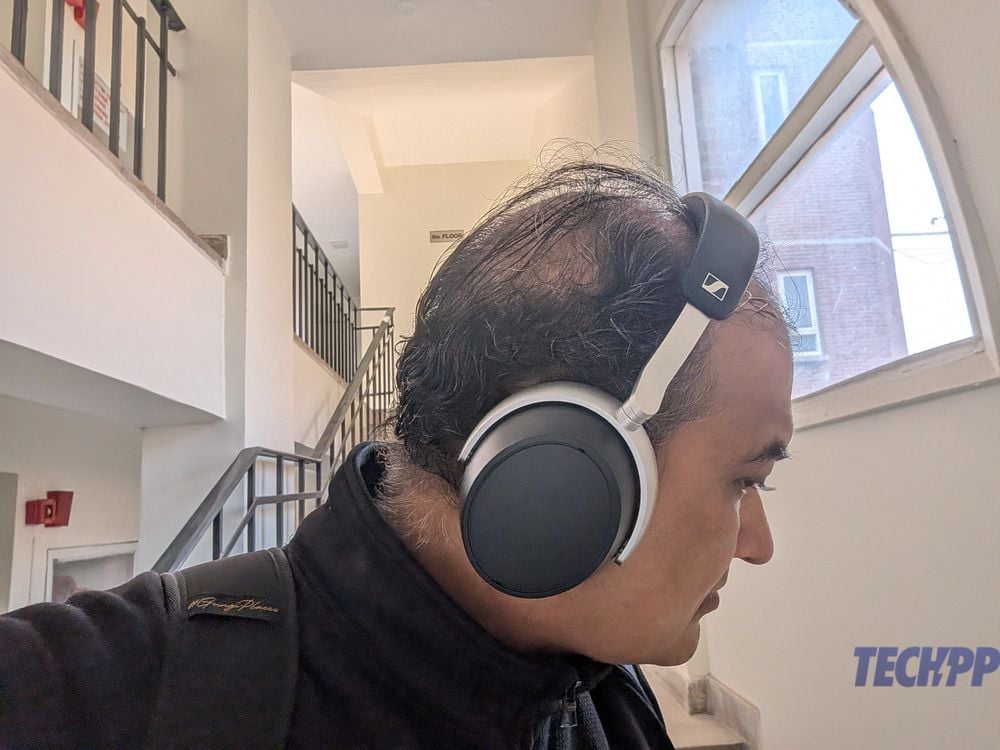
The Sennheiser HDB 630 deliver perhaps the most neutral sound we have ever heard on a wireless headphone. Mainstream users might find it too dull, as it lacks the thump and sparkle that many wireless headphones have, but audiophiles looking for absolutely unfiltered and pure sound will love it. Bass, treble, and mids are all present and noticeable, with none trying to overwhelm or rise above the others. There is also a wealth of detail, and we found ourselves noticing new touches in tracks that we had heard even dozens of times in the past – we found new hums and spur jangles in the theme of For a Few Dollars More, and could actually hear the twang of the mouth harp, while the iconic whistle took on a new dimension altogether. Add the dongle (you simply must) and the experience gets even better – we found we could actually distinguish different hand claps in Nusrat Fateh Ali Khan’s famous Sochta Hoon qawwali.
The dongle brings an experience that is close to the wired one, which makes these headphones an audiophile’s or even an audio technician’s wireless dream. As these are closed back, the sound stage is not as expansive as on open back headphones, but one still gets a good sense of instrument placement. The EQ settings make a very audible change to the sound, and bass enthusiasts would love the additional stress the bass boost provides. We did most of our listening in neutral mode, but rock and classical were our other favorites as they added just a little sparkle to the detail. Of course, proper audiophiles can literally tweak every frequency out there with the Parametric EQ – we are no experts in the field, but were amazed at the way in which the headphones responded to the changes we made. For best results, use them with a high-quality music service – we used them on Apple Music and Spotify, and the difference was staggering (Spotify simply is not in the same league in India right now).
These are headphones that can be used for literally anything from pop music to rock music to films to games and podcasts – they fit in every sound requirement, and if you feel they do not, just open the EQ section and set things right. There is also a Crossfeed effect that claims to blend sound from left and right channels for a more natural sound – we honestly were not able to tell the difference, though. Some might complain about the absence of “spatial sound,” but they are unlikely to be audio enthusiasts.
To get this kind of performance on a set of wireless headphones would be amazing in itself, but the HDB 630 combines it with flagship-level adaptive ANC. Perhaps the thicker padding on the headphones helped, but we found the ANC to be better than on Sennheiser’s own Momentum 4. The ANC on the HDB 630 is good enough to drown out a lot of the traffic and Metro buzz and even bring a level of quiet to a noisy cafe. Best of all, they do not affect the quality of audio being played on them at all. We still think the Bose Quiet Comfort and Sony WH-1000 XM6 have better ANC, but then they do not offer this level of audio quality. Transparency mode works superbly as well, and call clarity is very good too, once one gets the hang of the gestures for handling calls on the headphones. Round that off with 50-55 hours of battery life with ANC on a single charge, about two hours of charging time, and a fast charge option of about 5-6 hours of audio from 10 minutes of charging, and you have headphones that are masters of everyday audio!
Sennheiser HDB 630 Pricing: Premium pricing, but then these are one of a kind
The Sennheiser HDB 630 are priced at $499/Rs 44,990, and that puts them very comfortably in the premium zone, well above even the likes of premium ANC headphones like Sony WH-1000XM6 ($458/Rs 38,990), the Bose Quiet Comfort Ultra ($271/Rs 35,900), and the JBL Tour One M3 Tx ($449/Rs 32,999). However, as we said at the very beginning, the HDB 630 are not your usual ANC headphones, but actually add ANC to the closest thing we have heard to a wireless audiophile experience.
Sennheiser HDB 630 Competition and challengers: Not too many there
Audio Technica ATH-M50X BT2 – the classics, wireless edition
$218/Rs 18,999
These are the Bluetooth-enabled versions of the classic ATH-M50X, and with their comfortable fit and padding, are incredibly comfortable to wear. In terms of audio quality, these come close to the HDB 630, although they have a (very) slight bass emphasis. Also, while their Bluetooth connectivity is superb, they lack ANC, and call quality is not the greatest.
Edifier Stax Spirit S3 – planar wireless magic
$319/Rs 29,990
The Stax Spirit S3 are those very rare creatures – Bluetooth Planar headphones. They too deliver excellent audio quality (although they sound a little bright) and their design is very eye-catching. Again, the catch here is the total absence of ANC and very ordinary call quality.
Sony WH-1000 XM6 – similar price, dissimilar sound
$458/Rs 38,990
They might be priced close to the HDB 630, but are nowhere near them in terms of audio quality and are far ahead of them in terms of ANC. As we said earlier, these are for a different audience. We have included them here just because we have received a number of queries about them from competitors.
Sennheiser HDB 630 Review verdict: Audiophiles now have wireless ANC headphones!
So, should you get the Sennheiser HDB 630? Well, if you want audiophile-level audio on wireless headphones, with ANC and good call quality, there is simply no comparable option. It is as simple as that. Hardcore audiophiles could say that one can get slightly better sound from other headphones, including Sennheiser’s own legendary HD 600 series, but those are wired. Mainstream users will claim that Bose and Sony’s flagships provide better ANC and call quality, but their sound quality is simply not in the same class as these.
With the HDB 630, Sennheiser might just have created a very rare product category – one that marries wireless audiophile sound to good ANC and great call quality.
Not everyone will like them.
And that’s fine.
They are not for everyone.
Buy Sennheiser HDB 630 (India)
Buy Sennheiser HDB 630 (USA)
- Very comfortable to wear
- Excellent, detailed audio
- Multiple connectivity options
- Bundled Bluetooth dongle adds aptX support and improves sound immensely
- Very good battery life
- Good call quality
- Very good carrying case
- Expensive
- Can be bulky to carry with carrying case
- Dongle can get misplaced
- Not for bassheads
| Design & Comfort |
|
| Audio quality |
|
| ANC & Call quality |
|
| Battery Life |
|
| Price |
|
|
SUMMARY
Sennheiser HDB 630 try to do what many consider to be impossible - combining ANC and wireless connectivity with audiophile-level sound. But do they succeed enough to justify a rather stiff price tag? |
4.1
|

