

In Summary
- The OnePlus 13s is the latest flagship phone from OnePlus, after the OnePlus 13 and 13R, which were released earlier this year.
- The most striking feature of the OnePlus 13s is its size – it is a compact device and much smaller than most flagships. But in spite of its size, it packs in flagship-level specs, including the Snapdragon 8 Elite processor and a surprisingly large 5850 mAh battery.
- At Rs 54,999, the OnePlus 13s is the most affordable compact flagship phone in the market, and unlike many of its competitors, comes with hardly any major compromises.
“With compact frames come compromised specs and performance…and generally premium prices” is a fact of tech life that most smartphone users have come to terms with. Contrary to popular belief and online video burials, compact smartphones are far from dead, as the likes of the iPhone 16, the Galaxy S25, the Pixel 9, and the Xiaomi 15 prove. However, these small(ish) phones generally come with stiff price tags and specs that seem watered down, especially in terms of display and battery. OnePlus, the brand that gave us the OG flagship killer, is looking to change that perception with the OnePlus 13s. Will it succeed?

Table of Contents
OnePlus 13s Design and Appearance: Compact and elegant (but not “small”)
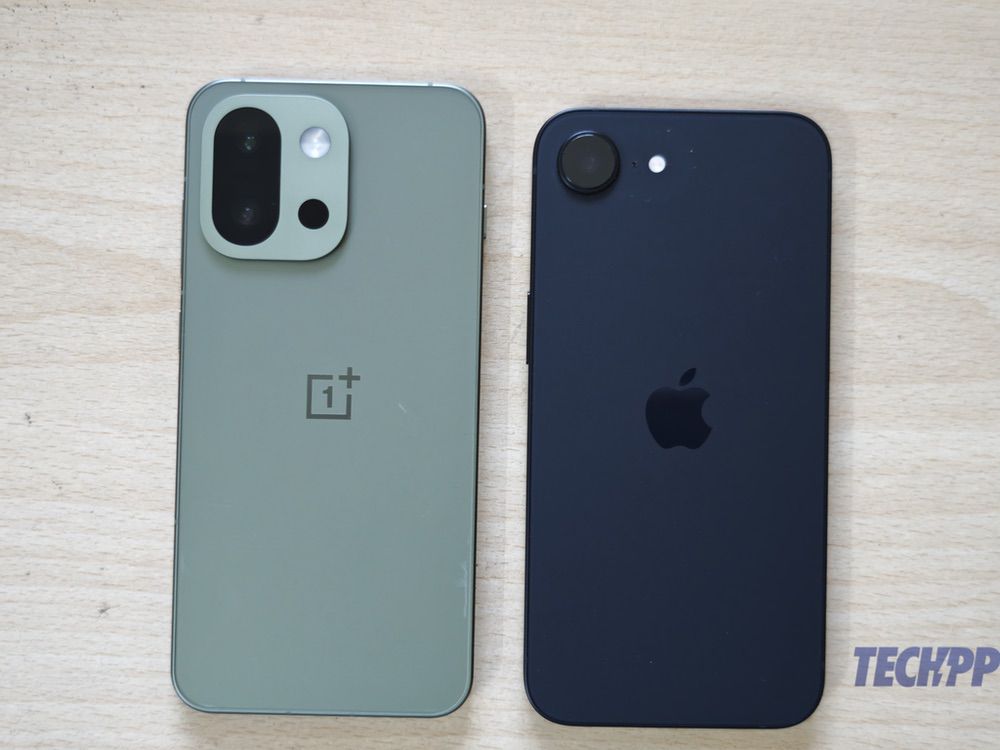
A lot of the hype around the OnePlus 13s has been around how compact it is – “Stronger. Smarter. Smaller’ is the tagline being used to sell it. The term “smaller” sort of sums it up in terms of design. The OnePlus 13s is not exactly a ‘small’ phone – at 150.8 mm height and 71.7 mm width, it is bigger than the iPhone 16e (146.7 mm height and 71.5 mm width) and only slightly smaller than the Xiaomi 15 (152.3 mm tall and 71.2. That said, it is smaller by modern smartphone standards in general and OnePlus phones in particular – the OnePlus 13 is 162.9 mm tall and 76.5 mm wide. The OnePlus 13s is impressively slim at 8.2 mm but seems a trifle heavy at 185 grams (the iPhone 16e is 167 grams, and even the much bigger iPhone 16 Plus is 199 grams). This is a phone that you can mostly handle with one hand – a rarity in this day and age.
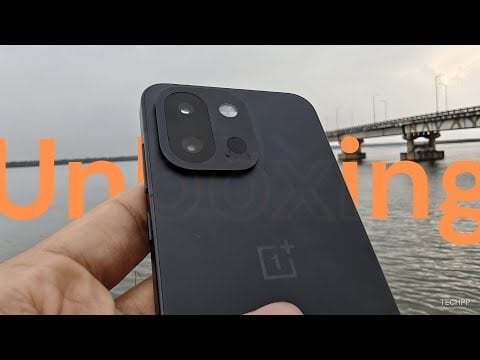
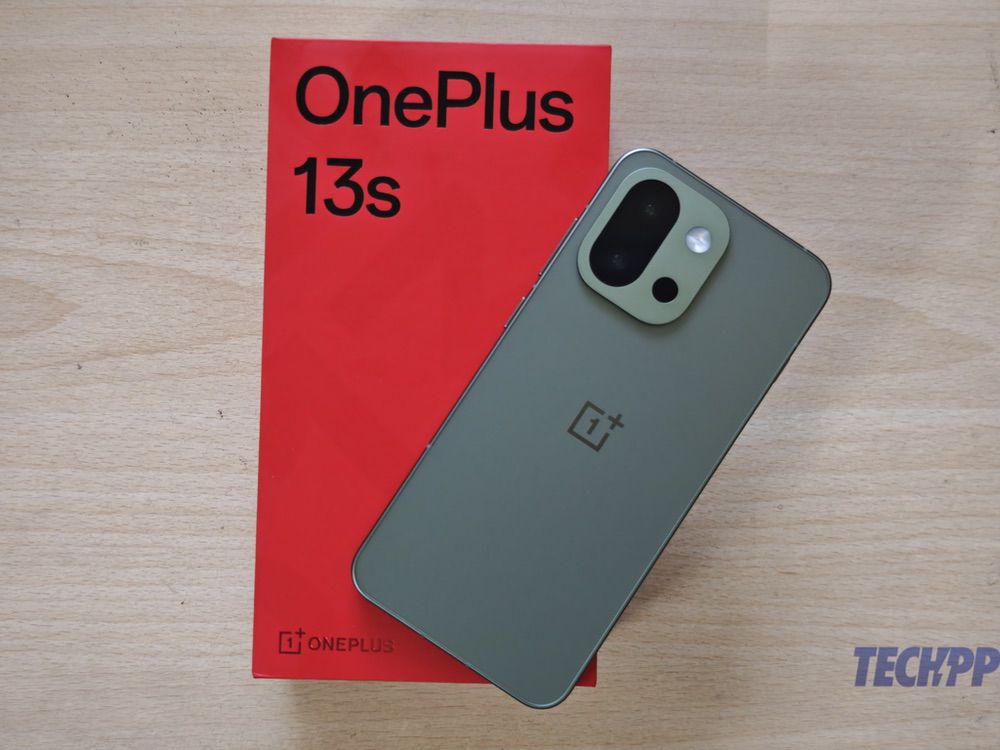
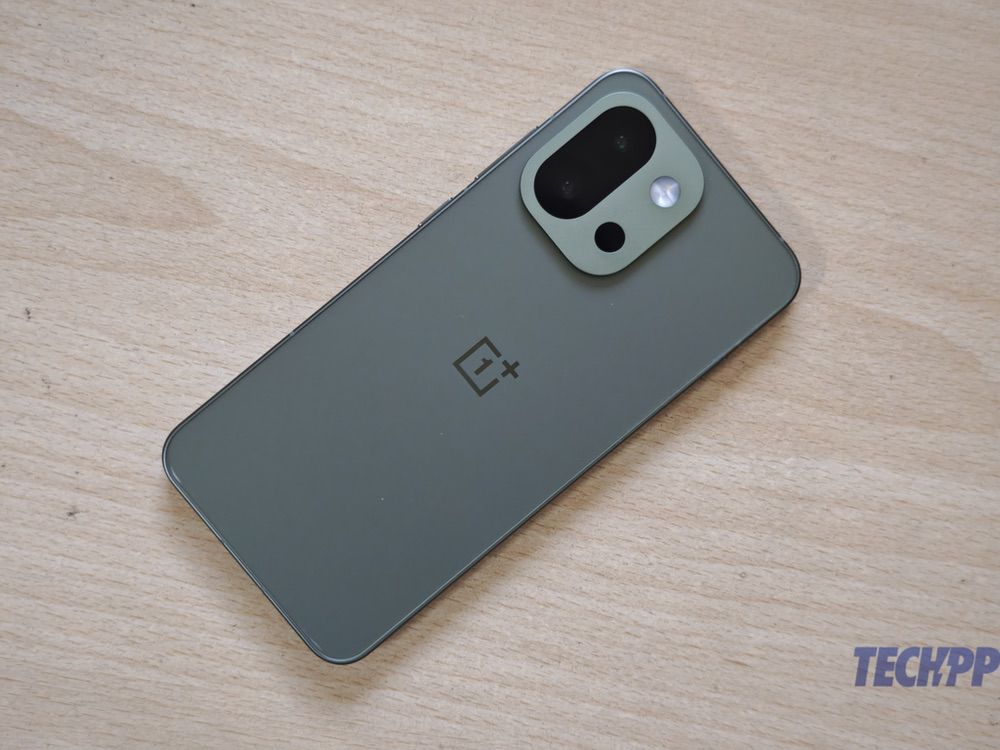
The OnePlus 13s comes with a clean, minimalist design, with straight sides and a flat back that is the phone-y fashion of the day. Jutting out from the top left corner of the back is a square-ish camera unit, which is cut out of a single piece of aluminum and is of a similar shade to the back, giving the phone a very distinct look. OnePlus claims that it has been placed optimally to stay out of the way when the phone is held horizontally while gaming or watching videos, but we found our fingers falling into that position quite often, as they do with most other phones. On the right side of the phone is one of its most talked about features – the Plus Key, which replaces the famous OnePlus alert slider, more on which later. The front is all about a tall display with very narrow bezels.
The phone comes in three colors: Black Velvet, Pink Satin, and an India-exclusive Green Silk. We got the Green Silk variant, and it cut a very smart figure. The green changes shades depending on the lighting and can seem relatively light green and fade to a darker version, in a manner that is classy rather than loud. OnePlus has added a good quality phone cover of the same color in the box, which is a very nice touch and so different from the very basic transparent or solid black covers we get with most phones. The phone comes with Gorilla Glass 7i protection on the display, and Panda Glass on the back, and has an IP65 rating, which means it can survive splashes of water. Some might expect an IP68 rating at this price, but this is hardly a deal-breaker.
All said and done, the OnePlus 13s is a very smart and elegant-looking phone, and one which will grab some attention thanks to its size and that rather different camera unit. The green and pink units will also turn heads with their rather different shades.
OnePlus 13s spec sheet: Nothing compact about the specs…even the battery is big
We normally talk of displays and processors up front when we are discussing flagship spec sheets, but in the OnePlus 13s, we are going to lead with the battery. That is because the battery is the one area where corners are cut in compact devices. Rather remarkably, that is not the case with the OnePlus 13s, which packs in a huge 5850 mAh battery, which is very close to the 6000 mAh battery seen on the much larger OnePlus 13, which is bigger than the 5500 mAh battery seen on the OnePlus Nord 4, and is hands down the biggest battery we have seen on a compact flagship (the Xiaomi 15 has a 5240 mAh battery, while the Pixel 9a has a 5100 mAh battery).
The charging speed is a flagship-worthy 80W, and there is an 80W charger in the box (please learn, Apple, Google, and Samsung), although there is no support for wireless charging. OnePlus has also managed to put in a large 4400 sq mm vapor chamber inside that very compact frame to ensure it does not heat up. All of which adds up to some seriously good engineering sorcery.
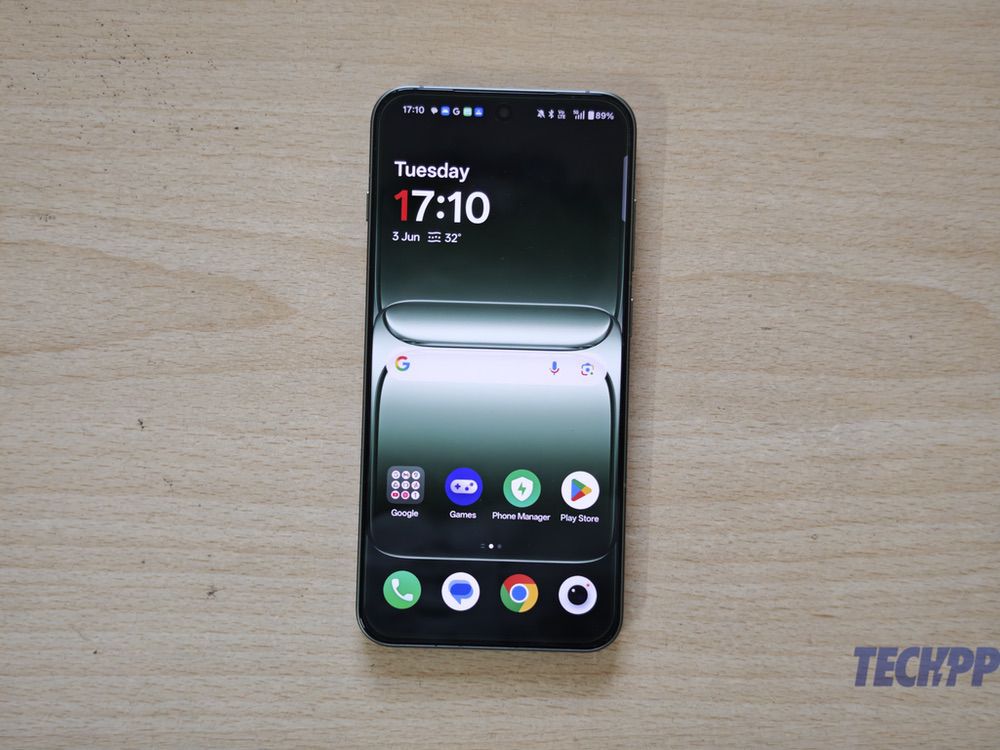
The rest of the specs are flagship-level too. The display might be a relatively small 6.32 inches, but it is LTPO AMOLED and packs in a massive 1.5K resolution of 2640 x 1216, giving it a pixel density of 460 ppi. It comes with a 120 Hz dynamic refresh rate, allowing it to switch between 1-120 Hz depending on the kind of content playing on it. It comes with an HBM (high brightness mode) of 1600 nits, which is impressive and makes the display very visible even in bright sunshine. Powering the phone is the same processor that is seen in the OnePlus 13 and the likes of the Samsung Galaxy S25 series – the Snapdragon 8 Elite. This is paired with 12 GB of LPDDR5X RAM and two UFS 4.0 storage options of 256 GB and 512 GB.
There are two 50-megapixel cameras on the back, a 50-megapixel Sony LYT-700 main sensor with OIS, and a telephoto with a rather modest 2x zoom. The surprise packet in photography, however, lies in front of the phone – a 32-megapixel selfie camera with autofocus, easily the best selfie camera seen on a OnePlus device. You also get stereo speakers, a truckload of connectivity options (including NFC and infrared), and OxygenOS 15 on top of Android 15, with some of OnePlus’ own AI touches, and that Plus button functionality.
OnePlus 13s performance: Typical flagship plus AI plus a Plus Key
With that kind of hardware, it is hardly surprising that the OnePlus 13s sails through regular and heavy-duty tasks with ease. Whether it is browsing the Web, social media doomscrolling, emails, and messaging, or just switching between multiple apps, the OnePlus 13s handles them all without a stutter. Its performance in gaming is equally impressive – it easily handled titles like Call of Duty and Genshin Impact at high graphics settings. The stereo speakers are not the loudest, but are of good quality, and make the multimedia experience a very immersive one.
A point to keep in mind is that while the display is a very good one, its relatively small size makes it less than ideal for viewing shows and films, while games with expansive environments like Genshin Impact or with multiple characters on the screen at the same time (such as the FIFA series) seem a little “squeezed in.” The OnePlus 13s can handle gaming superbly, but it is not really a phone designed primarily for gaming (the OnePlus 13 remains the boss there, along with the iQOO 13, if you are on a tight budget). The phone did heat up a little initially, but an update sent shortly afterward seems to have fixed the issue. Yes, there will be a little increase in temperature when you are gaming or shooting or editing video (yes, there is enough hardware muscle to do that), but it never reaches uncomfortably high levels.

The phone runs on OnePlus’ Oxygen 15 software, and although there are a few preinstalled apps (Facebook, Netflix), the experience is generally a clean and smooth one. A lot of attention has been on the new Plus Key, which can be mapped to different tasks (camera, do not disturb, torch, translate, etc.) but takes you to the new AI Plus Mind (or the Mind Space app on the phone) feature by default. This basically takes a screenshot and analyses what is on the screen, and presents a summary of it, while also placing it in a category.
So, for instance, if you press the button while looking at flights on your phone, AI Plus Mind can actually offer to set a time on your calendar for the flight. Similarly, if you press the button while viewing a landmark, you can get a brief summary about it and also the option to navigate to it if you so wish. You can also edit the descriptions and tags in the summaries. It is a little slow initially, but is expected to get smoother and speedier in the coming days to fulfill its potential of being what OnePlus terms “Your Personal AI Companion.”

This brings us to a number of AI touches from OnePlus on the device, which it has called OnePlus AI. The Intelligent Search seen on the OnePlus 13 has now been boosted to AI Search, allowing you to search for information from not just the Web but also on the device. And while regular features like Gemini and Circle to Search are present, you also get AI Voice Scribe that can record, summarize, and translate calls and videos even within third-party apps, AI Translate that lets you translate text, voice, conversations, camera, and on-screen content, and AI Call Assistant that lets one translate and summarize phone calls.
The OnePlus 13s is also one of the first phones to come with support for Gemini Live, which actually lets you converse with Gemini about what is on your phone screen. There are plenty of AI features on board the OnePlus 13s, and most of them work smoothly (that 12 GB of RAM helps, we suspect). Writing about them all would need a separate article (do let us know if you would like us to write one). In software terms, this is a very well-stacked device, with hardly any bloatware.
OnePlus 13s cameras: Steady main and tele, but the selfie camera steals the show
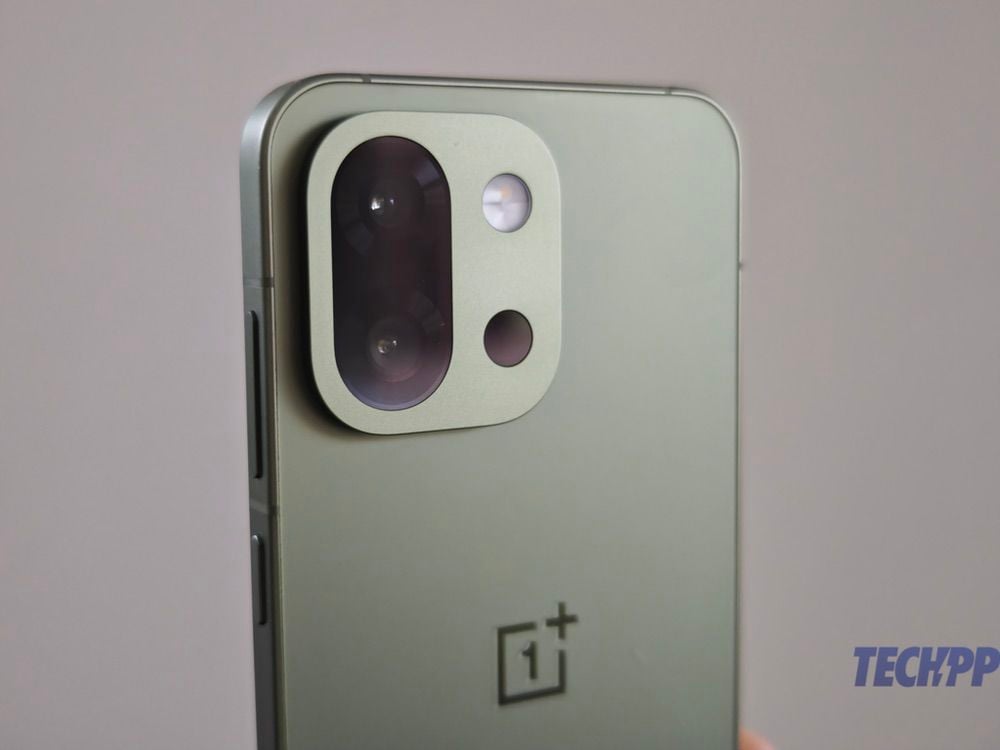
The OnePlus 13s comes with two 50-megapixel cameras on the back, and they are very good performers. The main sensor produces very good (if slightly too bright) colors and serves up impressive detail, while the telephoto lets you get a close-up view of subjects. The main camera is the better option if you are looking for detail, and also when you are shooting in low light, where it turns in some amazing shots with reasonable detail.
Image quality was very good throughout, although a notch below what we have seen on the likes of the OnePlus 13 and the Xiaomi 15, both of which bring an extra ultrawide sensor to the party and also seem to have better telephoto sensors. The telephoto delivers 2x optical zoom and also 4x lossless zoom, which is handy, with pretty impressive clarity. You can go up to 20x digital zoom, but we would not recommend it, as details get butchered, especially in low light. Portrait photography is a pleasant surprise, with sharp subjects and very natural bokeh even in low light conditions. Video quality is good from the main sensor in good light conditions, but takes a hit when it gets darker, and also when there is too much movement.







The surprise star of the OnePlus 13s camera show is, however, the 32-megapixel selfie camera with autofocus that delivers the best selfies we have seen not just on a OnePlus phone but from any non-Vivo V series phone in this price range. Yes, our skin did get smoothened out a little even when we stuck to natural mode, but the level of detail and color reproduction was very impressive. Video quality from the front camera is good enough for content creators to use this for shooting videos featuring themselves. We just hope other brands follow OnePlus’ example in the selfie department, and add autofocus and good sensors to the mix, instead of just boosting megapixels.
There are plenty of shooting and editing options on the phone, with AI tools as well. In terms of camera performance, the OnePlus 13s has no real weak point and can churn out exceptional shots and videos if handled well, although some might feel disappointed by the absence of an ultrawide camera and the relatively limited zoom on the telephoto camera.
OnePlus 13S battery life and charging speed: A compact flagship with impressive battery life

Battery life has been one of the stumbling blocks of compact flagships over the years, with most compact phones being associated with middling to poor battery life. The OnePlus 13s, however, breaks that stereotype. Its 5850 mAh battery initially lasted us through a day quite comfortably, which is rare in a compact phone with a 1.5K display, but after an update, comfortably got us through a day and a half, which is exceptional, and is right up there with the Pixel 9a in terms of battery longevity, and actually matches the battery life of the OnePlus 13.
The 80W charger in the box generally gets the phone fully charged in about 45 minutes, which is quite acceptable given the size of the battery. The absence of wireless charging is a bit of a disappointment and one of the very few spec compromises made by the brand.
OnePlus 13s Pricing: Very “compact” and competitive indeed
The OnePlus 13s is available in two RAM and storage variants at these prices:
- 12 GB/ 256 GB: Rs 54,999
- 12 GB/ 512 GB: Rs 59,999
At those prices, the OnePlus 13s is easily the most affordable compact flagship out there. The Pixel 9a is available at a lower price (Rs 49,999) but has a lower resolution display, no telephoto camera (it has a 13-megapixel ultrawide instead), and runs on a Google Tensor G4 chip that is smart but not as powerful as the Snapdragon 8 Elite, and a smaller battery with no charger.
The iPhone 16e is a more compact device and comes with comparable processing power (the A18) but has only one camera at the back and a 60Hz display, and also comes with a higher price tag of Rs 59,900. We would consider the Xiaomi 15 to be the closest competitor to the OnePlus 13s – it too comes with a compact frame and a display of comparable quality, and while it has a smaller battery, it comes with a superior Leica camera setup, albeit at a higher price of Rs 64,999. In fact, at its price, the OnePlus 13s is actually the most affordable Qualcomm Snapdragon 8 Elite phone in the Indian market right now, alongside the much larger iQOO 13, which too starts at Rs 54,999.
OnePlus 13s Review Verdict: We have a compact flagship killer in the house!
If you want a compact smartphone with stellar hardware and very good software, the OnePlus 13s stands in a league of its own, with the only real challenge coming in from the slightly lower Google Pixel 9a, which has good cameras and clean Android, but loses out in terms of processing power, selfie cameras and battery life and charging speed (and a charger in the box).
Yes, the S25 and iPhone 16/16e are more compact and light, and the Xiaomi 15 serves up better cameras in almost as compact a frame, but they are all more expensive.
Yes, compact flagships existed before the OnePlus 13s, but just as the OG OnePlus changed the flagship game with a flagship killer, the OnePlus 13s might have done the same for compact flagships.
The OnePlus 13s is a compact flagship, but it comes without many of the compromises that most compact flagships have, mainly in terms of display resolution and battery life. It is a compact flagship rose, without many of the compromise thorns that accompany others. What’s more, it is not a OnePlus 13 mini or a lite version of a more powerful device, but has a clear identity of its own. We have had compact flagships for a while, but with the OnePlus 13s, we finally have a compact flagship killer.
Will it herald a return to the compact smartphone era? That’s another story, but at the time of writing, we would recommend Never Settling for any other compact Android phone.
- Compact and premium design
- Price
- Flagship chip and good display
- Smooth performance with very little bloatware
- Good rear cameras
- Very good selfie camera
- Superb battery life
- A little heavy
- No wireless charging
- Display slightly small for heavy-duty gaming
- AI Plus Mind/ Mind Space is a little slow at the time of writing
- IP65 is a little disappointing at this price
| Design |
|
| Performance |
|
| Cameras |
|
| Software |
|
| Price |
|
|
SUMMARY
At Rs 54,999, the OnePlus 13s is the most affordable compact flagship phone in the market, and unlike many of its competitors, comes with hardly any major compromises. |
4.1
|

