

It might have a huge portfolio of products today, but if there is one product that defines Xiaomi in India, it is the classic Redmi Note series. The series, which has sold in millions, is not your conventional benchmark buyster but delivers an icing of flagship features on top of a fantastic fundamental cake, and serves it out of its tech oven at a surprisingly affordable price.

Now, Xiaomi has finally brought this Note-able tech recipe to its TWS. Up until now, the Redmi Buds range fought mainly on affordability, but with the Redmi Buds 5, the brand has upped the ante with specs and features while not upping the price one too much. The Redmi Buds 5 are priced at Rs 2,999 and, at that price, can be claimed to be the Redmi Note of the TWS segment.
Redmi Buds 5 Review: Pretty regular design, pretty exceptional specs
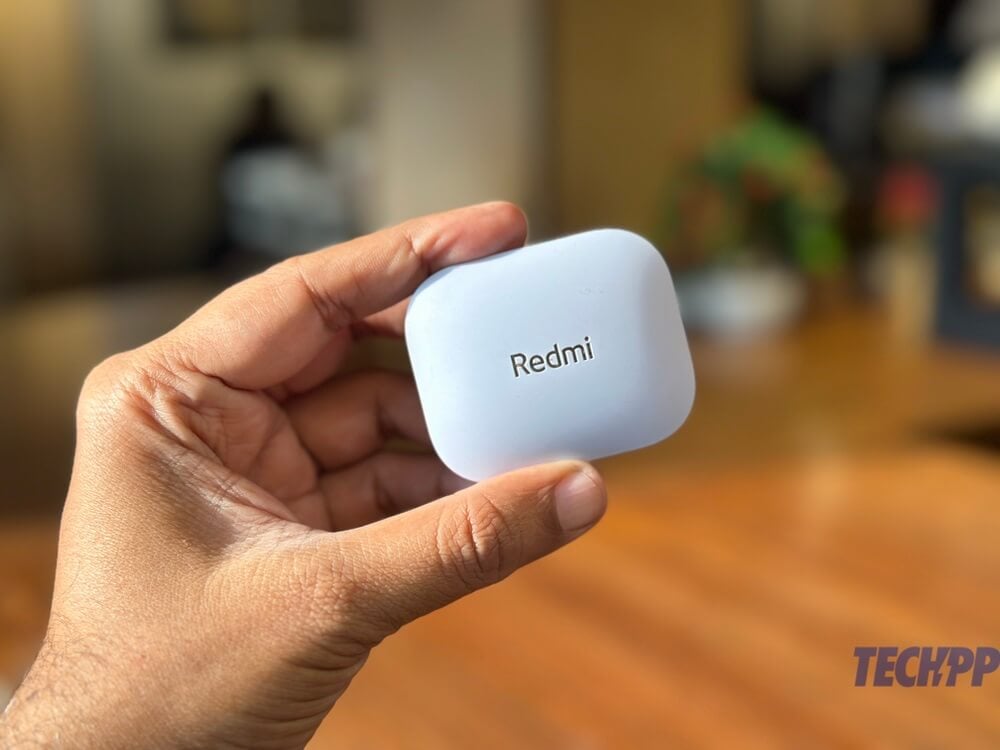
In terms of appearance, the Redmi Buds 5 are pretty routine. More accurately, their Fusion Purple variant (which we received for review) was pretty in color although relatively routine in design (the white and black versions are relatively plain). The buds come in a squoval case, which will easily slip into most pockets and, at around 43 grams, is not heavy at all. The Fusion Purple variant of the buds seems to take some inspiration from the similarly colored (and named) variant of the Redmi Note 13 Pro+ launched recently, with a light purple exterior and a light green interior. The buds themselves are light purple in shade and come with metal-colored accents on their stems. They are also very light (5 grams each) and lie horizontally flat in the case. The colors make the TWS stand out to an extent, but in most other regards, the Redmi Buds 5 sticks to TWS design conventions.
There is some weirdness, though. The placement of the USB Type C port just below the point where the case is opened is a little odd, as one’s finger rubs against the port every time one wants to open the case (not a pleasant sensation). Similarly, the connectivity button is on the side right slide of the case and is so flush with the case that it is not only difficult to spot but also to press. Finally, the case has two LEDs – one outside to show connectivity and battery status and a rather odd horizontal one inside the case for connectivity.
Although made totally of plastic, the Redmi Buds 5 feel reasonably solid in spite of a slightly shaky hinge (the buds fall out every time the case falls to the ground). The buds come with IP54 dust and water splash resistance, which makes them good enough for the gym and runs. They are comfortable fit in the ear and can be worn for hours without any problems, although they do fall out from time to time (like all TWS).

The design is the only thing that is routine about the Redmi Buds 5. The buds come stacked with features. You get 12.4 mm titanium drivers, four equalizer presets, three levels of ANC, 10 hours of battery life on the buds, and 38 hours with the case, and with support for fast charging. You even get smart features like an ear tip fit test, three levels of transparency mode, AI voice enhancement, dual device connectivity, and an app that works equally well on Android and iOS. This is not a Rs 2,999 TWS spec sheet!
Redmi Buds 5: Easy to set up and use (just remember where to tap!)
Pairing them is easy – you open the case with the buds inside and long press the button on the side of the case, and when the light inside the case starts blinking, you head to your device and select the buds from the Bluetooth options. You can connect the buds to your device without the Xiaomi Earbuds app for basic performance. Still, we would recommend downloading the app as it adds a lot to the user experience, giving you more controls and customization options.

Once you have the buds in your ears, you can carry out an ear tip fit test, which is rather quick as compared to those on other brands and is effective – when we deliberately placed the buds a little loosely in our ears, we were told to adjust them! The controls are a series of taps and holds and are as follows out of the box:
- Double tap: play/pause, receive and end calls
- Triple tap: Next track
- Press and hold: Noise cancellation, transparency
You can customize these controls to an extent using the Xiaomi Earbuds app and can even allot functions for a single tap – Xiaomi claims it has not mapped any function to a single tap because single tap gestures are easy to trigger accidentally (a good point). You can switch between different levels of ANC (light, balanced, and deep) and Transparency (regular, enhanced voice, and enhanced ambient sound) from the app as well. The app also gives you access to four equalizer presets – standard, enhance treble, enhance bass, and enhance voice – and also lets you connect to two different devices and update the firmware when it is available (you will have to login to your Xiaomi account for the firmware update, though).
While the control system itself is relatively straightforward, a big challenge is figuring out where exactly to tap on the buds to make the taps register. Taps on different parts of the stem often do not register, and we figured out that taps closest to the top of the stem worked best. As a result, we often got taps wrong in our initial days with the TWS, often cutting off calls and skipping tracks accidentally. A clearly defined area to tap on the buds would have helped.
Redmi Buds 5: Impressive in both volume and performance

It is not just the specs; the Redmi Buds 5’s performance is also not that of a Rs 2,999 TWS, but it is well above it. Both buds deliver impressive volume levels and do not distort even at maximum volume (which is VERY loud indeed). The general audio signature is slightly bass-heavy but not overly so, although you can use any of the presets to pump up bass or treble as per your wishes.
Audio quality is good in terms of clarity for this price point, although it can get a little muddy if you are hearing music that involves multiple instruments. There is a little bit of latency when it comes to gaming, but for viewing general content, these buds are very good. We would say that they are very, very good for mainstream use. Xiaomi also has considerably improved call quality, as they had shown with the Redmi Buds 4 Active, and as long as we got the taps right, the Redmi Buds 5 were great for handling calls. None of the people we spoke to had any problems hearing us clearly, and those high volumes in general audio were evident in calls, too.

ANC was comfortably the best we have seen on a TWS at this price point. No, it is not going to ensconce you on an island of silence amidst an ocean of noise, but it will keep a fair amount of noise out. We recommend using the Deep level as that can reduce the chatter of a cafe and the hum of the metro, although they do remain. The other two levels are a little too basic and work only if things are quiet enough as they are. We were actually more impressed with Transparency mode, where the difference between enhance voice and enhance ambient sound actually seemed to make a difference, with the former stressing voices a little more.
Simultaneously connecting and switching between two devices involves setting them up on the app and generally happens automatically – the buds switch to the device, getting a call or playing audio. There were occasions when we ended up with audio from both sources playing on the buds, but these were aberrations. Ear detection worked very well indeed, with audio pausing whenever we took out one of the buds and resuming when we placed it back in our ear. The buds also do not suffer from the popular budget TWS illness of playing audio even when placed in the case, which is a huge relief!
Battery life is about 6-7 hours with ANC and close to 10 hours without it, which is very good for the price. The case was able to recharge it about four times, which means that you would get close to 24-26 hours with ANC, which is exceptional for the price.
Redmi Buds 5: A no-brainer for anyone wanting a feature-packed TWS on a tight budget (Super Buds indeed)

They have a few rough edges, but their feature set and performance make the Redmi Buds 5 easily the best budget TWS with ANC we have used for under Rs 3,000. The only pair of TWS buds that we think could stand comparison with them are the OnePlus Nord Buds 2, which deliver slightly better sound and look sleeker but have inferior ANC and calling and also lose out on many other features, including in-ear detection.
There are offerings from other brands in this price zone, but none tick as many boxes as the Redmi Buds 5 do. The Buds 5 do the fundamentals like audio, calls, and battery very well indeed, and add a very useful layer of premium features like multiple transparency modes, eartip test mode, and ear detection to the mix. The blend is not perfect, but it is very, very usable and makes a number of features seen in higher-priced devices available at more affordable prices. Just like their phone-y sibling, the Redmi Note does.
Which is why we think the Redmi Buds are the Redmi Note of TWS. No wonder Xiaomi is calling them Super Buds – it has often referred to the Note as Super Note, remember? Want a feature-packed, steady-performing TWS for under Rs 3,000 – the Redmi Buds 5 are a no-brainer right now.
- Smart features like ear detection and ear tip test
- Excellent volumes
- Multiple ANC and transparency modes
- Excellent battery life
- App for iOS and Android
- Good at call handling
- Decent audio quality
- Slightly plain design
- Tapping area on buds is not clear
- Odd button and port placement on the case
| Looks & Appearance |
|
| Features |
|
| Calls |
|
| Audio Quality |
|
| Price |
|
|
SUMMARY
They not only have a fusion purple shade like the Redmi Note, but the Redmi Buds 5 follow the Note's legendary philosophy of delivering a lot at a surprisingly affordable price. |
4.1
|

