

In Summary
- The Redmi Note 15 Pro+ is the most powerful device in Xiaomi’s Redmi Note 15 series.
- With a very tough and well-designed exterior, the Redmi Note 15 Pro+ brings better specs and performance to the Note table, but does so at a significantly higher price.
- The Redmi Note 15 Pro+ is easily the best Redmi Note ever, but its starting price of Rs 37,999 makes it one of the most expensive as well, and places it in the budget flagship zone of 2025.
- Although smartphone prices have gone up, the Redmi Note 15 Pro+ will have to convince consumers that it is a better deal than a number of better-specced, if slightly older devices.
Xiaomi’s Redmi Note series has had a very interesting journey in the Indian market. It started out as the ultimate affordable smartphone and played a key role in spurring the smartphone revolution in India. However, in recent times, it has been moving up the price ladder, and getting into the premium mid-segment zone. While its predecessors had taken the high-end Redmi Note Pro+ into the Rs 30,000 zone, the Redmi Note 15 Pro+ takes it a step further, taking it beyond Rs 35,000 and close to what was, until recently, the flagship killer zone. But does it deliver enough to not only justify its price tag, but also fight off some very fierce competition? Let us find out.

Table of Contents
Redmi Note 15 Pro+ Design and Appearance: High, wide and handsome, and titanically tough
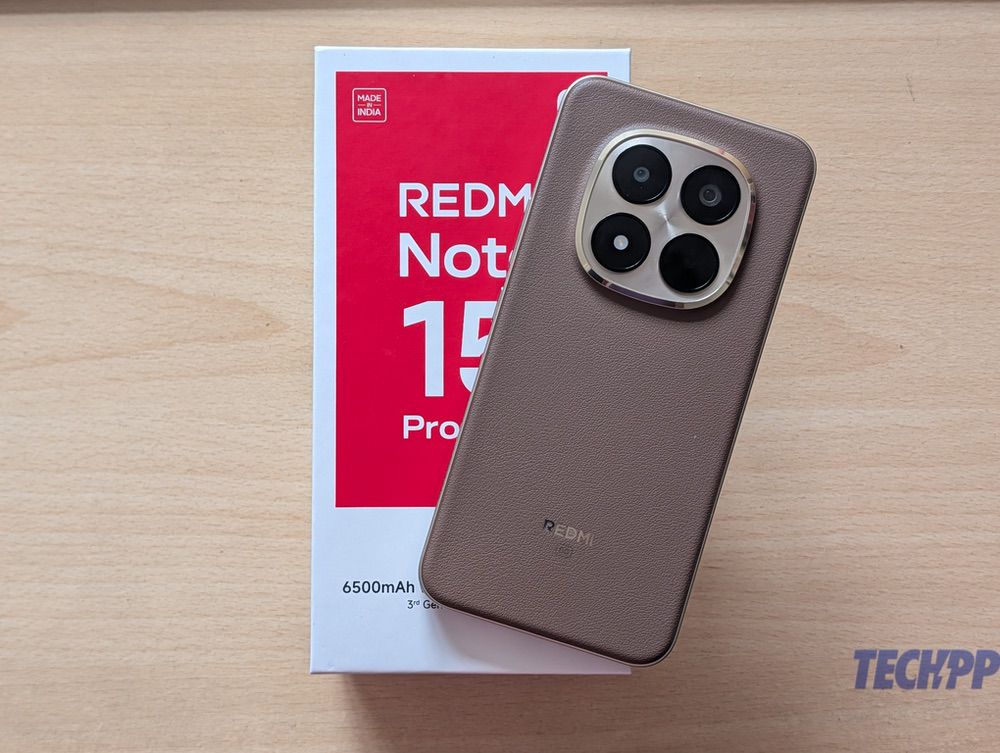
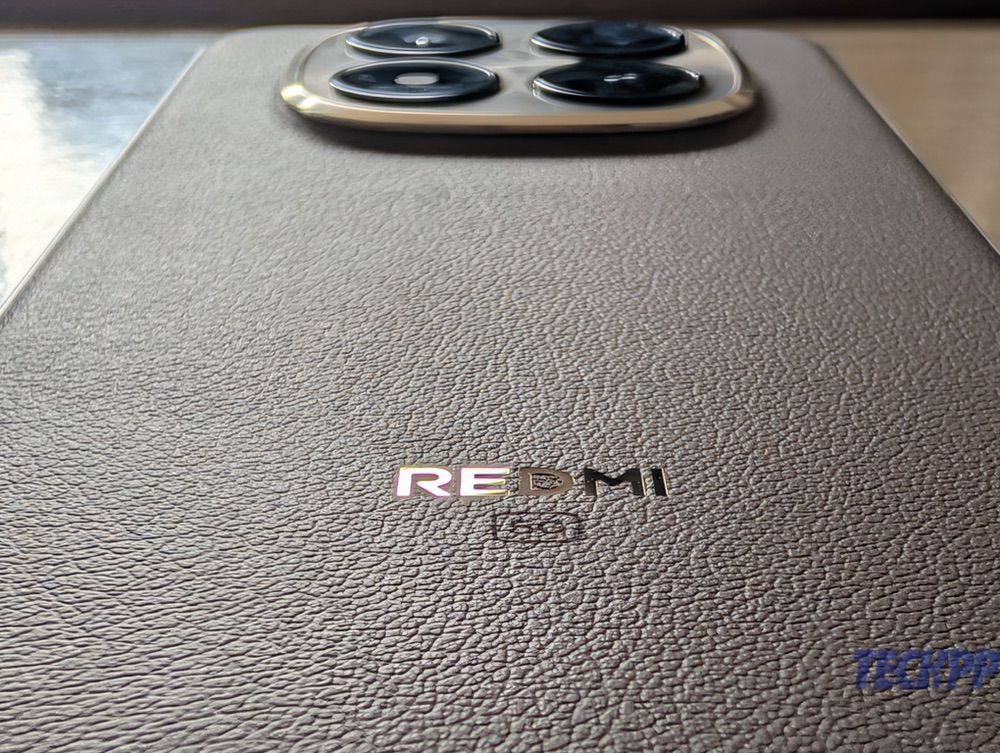
The Redmi 15 Pro+ looks very smart, with a relatively flat display, straight sides, and a back with a squarish-oval camera unit bang in the centre of its upper part (similar to the Redmi Note 14 Pro+). It is a regular design, but our unit attracted a lot of attention because of its color and texture. We got the Coffee Mocha shade, which was light brown and had a leather-like texture, which is very unusual these days. The straight sides are golden too, which gives the phone a very distinct look. The textured back means that the phone does not pick up scratches easily, making this one of the very few mid–segment phones that we felt comfortable using even without a cover. Other color options include the smoother finished Mirage Blue and Carbon Black, and while both are elegant (we favor the black), the Chocolate Mocha is the one that stands out, exuding premium looks.
The Note 15 Pro+ is a tall phone at 163.3 mm, taller than the 162.5 mm of the Note 14 Pro+ and only slightly shorter than the 163.4 mm of the iPhone 17 Pro Max. It is noticeably wide at 78.3 mm – the Note 14 Pro+ was 74.7 mm, and even the iPhone 17 Pro Max is 78 mm. Our Coffee Mocha version was 8.47 mm thin, which is slightly more than the 8.19 mm of other variants, but is still thinner than the 8.8 mm of the Note 14 Pro+ and the 8.75 mm of the iPhone 17 Pro Max. It is remarkably light for its size, weighing 208 grams, which is marginally more than the 205 grams of the Redmi Note 14 Pro+ and much less than the 233 grams of the iPhone 17 Pro Max. Although it is a big, wide phone, the Redmi Note 15 Pro+ is comfortable to hold and seems light for its size.
It is an incredibly tough one too, perhaps the toughest in its segment. Xiaomi describes it as ‘Titan tough,’ and it certainly walks that tough talk. The front is Gorilla Glass Victus 2, and the phone comes with IP66/68/69/69K protection. IP69K is the highest ingress protection rating, which means the phone will be a boss at keeping out dust and water, and will survive not just a fall in the water, but also high-temperature water jets. It also comes with a drop resistance of 2.5 meters, which is immensely reassuring to have, although we refrained from testing it on this parameter.
All in all, the Redmi Note 15 Pro+ is a big, wide, handsome phone that is designed to take on pretty much what everyday life throws at it, including dust and water. The Mirage Blue and Carbon Black, the Redmi Note 15 Pro+ look elegant, but our Coffee Mocha shade turned heads.
Redmi Note 15 Pro+ Specs and hardware: An upgrade from the Note 14 Pro+, but slightly out of sync with its price
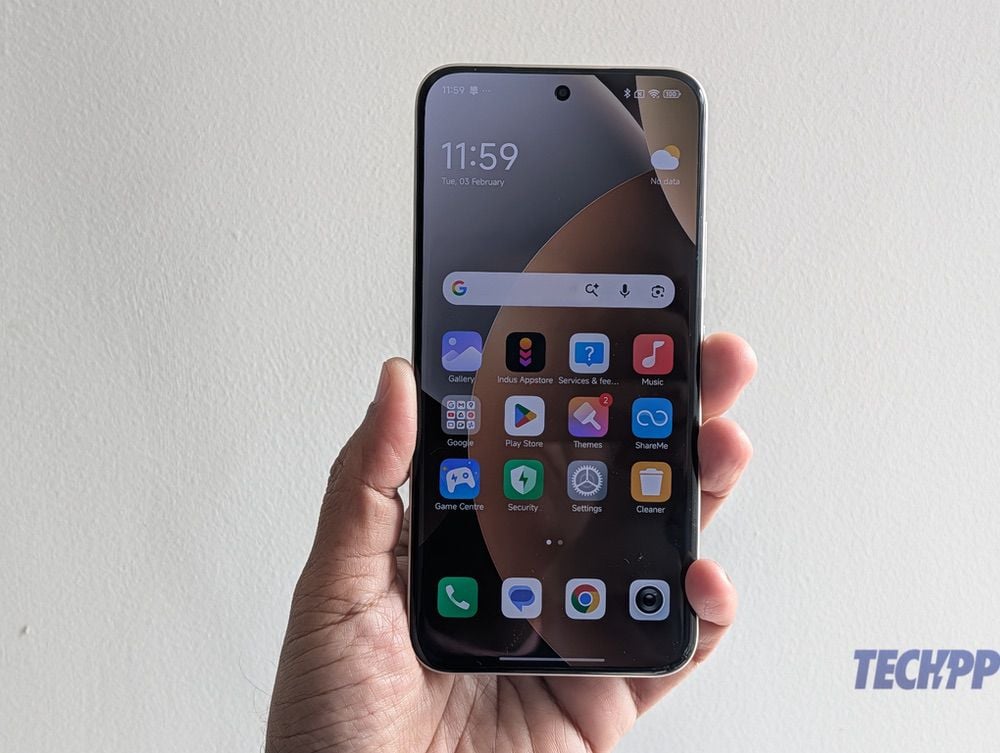
The Redmi Note 15 Pro+ is a significant upgrade to its predecessor, the Redmi Note 14 Pro+, in spec terms. The Note 15 Pro+ comes with a larger 6.83-inch AMOLED display as compared to the 6.67-inch one on the Note 14 Pro+. It has a 1.5K resolution (2772 x 1280 pixels), 120 Hz refresh rate, and a bigger peak brightness of 3200 nits and an impressive high brightness mode (HBM) of 1800 nits.
Powering the Redmi Note 15 Pro+ is the Qualcomm Snapdragon 7s Gen 4 chip, the successor of the Snapdragon 7s Gen 3 seen on the Note 14 Pro+. And this is perhaps the weakest point of the Redmi Note 15 Pro+. While a very good mid-segment chip, the Snapdragon 7s Gen 4 is a step behind the Snapdragon 8 and 8s series chips that are found in other devices in the Redmi Note 15 Pro+’s higher-than-before price range. This is combined with RAM and storage options of 8 GB/ 256 GB, 12 GB/ 256 GB, and 12 GB/ 512 GB. The base model now has twice as much storage as its predecessor, but the storage itself is UFS 2.2, which is adequate for routine use, but is well behind that found in its competitors at its price.
On the photography front, the Note 15 Pro+ comes with a new 200-megapixel HPE main sensor with OIS on its back, with an 8-megapixel ultrawide. While the main sensor is a huge step up from the 50-megapixel main camera on the Note 14 Pro+, there is no dedicated telephoto sensor (the Note 14 Pro+ had a 50-megapixel one). Xiaomi, however, claims that the new, larger main sensor delivers 4x lossless zoom, which more than compensates for the 2.5x zoom on the telephoto of its predecessor. The front camera has also been bumped up to 32 megapixels from 20 megapixels on the Note 14 Pro+.

In spite of being thinner, the Note 15 Pro+ actually comes with a higher capacity 6500 mAh battery as compared to the 6200 mAh one on the Note 14 Pro+. It also charges faster (100W as compared to 90W) and even charges other devices at 22.5 W, an ability its predecessor lacked. The battery is a Silicon Carbon one, and there is a 100W charger in the box. The phone not only comes with the usual connectivity options, but also brings support for eSIMs, which is rare at this price point (and even in some much more expensive phones). Another feature that is relatively rare in this segment is Xiaomi Offline Communication, which can let users make calls over a distance of one kilometer even when there is no network. Sound is handled by stereo speakers with support for Dolby Atmos and a 400 percent volume boost.
The phone runs on Android 15 out of the box with HyperOS 2 on top of it, which is a bit of a let-down, but we are told an update to Android 16 and HyperOS 3 is coming soon (incidentally, even the Chinese variants of the phone are on Android 15 and HyperOS 2 at the time of writing). Xiaomi has committed to four years of major OS updates and six years of security updates.
The Redmi Note 15 Pro+’s spec sheet is comfortably superior to its predecessor, but its chip, OS, and storage are a little out of sync with its new price point.
Redmi Note 15 Pro+ Cameras and Photography: All megapixels and very little AI make for a decent performance
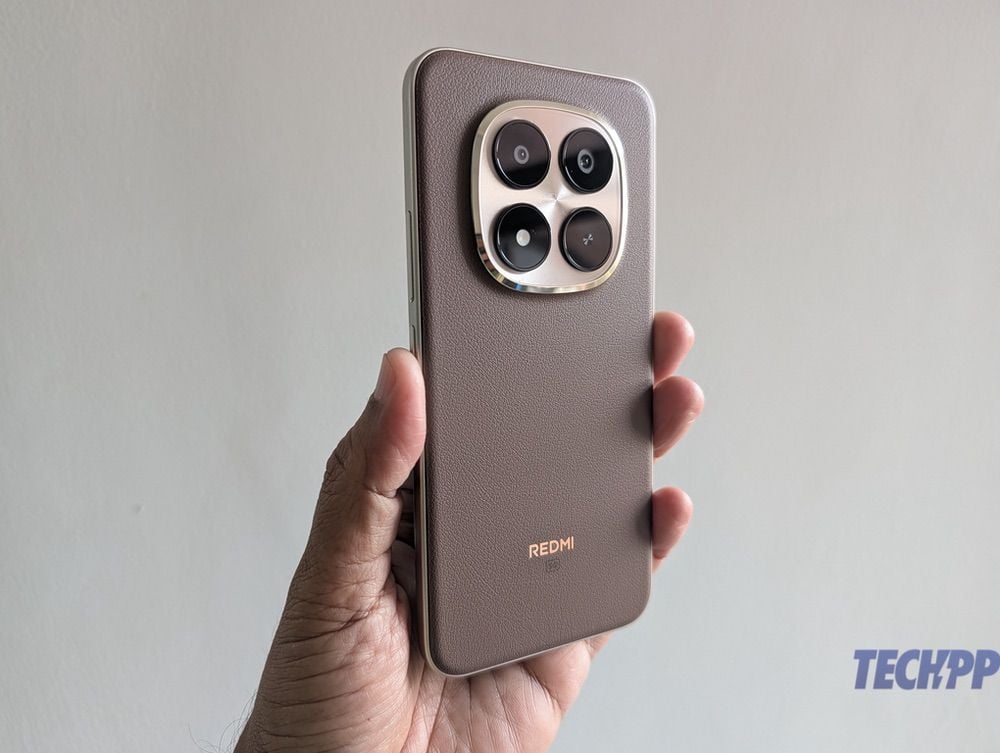
Photography on the Redmi Note 15 Pro+ is really all about the 200-megapixel main sensor. It takes some very good photographs in daylight conditions, and even turns in a decent performance in low light. The camera takes 12-megapixel snaps by default, although one can switch to a 200-megapixel shot too, using the UltraHD mode. Colors are generally bright, though not as bright as on Vivo/ iQOO/ Realme devices, and if the light conditions are good, one can get a fair amount of detail as well.
There are plenty of shooting options, and one can choose from five focal lengths and get up to 4x lossless zoom and digital zoom of up to 30x. Portrait photography comes with two focal lengths (23 mm and the classic 35 mm) and works well, although the bokeh can sometimes seem a little artificial. Unlike some of its competitors, Xiaomi seems to have opted not to use AI to enhance or sharpen digitally zoomed-in shots. As a result, while snaps with up to about 5x zoom are reasonably good, a lot of noise and pixellation start creeping in at higher zoom levels. We honestly would have liked more usable long zoom shoots, even though we were able to get a reasonable snap of the moon. The zoom is also handy for some macro, as the 4x gives reasonable close-ups. There is also Dynamic Shot, which is very similar to Apple’s Live Photos and captures a tiny video, even while showcasing the best shot in it, and a special Motion Capture mode for action shots, which is reasonably good, provided there is not too much movement in the frame.











There are a number of editing options, including some AI ones that let one erase elements, expand the image, add sky conditions and more, although you will have to log in to your Mi Account to use them, which is rather annoying. Video quality is good without being exceptional, and is good enough for social media. “Good enough for social media” is also how we would describe the selfie camera, which packs in the megapixels and can sometimes take great snaps (especially if you fiddle with the settings a little), but insists on smoothing out our skin and slightly brightening our complexion. The 8-megapixel ultrawide is best used to get a different perspective – it lacks detail, and images taken by it sometimes look a little faded.
The Redmi Note 15 Pro+ is mainly a one-camera phone, but that one camera is pretty good. We are just hoping they will add more AI muscle to it in the coming days. In terms of overall performance, we found the Note 15 Pro+ to be much better than the Note 14 Pro+, but if cameras are a major factor in your purchase, then there were devices with better snappers in its price range.
Redmi Note 15 Pro+ Performance: Big display, big sound, and a super everyday task manager
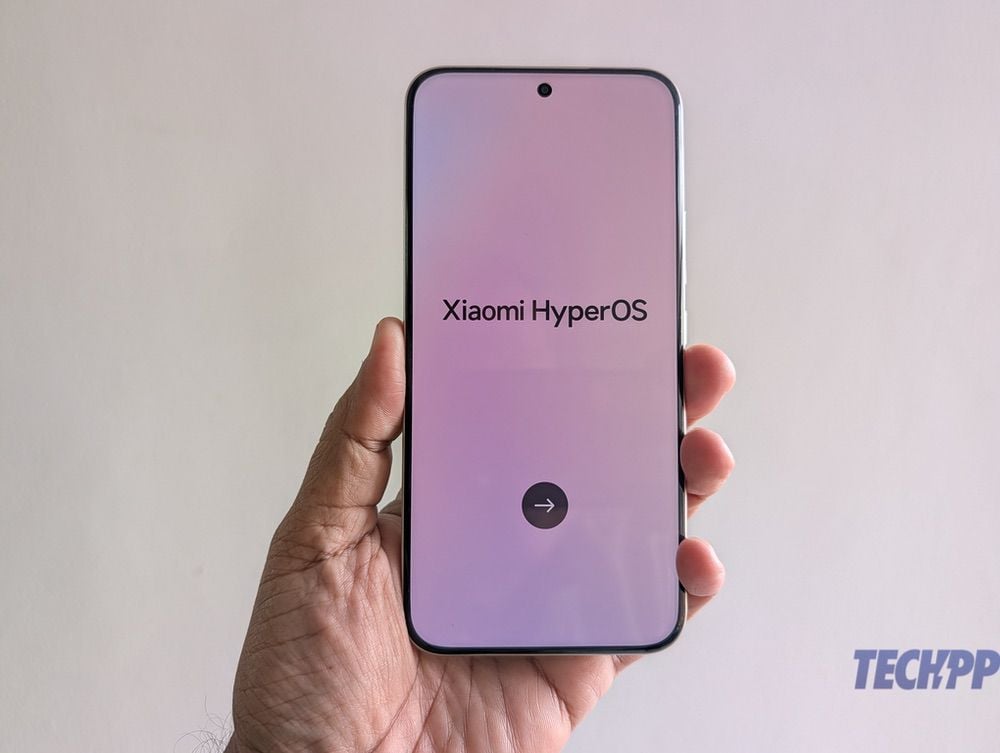
The Redmi Note 15 Pro+ is a classic Note in terms of performance, designed more for everyday tasks rather than a specific field. That huge, bright display, combined with very good stereo speakers, makes this one of the best smartphones in its segment for watching shows, films, and videos. The wide display also makes for a better reading experience. And in best Note tradition, the Redmi Note 15 Pro+ comfortably sails through regular day-to-day tasks. That display is terrific for browsing the Web, keeping track of social media, and reading and responding to emails and messages. Multi-tasking was smooth too – we were comfortably using half a dozen apps, and were able to switch between them easily without any lag.
When it comes to gaming, the Redmi Note 15 Pro+ is more for casual gamers than for serious ones. The multimedia muscle of the phone does make games look great on it, and casual titles like Alto’s Odyssey, Subway Surfer, and Candy Crush Saga zoom along smoothly on it, but if you are looking to play the likes of Call of Duty and Asphalt Racing, we would advise tweaking the graphics to lower levels, as lags tend to creep in. One can play these games and even a bit of Genshin Impact at lowered graphics settings, but the experience is not on par with that on budget flagships. Video editing can also be a little on the slower side, although
Although it comes with some bloatware (which can be uninstalled), HyperOS 2 runs very smoothly on the Redmi Note 15 Pro+. We did not face any lags or slowdowns, and AI features like AI writing, transcription, and interpretation, which are part of Xiaomi’s HyperAI, work very smoothly, while Google AI features like Gemini and Circle to Search work without a hitch. Call quality is superb, and the option to have an eSIM or to be able to use the phone even without a network connection (you will need a SIM and a Xiaomi account to make it work) is something that we are sure travellers will appreciate. The in-display fingerprint scanner works smoothly, and the phone never gets too warm.
All said and done, the Redmi Note 15 Pro+ is fantastic for top-notch everyday work. It is perfect for those who want a super reliable phone that gets them through the day without a hitch. But it does not deliver the kind of gaming experience that others in its price segment offer.
Redmi Note 15 Pro+ Battery and Charging: Note-ably better than most
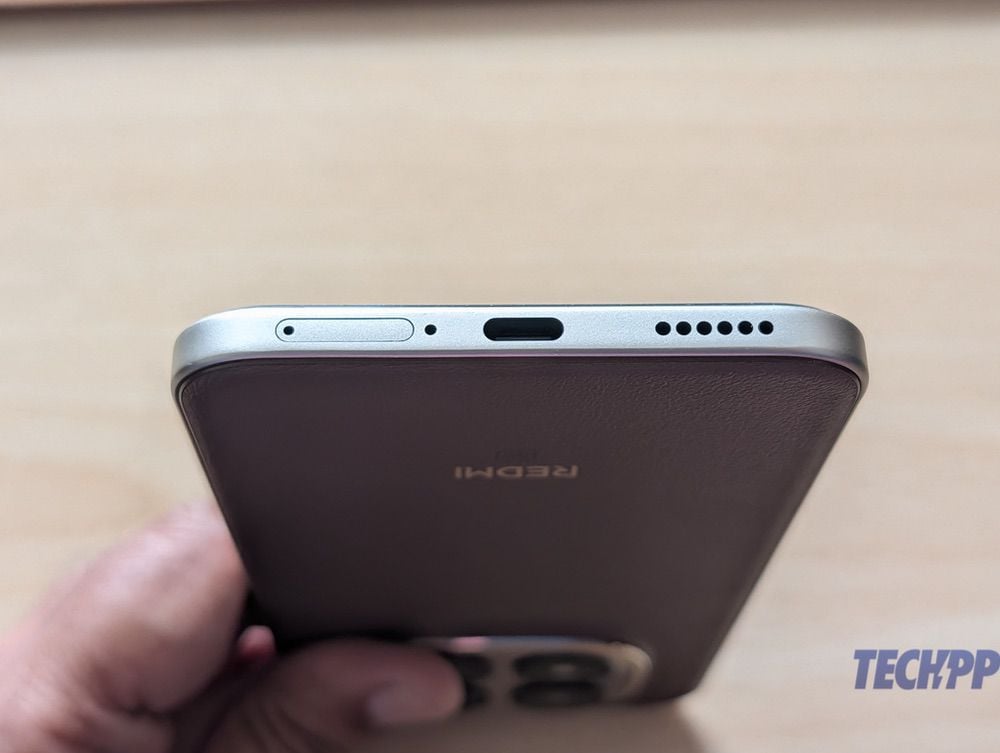
The Redmi Note 15 Pro+ comes with a 6500 mAh Silicon Carbon battery. While we have seen batteries with bigger mAh counts in this price segment, the Redmi Note 15 Pro+ is comfortably among the best smartphones in its segment in terms of battery life. We comfortably got through close to two days of normal usage, even when we used it to charge our TWS. What’s more, the 100W charger in the box gets the phone from empty to full in about 45-50 minutes, which is extremely impressive. And well, when the battery life is this good, one can often get through an entire day with just 50-60 per cent charge. This Redmi Note is an absolute battery champ, in terms of stamina as well as charging speed.
Redmi Note 15 Pro + Pricing: Note-ably high, high for a Note (even if it is a Pro+)

The Redmi Note 15 Pro+ is available in the following RAM and storage options at these prices:
- 8 GB/ 256 GB: Rs 37,999
- 12 GB/ 256 GB: Rs 39,999
- 12 GB/ 512 GB: Rs 43,999
That price is a significant increase from the starting price of Rs 30,999 of the Redmi Note 14 Pro+, even though the base model in that series was 8 GB/ 128 GB. Even the 8 GB/ 256 GB model of the Note 14 Pro+ was priced much lower at Rs 32,999. While there are considerable improvements in the Note 15 Pro+ over its predecessor, its price puts it closer to budget flagships than to the premium mid-segment.
Redmi Note 15 Pro+ Challengers and Competition: Never Settling with Made of Mad Pixels
Poco F7: the bro that’s a pain for this Pro
Rs 33,999
The troublesome Xiaomi family member for the Note, the F7, comes with a Snapdragon 8s Gen 4 chip and also brings a bigger battery to the table. Although its display and cameras are not in the same class as that of the Note, gaming fans will love that chip!
OnePlus Nord 5: Proper Note vibes from this Never Settler
Rs 33,999
Like the Note, the Nord 5 is also an all-rounder, and actually comes with a comparable display and battery, and while it cannot match the Note in the camera department, many will prefer its Snapdragon 8s Gen 3 chip to the one on the Note.
Google Pixel 9a: The clean Android and camera boss
Rs 39,999
It gets beaten by the Note on display and battery, but we can see people liking the Pixel 9a’s compact form factor, its clean and AI-infused interface, and of course, its famous cameras.
Redmi Note 15 Pro+ Review Verdict: One for those seeking solidity, not specs
On paper, the Redmi Note 15 Pro+ seems very out of place in its price segment. There are devices with better specs – most notably, better processors and cameras, and newer versions of Android – at comparable prices. But that is not to say that the Note 15 Pro+ has nothing going for it. It might not have the spec jazz of some of its competitors, but what it does bring to the table are typically Note-worthy strengths – a terrific build, a good display, very good sound, and superb battery life.
In that regard, it is so like the Redmi Note 15, which was launched earlier – more of a daily driver than a Formula One racer. But unlike the Redmi Note 15, the Redmi Note 15 Pro+ finds itself in a price segment where expectations are higher, and where older budget flagships are still going strong. At this point, the processor starts gaining importance, with many expecting a close to flagship chip. While that might change this year with increasing prices, it does not change the fact that the Redmi Note 15 Pro+’s Snapdragon 7s Gen 4 chip looks like a knife in a gunfight. The fact that it comes with an older version of Android out of the box and relatively slow UFS 2.2 storage does not help its cause.
And yet, there is a certain “no-nonsense” appeal about the Redmi Note 15 Pro+. The kind of appeal that the classic Nokia E series used to have – a perfect phone for those who want nothing more than a super reliable phone, and are not obsessed by image quality or gaming benchmarks. The Redmi Note 15 Pro+ is a Note that just works for those who mainly just work. Xiaomi’s challenge is going to be to convince people that Note-worthy features are worth paying a premium for, in a segment where camera and processor performance tend to be considered more important.
- Smart design (Coffee Mocha looks great)
- Excellent battery life
- Smooth general performance
- Very good display
- Superb speakers
- High IP rating makes it great for extreme conditions
- Android 15 and HyperOS 2 are dated
- Not the fastest processor in the segment
- Storage UFS 2.2
- No telephoto sensor, so-so ultrawide camera
| Design& Appearance |
|
| Performance |
|
| Camera |
|
| Software |
|
| Price |
|
|
SUMMARY
The most powerful Redmi Note yet with a tough design and strong performance, but at Rs 37,999 it enters budget flagship territory and faces competition. |
3.9
|

