

In Summary
- The Lava Blaze Duo 3 is one of the few phones in the market to come with two displays – one on the front (duh!) and one at the back.
- The Blaze Duo 3 comes with an AMOLED display on the back, which can show the time, notifications, camera controls, and can even let users take selfies with the rear camera.
- While its dual display does mark it out as a different phone, will it make the Lava Blaze Duo 3 a winner in a highly price-conscious and spec-conscious mid-segment?
Innovation in the smartphone world usually trickles down from the premium segment to the more affordable ones, so it is always a pleasant surprise to see it early in the mid-segment. And even more so from an Indian brand. In late 2024, Lava surprised us with the Blaze Duo, which came with two displays – a main one on the front and a secondary one on the back. While we had seen this feature before, it was largely a premium segment feature (and not very common there either), the Blaze Duo made it available on a phone that was priced below Rs 20,000.
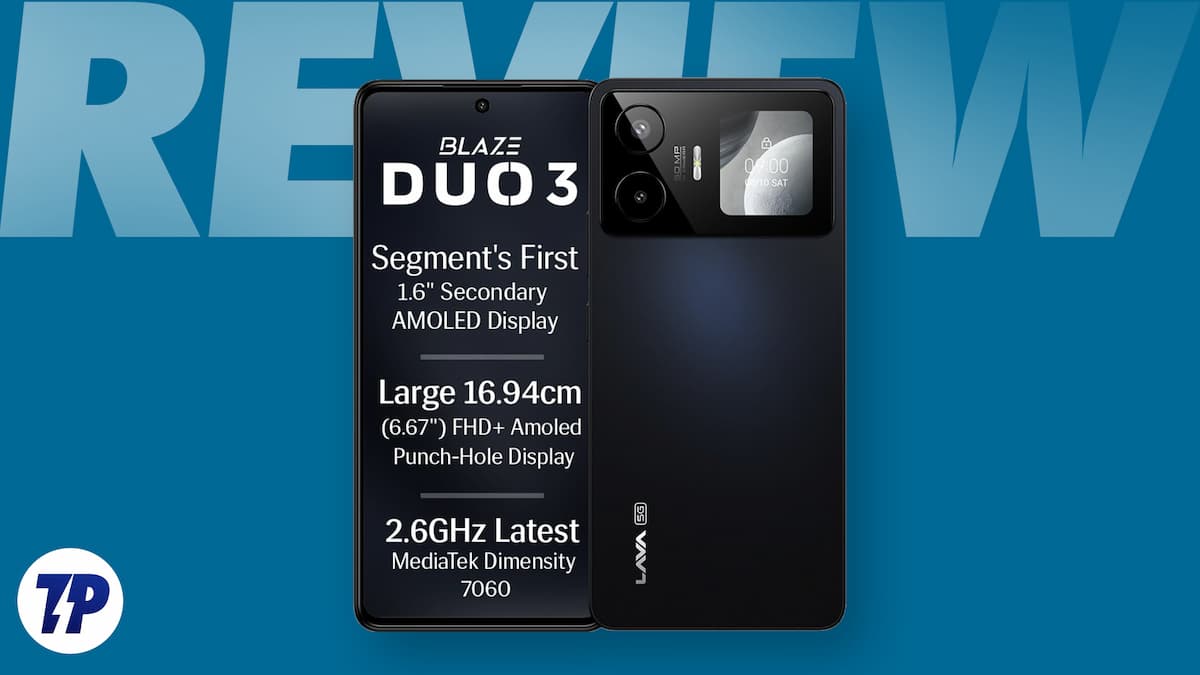
Lava has now released its successor, the Blaze Duo 3 (there was no Duo 2), which also follows a broadly the same spec and strategy blueprint, and more importantly, also brings two displays, at the same price as the original Blaze Duo, which is pretty impressive in this day and age of rising prices. But will the dual display at a mid-segment price be enough to make the Blaze Duo 3 leave a mark in a very competitive territory, or will it be seen as a party trick? Let’s find out:
Table of Contents
Lava Blaze Duo 3 Design: Seemingly routine? Look again!
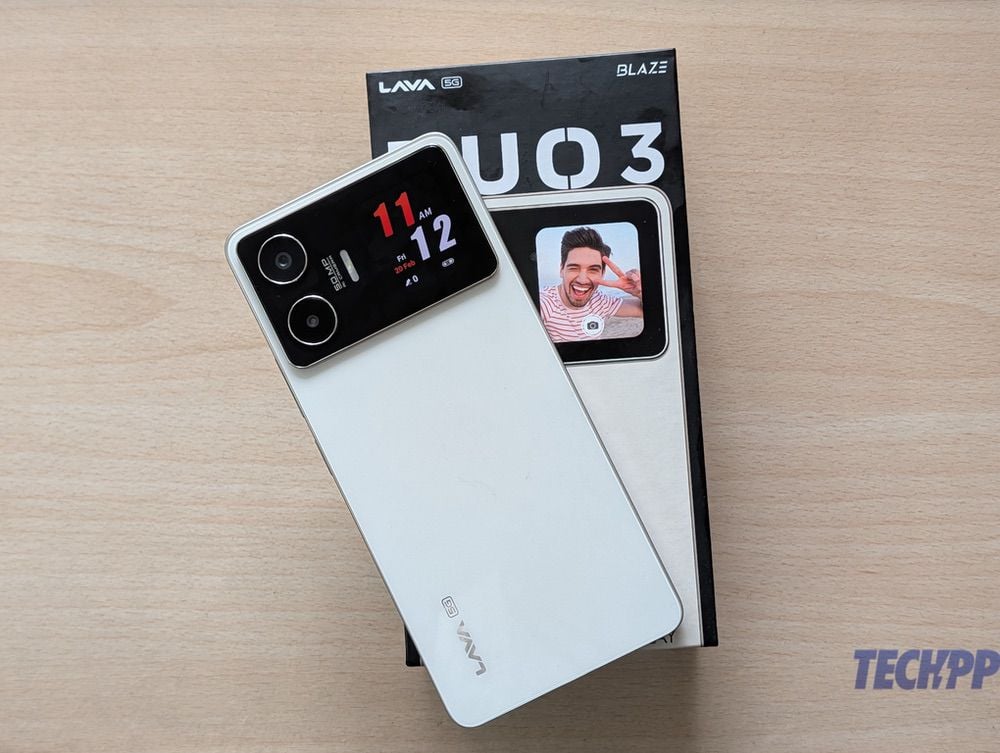
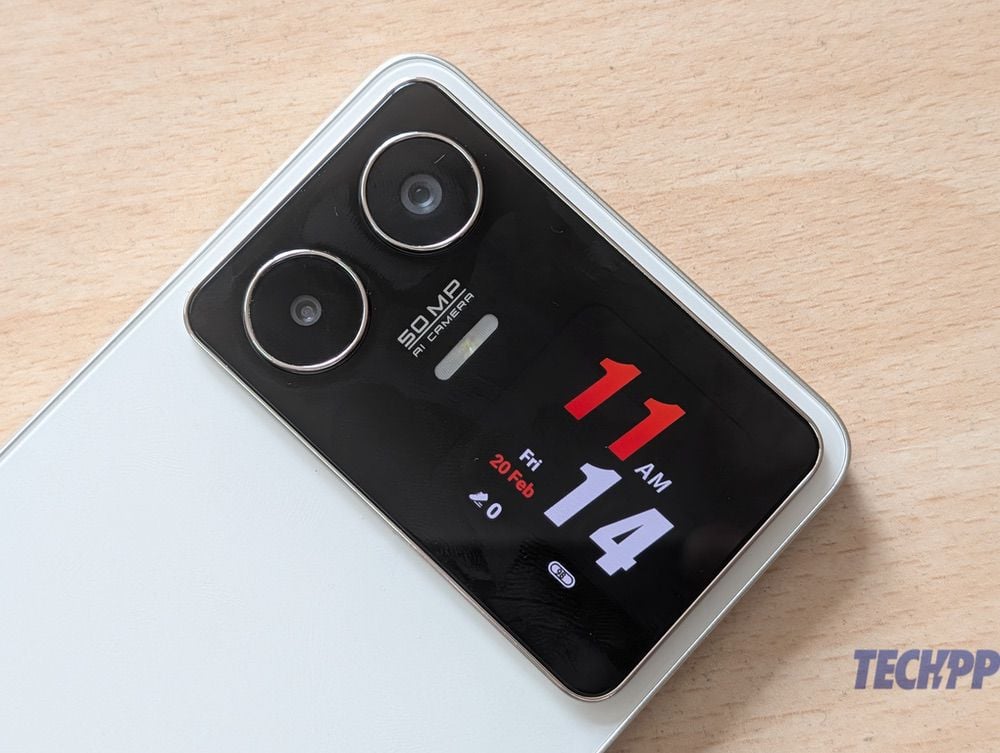
At first glance, the Blaze 3 Duo looks pretty routine. The front is a tall display surrounded by thin bezels, and a tiny dot notch that holds the camera. Keeping up with the trend, the sides are flat and metallic in shade. Even the back, at first sight, seems regular. It has a big, black, rectangular camera unit that takes up almost one third of the total area of the back – iPhone Pro feels, some would say. It has two camera lenses on the left side, and a pill-shaped flash is placed right next to it. The camera island also protrudes just a little and has a chrome outline. The rest of the back is plain, and there is a small Lava logo near the base on the left.
The right side is home to a volume rocker and a power/lock button, while the left side is bare. The base holds a speaker grille, a Type C port, and a SIM card slot, whereas the top has an IR blaster and another speaker grille.
So far, so normal, right? The key feature of the phone is hidden in plain sight. On the black rectangular camera unit. Double-tapping on the plain right side reveals a small but very interesting feature – a secondary AMOLED display. As this secondary display comes to life, the regular-looking Duo Blaze 3 starts looking pretty special. There is no phone like this one, not just in its segment but in the market right now.
The Blaze Duo 3 is quite tall at 163.2 mm, and even though it is 7.6 mm thin, which is slim by today’s standards, it is not a phone that can be used with a single hand comfortably. At 181 grams, however, it is light for its size. The phone comes with IP64 dust and water resistance, making it splash resistant. The phone is available in Moonlight Black and Imperial Gold, which actually looks more white than gold. Our unit was Imperial Gold, and it looked good with the secondary display switched off, and became a proper head turner when the secondary display sprang into life.
Lava Blaze Duo 3 Specs: Solid mid-segment specs
The specs of the Lava Blaze Duo 3 do not stray far away from its price segment. It is a mid-segment phone, and the spec sheet reflects the same. The phone brings a 6.67-inch full HD+ AMOLED display with a 120 Hz refresh rate. The secondary display is also an AMOLED one and measures 1.6 inches. The phone runs on MediaTek Dimensity 7060 paired with 6 GB RAM and 128 GB storage, which can be expanded to 1 TB using a microSD card. Although there is one RAM and storage variant, the RAM is LPDDR5, and the storage is UFS 3.1, which is impressive for the price segment. The phone comes with two cameras on the back – one is a 50 megapixel main sensor, while the other is an auxiliary lens (0.3 megapixels). On the front, there is an 8 megapixel sensor for selfies and video calls. Both cameras (front and back) are capable of capturing 2K video at 30fps.
The phone is powered by a 5,000 mAh battery with support for 33 W charging. It runs on Android 15, which is a bit of a bummer (but not uncommon at this price), but comes with a clean, clutter-free UI (no third-party apps) and can be upgraded to Android 16. The phone has stereo speakers and an in-display fingerprint scanner. It is a pretty solid, tick-all-boxes spec sheet.
Lava Blaze Duo 3 Performance: An everyday workhorse with a clean Android and a secondary display stars
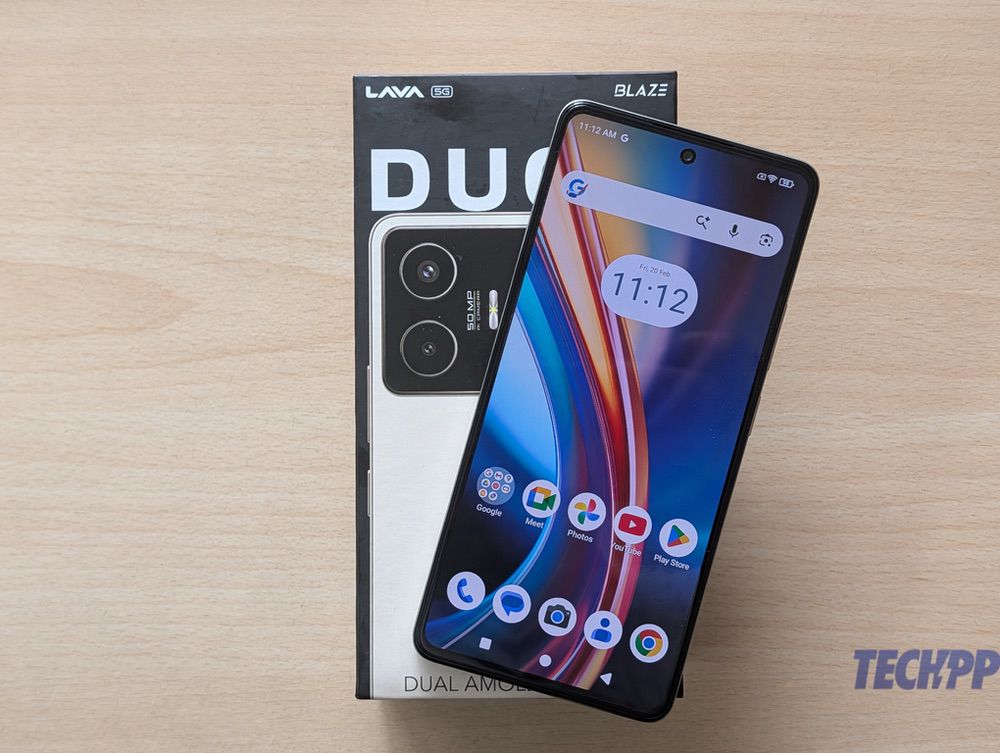
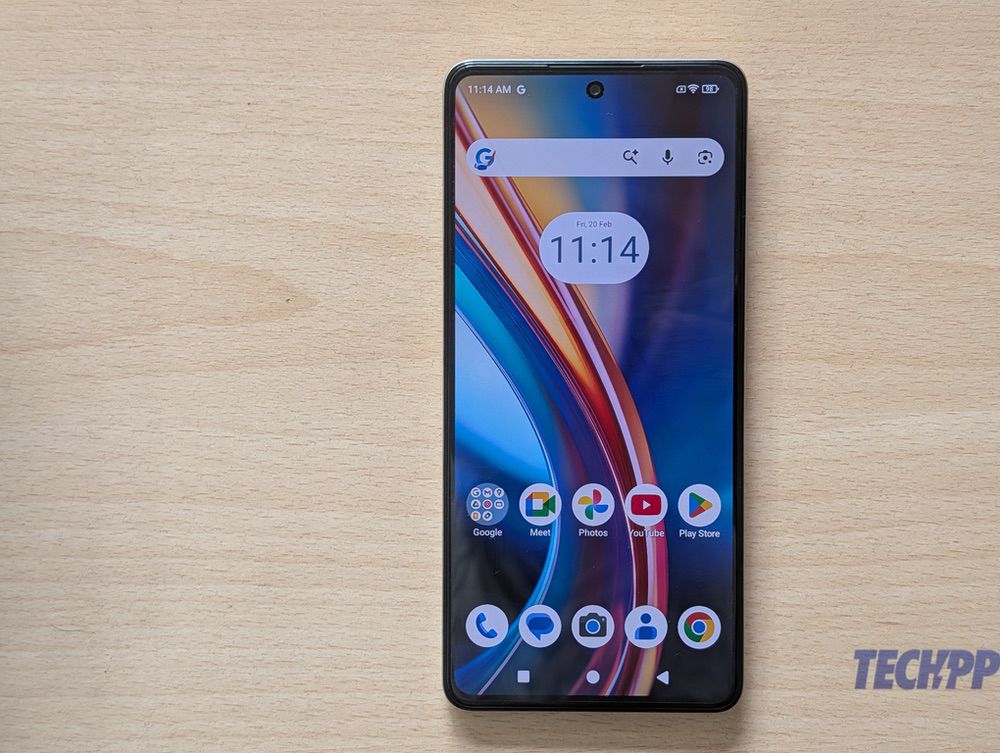
The Lava Blaze Duo 3 is the perfect everyday workhorse. The phone gets through chores like navigation, messaging, calls, social media scrolls, or even watching content (long-form or short videos). And while the specs are not good for high-end gaming or tasks like video-editing, its performance remains buttery smooth while playing casual games as well. If you are someone who likes killing boredom with sessions of Candy Crush or Subway Surfers, the phone will not let you down. Push it into high-end gaming or even hectic multitasking, however, and it starts to struggle and even heats up (though only mildly).
The main display produces vibrant, punchy colors, and the 120 Hz refresh rate makes scrolling a smooth affair. The stereo speakers are loud, although the detail is not the greatest. We were also surprised to see no 3.5 mm audio jack, so one has to get Type-C earphones (or use a Type-C adapter) or rely on Bluetooth earphones. The in-display fingerprint scanner works well, and so does the face unlock feature, although it is not secure. The call quality is good, and we have never faced any call drops.
The secondary display, hands down, is the prime feature of the Blaze Duo 3. It allows one to preview selfies taken with the main camera, control music, and check the time, basically serving as a small window you can double-tap on and access some basic features without actually picking up the phone. You can even see who’s calling and get message notifications – it is a little basic, but far more effective than some of the blinking LEDs we have seen on some other phone backs.
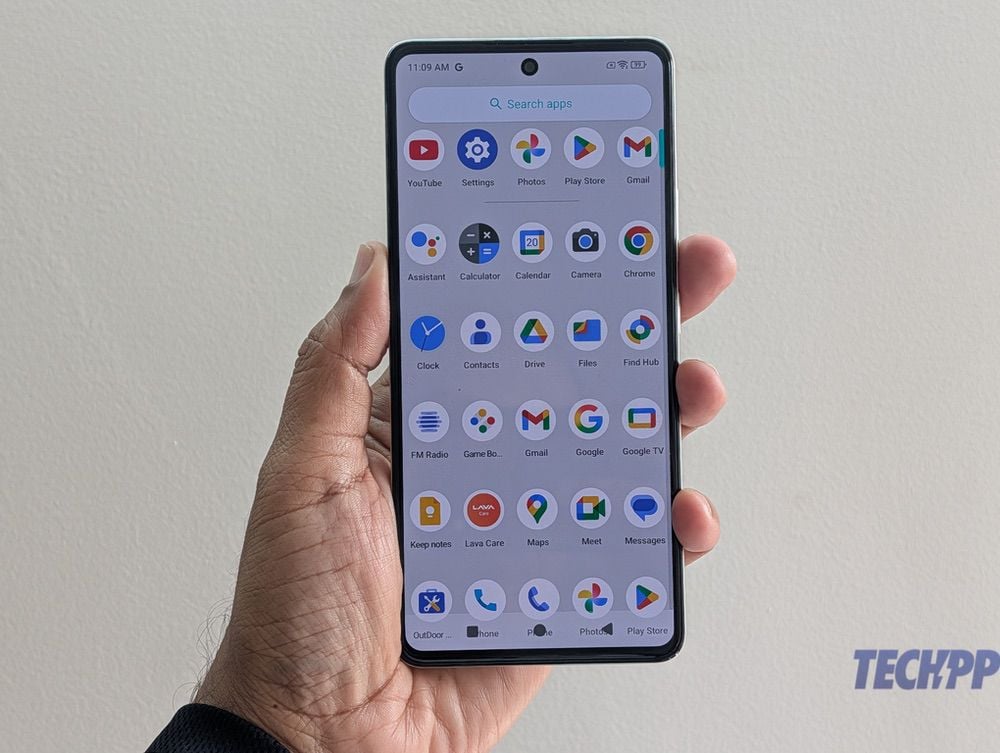
Its clean and nearly-stock Android interface makes the Lava Blaze Duo 3 an almost premium feeling phone in terms of interface. There is no bloatware, no annoying ads– just simple, clean Android, which is very refreshing, especially in this price segment. The phone comes with two years of software support and an assured update to Android 16, which is par for most of the price segment. Some might have expected more AI razzle-dazzle, but we just love the simple, user-friendly interface.
Lava Blaze Duo 3 Cameras: Steady rather than special
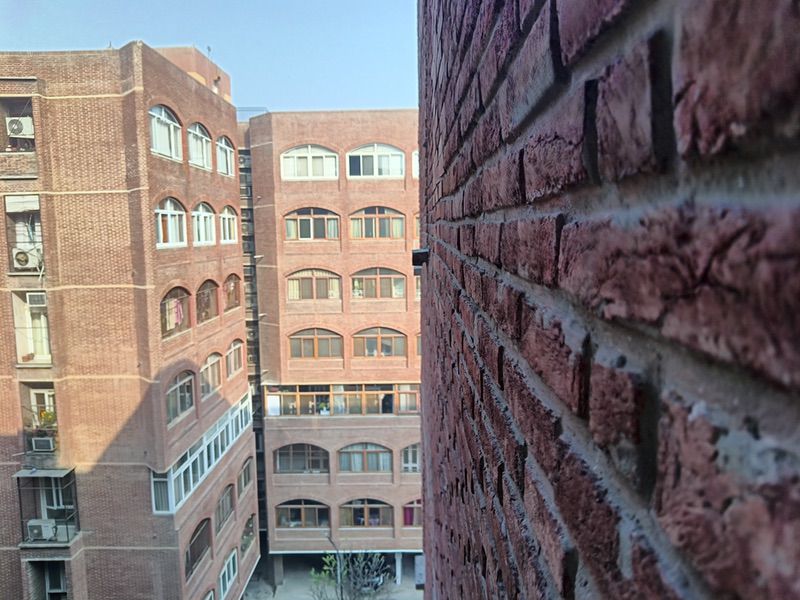
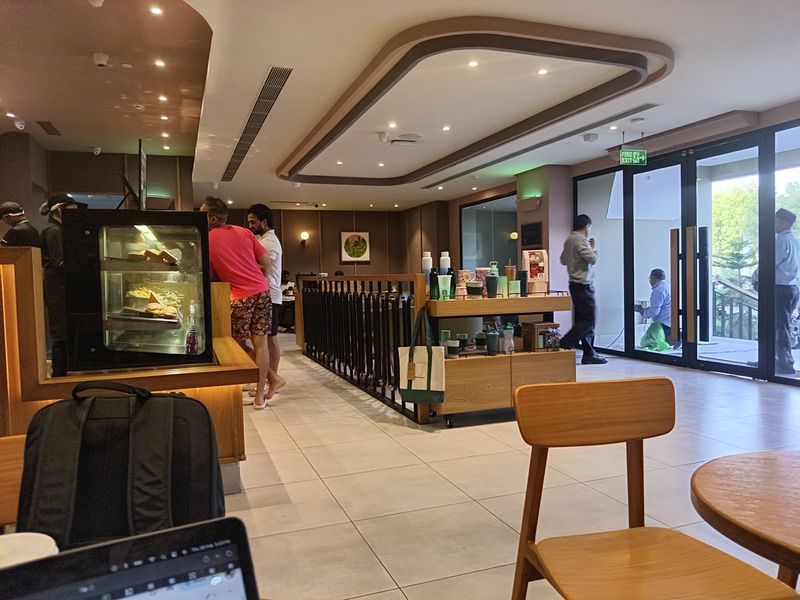
The main camera on the Blaze Duo 3 is decent. It takes good photos in well-lit conditions. The colors turn out punchy and vibrant, although we expected more details, and some might expect greater sharpness. The 2x zoom is handy. There are a number of shooting modes, with a film mode that gave our videos a very vintage tint, being our favorite. The portrait mode works well with impressive edge detection, although the bokeh can seem a bit artificial sometimes. As is common at this price, low-light performance is not the greatest. One can get a reasonably good snap, but only with a lot of effort.
The secondary display makes the Lava Blaze Duo 3 one of the best selfie snappers in its segment. The 8-megapixel front-facing camera is rather ordinary by comparison and is best left to handle video calls. After all, why would anyone lose out on much better colors and details from the main sensor for one’s selfies, especially when there is a beauty mode available for the main camera too? The videos are good enough for social media, but not much beyond that.










Lava Blaze Duo 3 Battery and UI: Good and refreshing for a change
The Lava Blaze Duo 3 comes with a 5000 mAh battery, which is capable of seeing a day of usage. That said, if you are a doom scroller or like binge watching content on your phone or into somewhat heavy multi-tasking – and also use that rear display heavily – you might have to plug your phone in before the day ends. The phone comes with 33W charging support and a 33W charger in the box. This is not the fastest around – a full charge from zero takes about 95-100 minutes – but given the battery life, this is not a deal breaker.
Lava Blaze Duo 3 Price: One variant, one price
The Lava Blaze Duo 3 comes in a single RAM and storage variant – 6 GB/ 128 GB – and is priced at Rs. 17,999. This is slightly higher than the Rs 16,999 at which the 6 GB/ 128 GB variant of the Lava Blaze Duo was launched, but given the way prices have been going up, we have no complaints. While there are a number of phones offering better specs and features at this price, the secondary display on the back of the phone makes it one of a kind in the segment.
Lava Blaze Duo 3 Competition and Challengers: No shortage of spec challengers
iQOO Z11x/ Vivo T5x: Big chip, big battery
Rs. 18,999 onwards
These spec twins come with a more powerful MediaTek Dimensity 7400 Turbo chip and a huge 7200 mAh battery, with 44 W charging support. They also come with Android 16 out of the box, but the LCD display might annoy some.
Samsung Galaxy A17: Typical solid Samsung
Rs. 18,290 onwards
This is one for those who want Android updates – there are six years of them. One also gets a brilliant 6.7-inch Super AMOLED FHD+ display, although with a 90 Hz refresh rate, a triple camera setup, and a 5,000 mAh battery. No charger in the box, though.
Poco M8: Steady performer
Rs. 16,699 onwards
The Poco M8 comes with a Snapdragon 6 Gen 3 processor, a 5,220 mAh battery with 45 W charging, and a 6.77-inch AMOLED display with a 120 Hz refresh rate. Four years of Android OS and 6 years of security updates top off this steady performer.
Lava Blaze Duo 3 Review Verdict: Nothing like anything
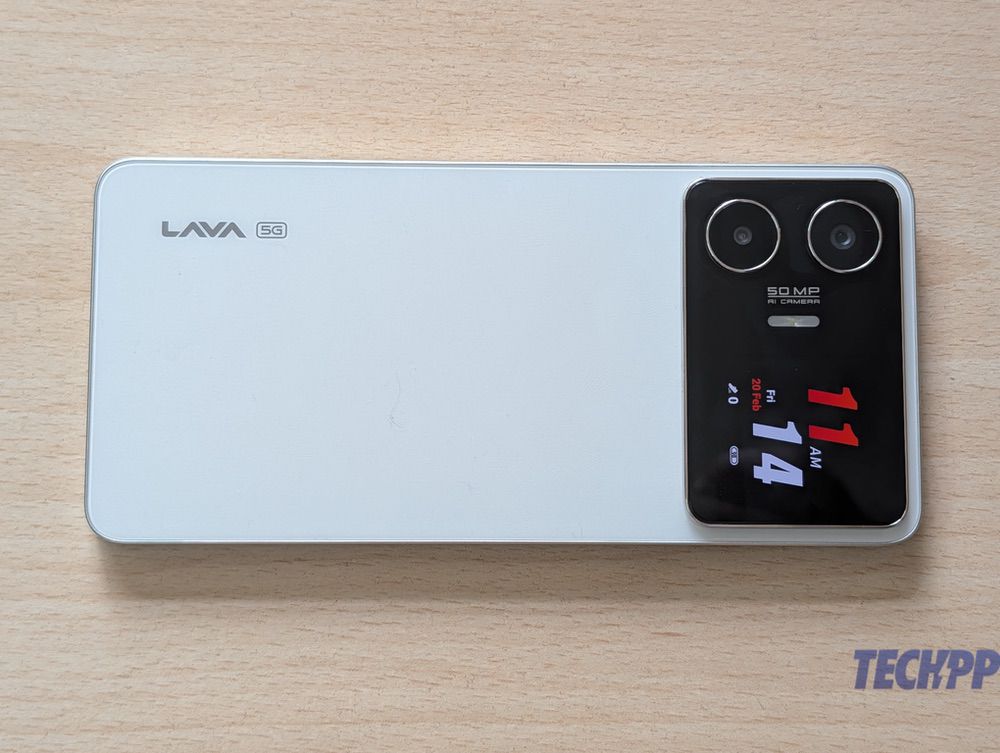
Thanks to the secondary display on the back, there is literally no phone like the Lava Blaze Duo 3 in the market. Not just in its own price segment but in segments much above it, too. It is a steady mid-segment performer, and while the competition might have better chips and bigger batteries, that secondary display gives the Blaze Duo 3 an edge not just in appearance and interface but also in selfies. Whether you should invest in it or not really depends on how much you value that secondary display. We think it is super cool, and this makes the Lava Blaze Duo 3 nothing like anything out there in its segment, and most others too. What more can we say?
- Good display
- Secondary display is very handy and very different
- Clean, near-stock Android UI
- Handles everyday tasks very well
- Rear camera takes selfies too
- The selfie sensor is not that great
- Not the largest or fastest charging battery in the segment
- Android 15 feels dated
| Looks |
|
| Performance |
|
| Cameras |
|
| Software |
|
| Price |
|
|
SUMMARY
The Lava Blaze Duo 3 stands out with its unique rear display. Solid mid-range performance, but buy it only if that cool second screen matters to you. |
3.9
|

