

In Summary
- Apple is set to launch a new range of iPhones on September 9, 9/9/2025.
- As always, there is a lot of speculation about the features, design, and pricing of the new iPhones. The rumour mills are whirring loud enough to generate electricity to solve global energy problems!
- While we will know what Apple is going to bring to our lives only on 9 September itself, here’s our wish list for nine things that we would love to see from the Cupertino giant on 9/9!
September is here, and so are the invites for Apple’s annual iPhone event. The Cupertino tech giant may have just sent out its invites, but the rumour mill has been working for months now. Rumors and leaks about what to expect have been constantly flooding our feeds. Size, design, models…it is all out there, Tim Cook only has to get on that stage on September 9 and put the stamp of approval on things.
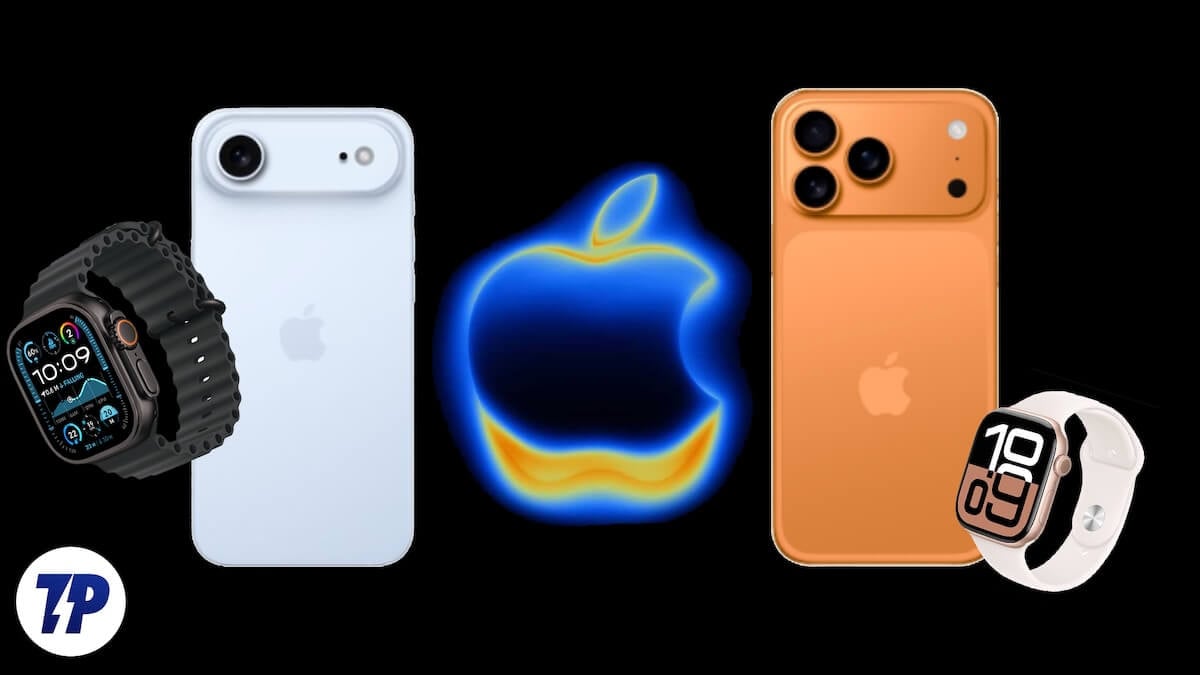
But while the world is busy talking about what might be coming, we are here with a wish list. Something we hope would love to see from Apple come its “Awe Dropping” event. Here are nine things we would love to see when Tim Cook and his colleagues take the stage on the ninth day of the ninth month of the year:
Table of Contents
Apple Intelligence… make this artificial intelligence real, please!
Apple is known for arriving late to new tech trend parties, but whenever the brand does arrive, it does with style and substance. That shockingly has not been the case with Apple Intelligence (Apple’s version of AI). While its biggest competitors, such as Google, Samsung, and Microsoft, have managed to take major AI leaps, moving (and removing) mountains with the help of AI, Apple has been lagging way behind. Apple promised AI smarts last year and promised that they would come soon. We are still waiting for the finished version, and what we have seen so far is not really on par with what the competition offers. We hope that changes come on 9 September.
Bring ProMotion technology to non-pro models…that would be SO “refresh”ing!
When a brand launches Pro and Plain models in the same series, there often is a substantial difference between the two, to justify the “Pro” moniker (and ahem, the price). That is true for the iPhone, too. While there are many differences between the Pro and plain models, to still offer a 60 Hz refresh rate on a nearly Rs. 80,000 (USD 799) smartphone seems diabolically unfair.
If you haven’t joined the dots yet, we are talking about the non-Pro iPhones that STILL come with a 60 Hz refresh rate. Apple introduced ProMotion technology on iPhones a few years ago, which is basically an adaptive refresh rate that allows the display to go as low as 1 Hz and all the way up to 120 Hz, depending on the content being viewed. However, this has been restricted to the iPhone Pro range. The plain iPhones and SEs still have 60 Hz refresh rate displays, which is plain weird in an age where phones with higher refresh rates are available at a quarter of their prices. We think it is high time Apple refreshed the displays of the plain iPhones by upping their refresh rates and giving them promotion to ProMotion.
Hit “Del” on that Camera Control button..or relocate it!

In 2024, Apple introduced a dedicated button for camera controls and placed it on the lower part of the right side of the iPhone 17 series. In best Apple tradition, there was some very cool tech and design involved in the button – it was a sapphire glass button that allowed users to manage/handle/ access all things cameras on the iPhone. You could launch the camera and access its controls by just pressing it.
NEWS FLASH – not only were we used to the regular, already simple interface, but we could also access the camera and controls by simply swiping left from the lockscreen. The new button was super cool tech, but only caused accidental touches and was rather counterintuitive. It also took away from the whole “cut back on the buttons” idea that we thought Apple was pursuing with the iPhone.
As if that were not enough, the button has a massive learning curve (we still are not used to using it instinctively), and the working of it is also not exactly free-flowing. We vote for its complete removal as its feature-value does not compare with the struggle it brings along. That said, it remains a relatively new feature, so if Apple does not want to give up on it and thinks it has potential, then the brand could relocate it to prevent accidental touches and improve its ease of use.
Air is fine, but stick to four models, please

When the iPhone first came into our lives, it was just one phone. Apple launched just a single iPhone at each of its launch events. Then Steve Jobs passed away, and suddenly there were two: Plain and Plus. Then came the Plain, Plus, and X. Now there are four – the Pro, Pro Max, Plain, and Plus.
Now, if the rumor mill is to be believed, Apple is gearing up to add another device to this already packed portfolio– an Air. As the name suggests, it will be the thinnest, most slim and light iPhone ever.’ We can already see Tim Cook talking about the beauty and the sleekness of the design on stage. Which is all wonderful, but if Apple is indeed going ahead with it, might we suggest something? Please take one of the existing models out of the running – the basic one, the Plus, or even one of the Pros.
Keep the iPhone model number at four, please. Getting spoiled for choices is great, but the number of iPhones being released at each launch is getting to a place where things are getting confusing, and there is often not much difference between devices in terms of actual features, which doesn’t really help the brand’s cause either. And please resist the temptation to come out with Air Pro, Air Plus, Air Mini, Air SE…
Give us a more affordable iPhone now… don’t release an SE later!
It has been happening every few years now. Apple launches its flagship series in September and then waits for a few months before launching an SE variant of the phone, which is usually more affordable and delightfully compact, although with relatively inferior specs. And while this refresh often boosts sales, it can make those who bought a new iPhone a few months ago feel a little silly. Apple loyalists queue up to get the latest iPhones, only to find themselves superseded by a lower-priced variant later on. We love the concept of the iPhone SE, but come on, Apple, offer it up front, along with the others, please. And yes, if you can STILL keep the number of iPhone models to four, that would be just dandy – an SE, a base, an Air, and a Pro sounds perfect. Now, if only…
Zoom in on the base model… give it a telephoto!

Ultrawide sensors are often seen as backup cameras for the main one in the non-Pro models of many flagships, and the iPhone is no different. Although the first dual camera set up on an iPhone (the iPhone 7 Plus) comprised a main sensor and a telephoto, the telephoto has in recent years been bumped up to the Pro range – the two dual camera iPhones (iPhone 16 and iPhone 16 Plus last year) came with a main sensor and an ultrawide sensor, with Apple reserving the telephoto lens for its Pro models.
Now, while ultrawide sensors do have utility, we would love it if Apple swapped it with a telephoto sensor on the non-Pros this year. This will not only help us get a bit closer to our subjects but will also deliver much better portrait photography. Of course, we are not complaining if Apple decides to add a telephoto to the plain models, giving them a three-camera lineup as well, but if it comes to a choice between telephoto and ultrawide, we hope Apple votes telephoto for the plain iPhones!
Faster charging, please…can we get into the 60W zone?
It has been more than half a decade since smartphone brands brought fast charging to the mainstream market, and yet the highest-selling phone series in the world continues to charge at a snail’s pace. The technology has been here for years, and yet even the latest and greatest iPhone, the iPhone 16 Pro Max, caps out on 25W charging support, even while the OnePlus 13, which comes at about half its price, charges four times as fast at 100W. We do understand initial concerns about heating issues associated with fast charging, but surely that time is past now.
So, we have just one question: Why? Why are Apple users prohibited from tasting the sweet nectar that is fast charging? Fast charging is not the Poisoned Apple (pun intended), and other brands offering it are certainly not the Evil Queen, nor is Apple Snow White. So this year, we would love to see Apple bring fast charging support to iPhones. We are not asking for much. We would be happy with something as basic as 60W, but it would be borderline blasphemous if we saw a USD 799 (or worse, a USD 1799) phone that does everything else at stunning speed, but charges at 25W.
So come on, Apple. You charge us a lot for those iPhones, and charge them fast, too, this time. Start with wired, and then we can move to boosting wireless charging speeds. Speaking of wireless charging…next on the wish list.
Put our iPhones in ‘charge’ of our AirPods…Reverse wireless charging, please!
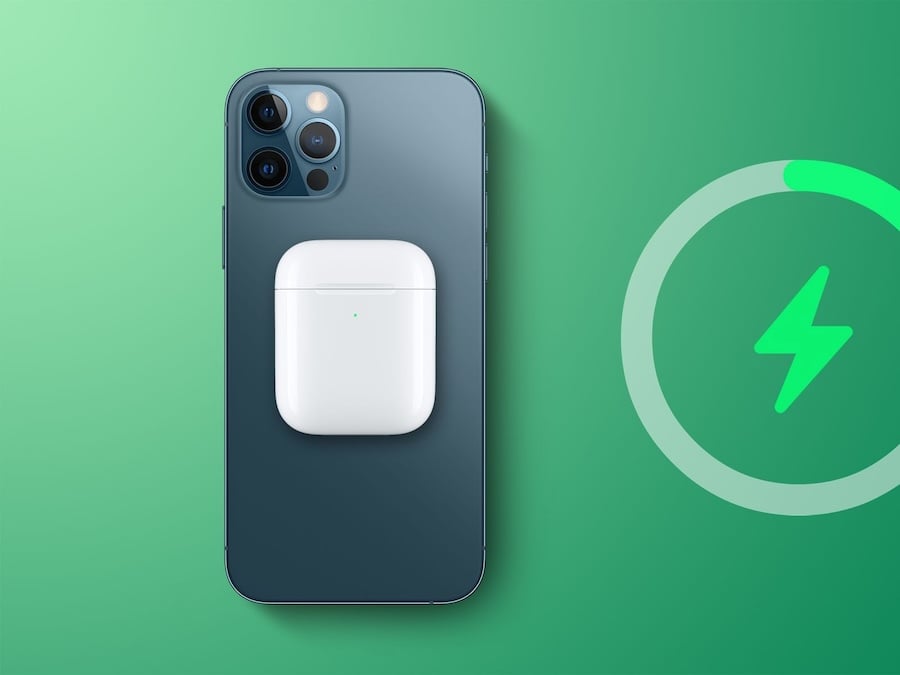
They have supported wireless charging (albeit at relatively slow speeds), but iPhones lack reverse wireless charging. In simple terms, we cannot place a device that supports wireless charging on an iPhone and charge it, although the irony is that the opposite of this is often possible. This is another feature that has been around for a while now and is actually very handy at those moments when you do not have a wire or a charging point. With so many gadgets that require charging, Apple has the power to make our lives easier and bring reverse wireless charging to iPhones. This way, we would at least be able to charge our AirPods with the iPhone itself.
The future is rosy…but please announce features that work straight away on the phone, and not ‘in the future’
A new habit which Apple seems to have acquired is hyping and introducing a feature but not delivering it out of the box on the new iPhones, leaving them for “future downloads”. New Siri and Visual Intelligence ChatGPT integration were among a few features that were hyped during the launch of the iPhone 16 series, but were not seen on devices. In fact, a number of features that are hyped at keynotes come to iPhones much later. This seems a little unfair as consumers end up paying the full price of the device up front, paying partly for promised features that have not yet arrived. It would be nice if, in 2025, the first purchasers of an iPhone got a device that has every feature that was showcased at its launch. We have no problem with new features being added to a device later (Google and Nothing are becoming masters of this art), but let those be pleasant surprises rather than “oh, it is finally here.”

