

Quick Answer
India’s newest Apple apps are proving that great software knows when to step back. From Katha Room’s screen-free storytelling and Mood Dial’s effortless music matching to Feelly’s private mood journaling, District’s smart event assistance, and LookAway’s gentle break reminders, these apps use Apple technologies like Foundation Models, HealthKit, and Liquid Glass to make technology feel more human, intuitive, and unobtrusive.
Apple’s Developer Center in Bengaluru has quietly become one of the most productive rooms in India’s tech story. It’s not a startup accelerator in the traditional sense. There are no pitch decks, no investors, no term sheets. What it is, instead, is a room where developers who care deeply about their craft sit across from Apple engineers and get better at what they do.
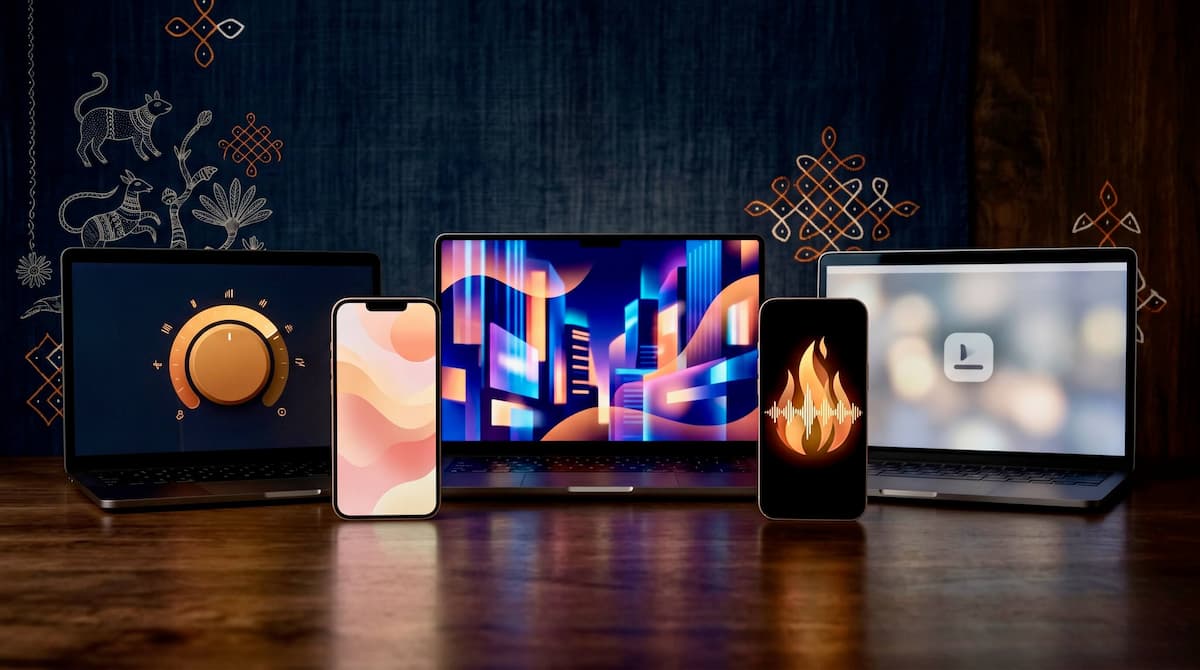
With WWDC 2026 as the backdrop, I met five developers who have been working with the Apple Developer Center. Their apps span mood-driven music, emotional journaling, going-out discovery, children’s audio stories, and screen-break wellness. On the surface, these are five very different products. But spend enough time talking to each developer, and a common thread emerges: they all built apps that understand how people feel, and they have all leaned into Apple’s newest platforms — Foundation Models, Liquid Glass, HealthKit — to make those ideas come to life.
Table of Contents
Katha Room: A Billion Stories Untold
Raksha Rao and Krishnaprasad Jagadish are no strangers to the Apple Developer Center. Since connecting with Apple India, they have pivoted to a problem that is deeply personal to them as parents: the gap between the rich oral storytelling tradition Indian children grew up with and the screen-heavy, YouTube-led content diet that today’s kids consume.
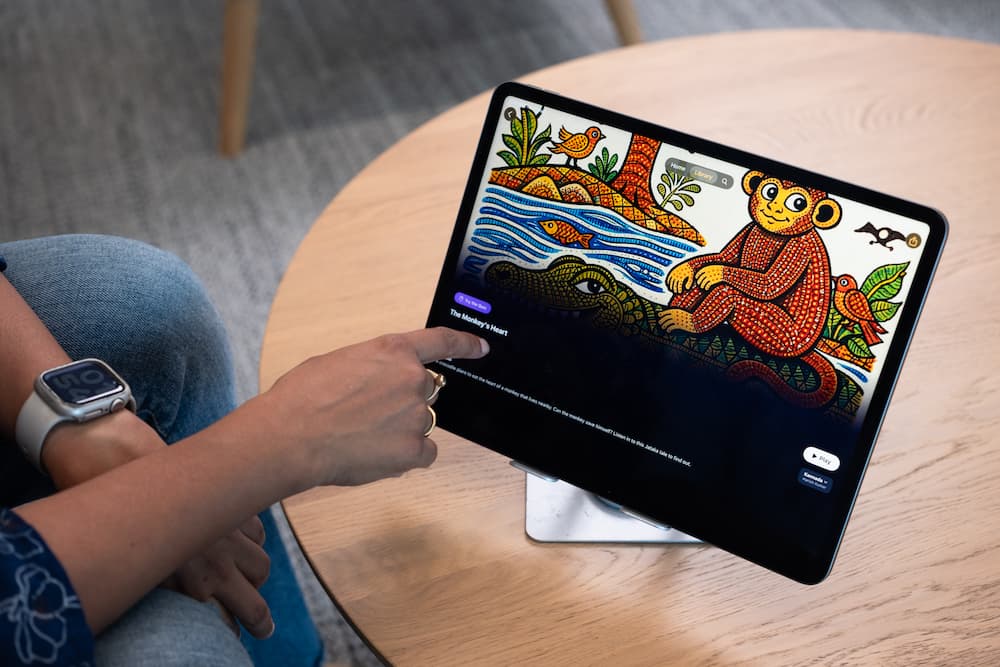
Katha Room is their answer. An audio-only storytelling app for children aged 3 to 10, curated from Indian mythology, epics, folklore, history, and freedom fighter stories. The “audio only” choice is deliberate, almost philosophical. “Once you show a visual, your imagination is bound to that visual,” says Raksha. “We want kids to imagine the world the way they want to, not the way a TV show tells them to.” The narrations are done by real people, recorded in-house, including grandmothers whose voices genuinely sound like someone sitting beside you telling a story. Not AI-generated voice. The real thing.
Katha Room also earned recognition beyond its user base this year. The app was named a finalist at the Apple Design Awards 2026, Apple’s highest honor for design, innovation, and technical excellence.
The library now has 100+ stories across Kannada, Tamil, Hindi, Sanskrit, and English, with a partnership with Samskrita Bharati for a curated set of Sanskrit stories. Each story has distinctive artwork inspired by Gond art from Madhya Pradesh, intricate small patterns that give younger children who cannot read a visual identity for each story. The team first created these manually on iPads and has since built custom image generation pipelines to maintain the aesthetic at scale.
On the technology side, Krishna says the goal is always for technology to stay invisible. The biggest feature addition has been natural language search powered by Foundation Models, so a parent who wants to talk to their daughter about friendship just types “friendship” and the app surfaces every story that matches, not just by title but by tags, descriptions, and metadata.
The app is also fully iPadOS 26 and Liquid Glass compliant, supports CarPlay, HomePod, and Apple TV casting, and includes parental controls so children cannot access subscription settings. Coming next are Indian lullabies to replace the white noise many families use at bedtime with something rooted in Indian culture. The team’s vision is simply stated: “A billion stories untold.” They see Katha Room not just as an Indian app but as a product from India to the world, the way Crunchyroll brought anime global.
Mood Dial: The Radio, Reimagined
Mohit Nadwani has been building apps since 2018, and Mood Dial is his latest. The concept is deceptively simple: a dial on your screen, six moods around it. Turn it to the mood you want, and the app plays music that matches, completely personalized to your listening history. No playlist hunting, no skipping through songs you don’t feel like hearing right now.
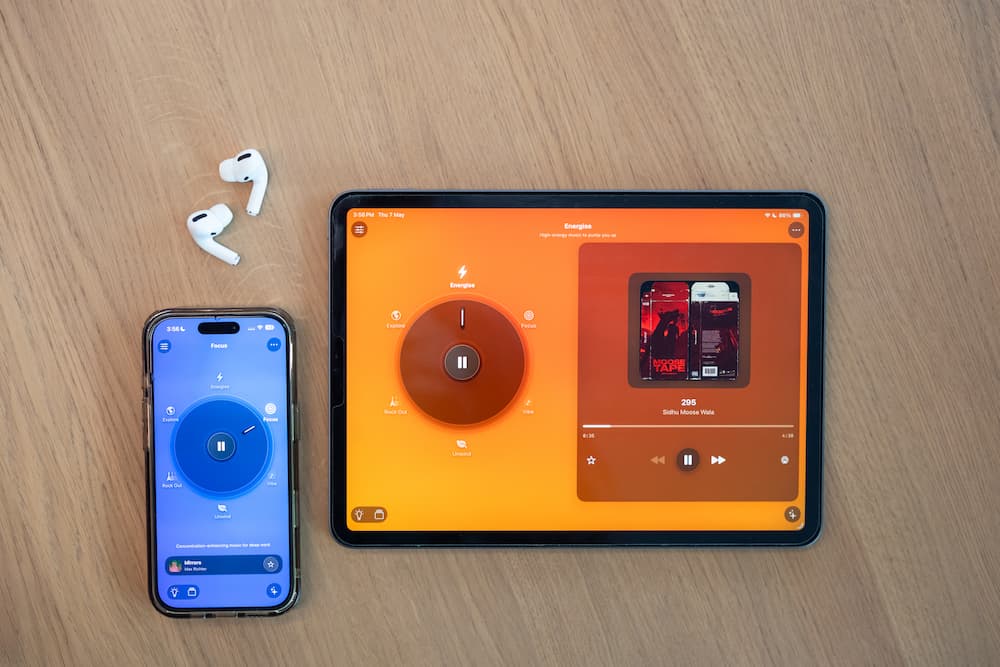
Mohit traces the idea back to a specific frustration. Radio was easy — someone else chose the music, and you just listened. Streaming gave you control but added so much friction that most people end up opening the app, scrolling through playlists they don’t want, and eventually closing it. “Radio gave you ease. Streaming gave you personalization but added a lot of friction,” he says. “I wanted to build something with the ease of radio and the personalization of streaming.”
What makes Mood Dial technically interesting is how deep it goes under the hood. The app uses MusicKit, HealthKit, and Apple’s Foundation Models framework. The HealthKit integration is optional but clever. If your heart rate has been high because you just exercised, the app will suggest the “Unwind” mood to help you come down. Foundation Models powers the “Ask Mood” feature, where you simply describe how you feel — “I want to focus” or “Hindi music from the 90s” — and the app either picks the right mood from your dial or creates a brand new custom one on the spot. All processing happens on-device, no login required, and Mohit insists no data ever leaves the device. The eight months he spent building his own mapping algorithm to work around the Apple Music API’s limitations is why the personalization actually feels personal.
The app also works on iPhone, iPad, and CarPlay, which is a natural fit for a product built around how music travels through your day.
Download Mood Dial for Apple Music
Feelly: A Mood Journal Built by a Mum, for Mums
Subbulakshmi Balamuthu’s path to the App Store is not your typical developer story. From Coimbatore, she started as a part-time lecturer, went on to complete her Master’s, then relocated to the US after marriage, where her husband introduced her to Apple devices. That sparked an interest in iOS development that led to her first app — a task reminder — before motherhood pulled her away entirely.
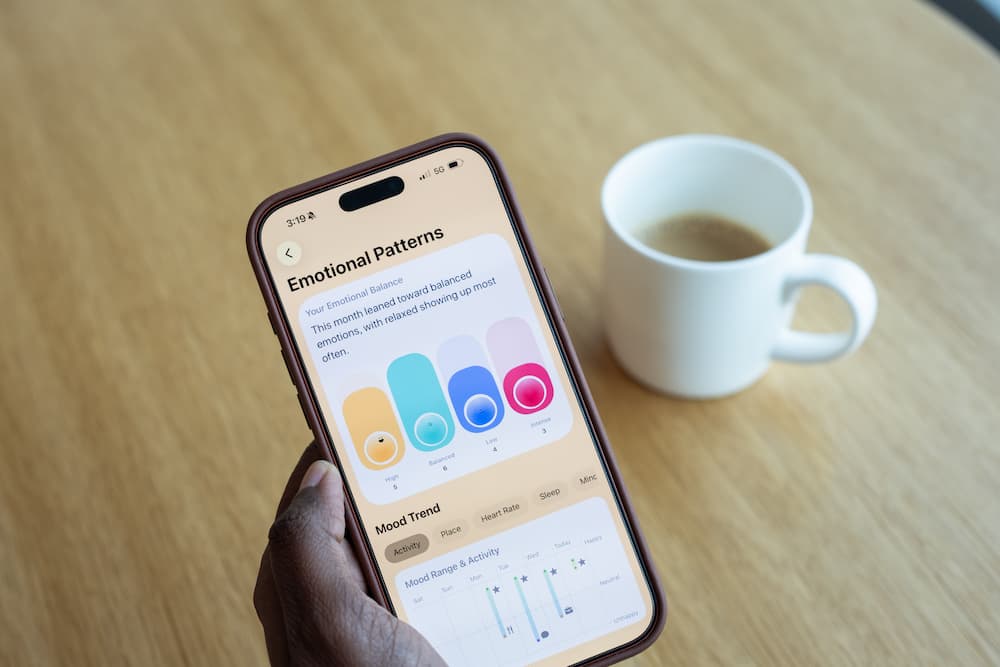
When she came back to building apps, she came back with a very specific problem to solve: the emotional chaos of being a mother. “As a mum, I go through a lot of emotions daily. But as life gets busier, I just forget how I feel and how I react towards things,” she says. Feelly, her mood and thought journaling app, is her answer to that gap.
The app’s approach to reflection is refreshingly low-friction. You slide to reflect, then either type or speak your thoughts, and Feelly transcribes and stores everything on your personal iCloud, with no ads, no tracking, and no servers involved. What is more interesting is what happens in the background: Feelly automatically pulls in sleep data, workout data, heart rate, and mindfulness from Apple Health, then shows you how your mood correlates with these physiological signals over time. A friend of Subbulakshmi’s was told by her doctor that her mood was affecting her heart rate rhythm, and was amazed to find that Feelly already connected those dots.
The app also uses Apple Intelligence to generate personalized mood stories based on your current state, small narrative nudges that shift your focus, all entirely on-device. Subbulakshmi is working on an Apple Watch companion, so you can do a quick voice check-in on the go without reaching for your phone. Feelly is a quiet, private, thoughtful app, very much a reflection of the person who built it.
District: Going Out at Scale
If Mood Dial and Feelly are intimate, personal apps built by solo developers, District operates at the other end of the spectrum entirely. Yash Shah is an engineering manager at District, Eternal’s (Zomato’s parent company) going-out super-app, which launched in November 2024 and has since crossed 10.7 million downloads with a 4.8-star rating from over 110,000 reviews. The app brings together dining reservations, movie bookings, live events, sports, workshops, and more into one native iOS experience.
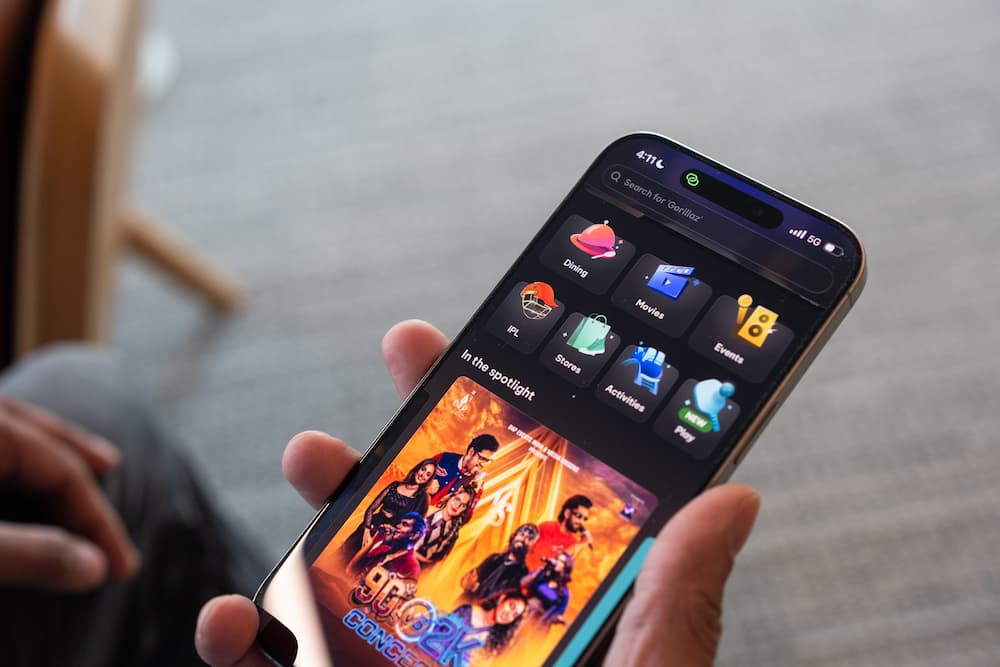
What makes District worth talking about in the context of WWDC 2026 is how all-in the team went on iOS 26. Every year, the team hosts an internal WWDC watch party where engineers come up with product ideas based on newly announced features. When Liquid Glass was announced at WWDC 2025, they moved fast. “District is a content-heavy app, and Liquid Glass made the app content-first,” says Yash. “The interface was adapting based on the content, not the other way around.” Before iOS 26, the UI was containerized — a header container, a content container, everything boxed in. After Liquid Glass, content flows through the interface, headers adjust to what’s behind them, and the whole experience feels immersive rather than just functional. They shipped it within three months.
The Foundation Models integration is equally smart. Concerts and large events typically come with lengthy guides that nobody reads. District now feeds those guides to the on-device Foundation Models, letting users ask questions in plain English — “How do I reach the venue?” — and get instant answers without internet. Yash is candid that Foundation Models is still limited, but for their specific use case, offline queries at events where the network is terrible, it is perfect. The team has also added automatic Apple Wallet pass addition when you book tickets, Live Activities for upcoming bookings on Dynamic Island, GPS-based offline navigation within venues, and an Instagram share extension that uses an LLM to parse reels and save locations directly to your District hotlist, without ever leaving Instagram.
LookAway: The Friend in Your Menu Bar
Kushagra Agarwal has been building apps for 10 years, starting at 23. His first app, Koon, was a color identifier he built because he discovered he was colour-blind and needed a way to point his iPhone at objects to identify colors. That story eventually brought him to Apple India’s attention and got him featured at WWDC. His second app, Unwind, helped people manage stress through breathing exercises. His third, and the one he has spent the last three years on, is LookAway, a macOS app that reminds you to take screen breaks without ruining your flow.
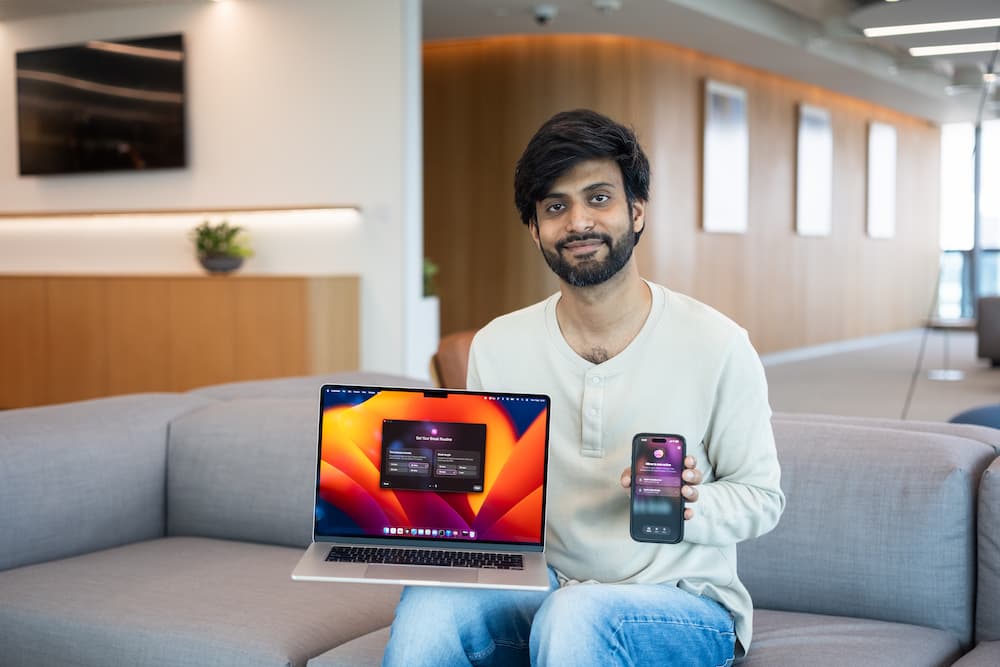
The origin is personal and relatable. Working from home, Kushagra found himself sitting for hours without breaks, ending each day with tired eyes, a stiff back, and a sense of having been ground down. He tried existing break reminder apps but found them maddening. They would fire a reminder mid-meeting or mid-sentence, with no concept of context. LookAway was built from scratch to be different. It detects when you are on a call (via CoreAudio), when you are watching a video (via system signals that don’t require private APIs), when a calendar event is running, when you are gaming, and pauses automatically. When a break is coming, it gives you a one-minute heads-up notification, then a 10-second countdown that sticks to your cursor. When the break actually fires, it blurs every screen, blocks every app, and asks you to look into the distance. All of this is done with AppKit for the app lifecycle and SwiftUI for the views, the hybrid approach that most macOS developers seem to converge on.
The feature that sets LookAway apart from every competitor is LookAway Mirror, a companion iOS app that pairs with your Mac and mirrors your break on your phone and iPad in real time, even over different networks. It was born from a guilty habit: Kushagra would take a “break” from his Mac only to immediately pick up his phone. The mirror app eliminates that loophole. The feedback from users, he says, is consistent: LookAway feels like the breaks are their own idea, not something being forced on them. “It feels part of the Mac. It feels natural. It feels gentle,” he says. On Liquid Glass, Kushagra waited about a month and a half before shipping the update, letting the initial skepticism settle. People are used to it now, and the feedback has been positive.
Making Technology Feel Human
Across all five apps, one pattern kept showing up: the best technology was often the least visible. Whether it was helping parents surface the right story, matching music to a mood, connecting emotions to health data, answering event questions offline, or nudging someone to step away from their screen, the goal wasn’t to make technology the centre of the experience. It was to quietly support the person using it.
That’s a subtle shift, but an important one. And judging by the developers building at Apple’s Bengaluru Developer Center, it’s a direction India’s app ecosystem is increasingly embracing.

