

During the recent Q2 earnings call, Tim Cook spoke about Apple’s efforts to expand the developer ecosystem in India, which has a rapidly growing base of developers for Apple. India is one of the fastest-growing smartphone markets in the world, and Apple has been expanding its operations here in the past few years.

It started with the launch of the App Accelerator in Bengaluru in 2017, which has since been renamed the Developer Center, but the focus remains the same: to nurture hundreds of budding entrepreneurs and talented students in India. The Apple Developer Center is designed for teams of all sizes and at all stages of app development. Here, developers can hone their skills and optimize the design, quality, and performance of their apps for iOS, iPadOS, macOS, tvOS, visionOS, and watchOS.
With WWDC 2024 just a few weeks away (June 10-14), I met some talented Indian app developers who have been honing their skills at the Apple Developer Center in Bengaluru.
Aditya Ganguly: Turning Psychology into Playful Apps
One of them is Aditya Ganguly, a Bengali born and brought up in Delhi. With a formal education in Psychology, he has mostly been involved in developing playful apps and games. He started OMOI studio primarily to build products centered around wellness and creative expression.
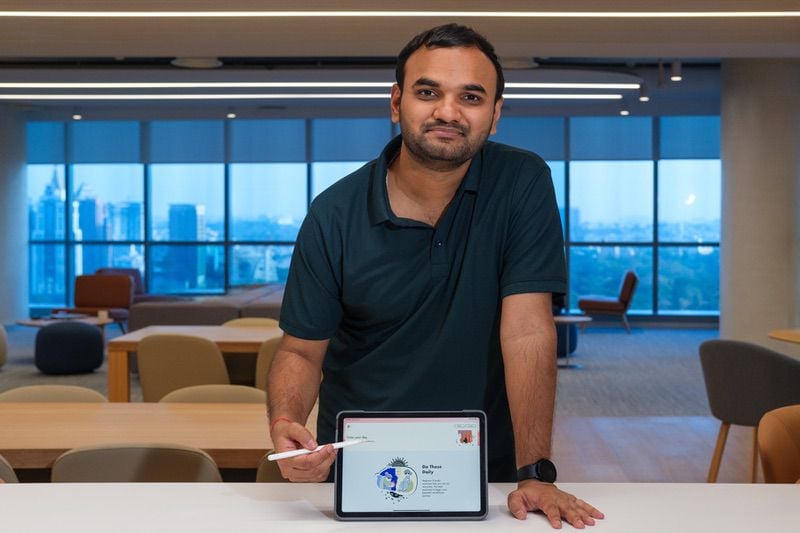
Groodles is Aditya’s attempt at art therapy-based exercises that combine creative self-expression, introspection, healing, and mindfulness. Art therapy isn’t new as such, but mostly, it revolves around doodling, coloring, and drawing. But considering his Psychology background, Aditya is trying to provide iPad users with thoughtfully designed canvases that help them express themselves freely. From anxiety to body positivity to mindful eating, Groodles pushes the boundaries of therapeutic art, making it a holistic experience for users.
“When you think of a mental well-being app, you think of meditation, you think of journaling, you think of situations. The fact is, if you take away the logos of these apps, almost all of them feel the same. What we wanted to do is we wanted to make the entire experience more playful, interactive, and actually effective,” says Aditya.
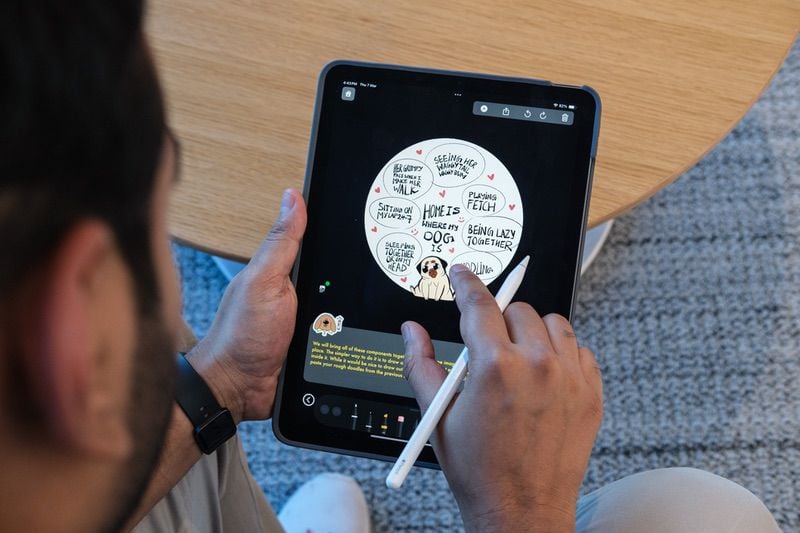
While Groodles is currently built for the iPad experience, Aditya is working to bring it to the Vision Pro as well. He already has another visionOS app called Mahou, but looking at the traction Groodles has got, he wants to bring it to Vision Pro as well. And that’s where Apple’s Developer Center helps small developers like Aditya by giving him access to experts within the company.
“One of the key things we use is this framework called PencilKit. Every time WWDC happens, they’ll make some changes to the PencilKit. Once WWDC is done, we update the iPadOS version and open our own app, and we see that certain new tools have been introduced. You wake up one morning, it’s like, oh, wow, now my app does this as well!”
“With WWDC 24, I’m looking forward to auto-completion because we talked about accessibility. Where let’s say I’m drawing a flower, and it recognizes that I’m drawing a flower and completes it for me, or I’m drawing a house, and it completes it for me to give me just a framework to play around with.
With Generative AI and stuff, this is very much possible. Hopefully, we can even animate the drawings. Say, if I doodle a dog, it can autocomplete and animate?”
Rama Krishna and NoteShelf: Revolutionizing Note-Taking
Another developer who’s looking forward to Generative AI within iOS and iPadOS is Rama Krishna, the developer of NoteShelf. NoteShelf is an award-winning note-taking app that helps you take notes, organize, and focus on things that matter.
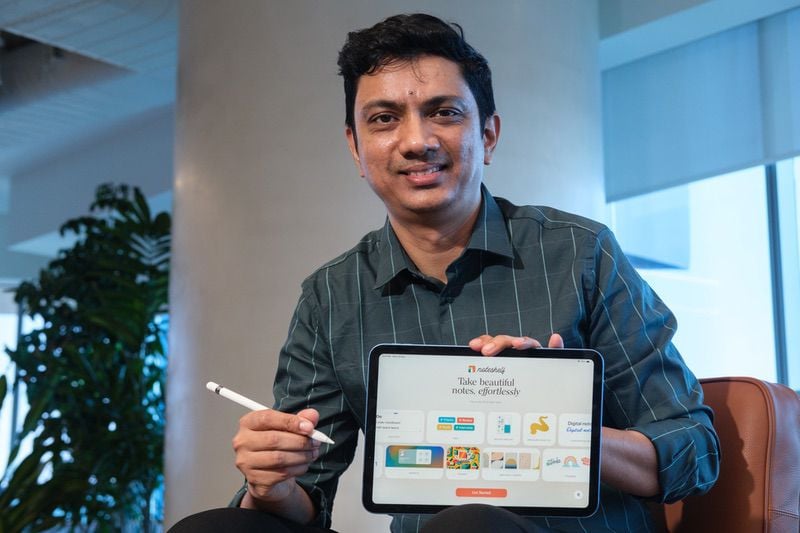
Krishna was amongst the first few developers to have an app for iPad back in 2010 when it was first announced. 14 years down the line, NoteShelf has reached the number 1 ranking across categories. What started as a hobby project for Krishna has grown into a company of 35+ employees with the app now being available on Android and Windows as well.
NoteShelf has over 8 million paid users and recently hit the milestone of 1 billion notebooks created. Krishna cheekily remarks that it’s equivalent to 2 million trees saved! Like Aditya, Krishna also credits Apple’s Developer Center in Bengaluru for the invaluable insights and help he has received over the years.
“I was working in Japan since 2000 but decided to move to Hyderabad in 2016. That turned out to be a great decision. Around the same time, Apple opened its Developer Center in India, and that helped us a lot. The growth curve took off exponentially because we got a lot of insights from not just people here, but they connect us to people across the world,” says Krishna.

“Our Watch app was done in collaboration with somebody in the UK. And people from the US come here, like Mike Stone, a lot of senior designers from Apple come here and they give us sessions. We had a three-hour session and three pages of feedback about our application. We had a lot of help with how we take the apps to the next level. Every one to two months, we used to have a review with the center here.”
Interestingly, Rama Krishna has already integrated AI into his apps. NoteShelf AI, as he calls it, lets you write anything about any subject you are interested in and let the AI summarise, translate, or explain it for you using AI. Krishna has integrated Open AI’s ChatGPT for this but hopes WWDC 24 will provide him with more options for deeper integration of AI within iOS, iPadOS, and macOS. With Generative AI at the OS level, he expects his journaling app to be crazy useful, with the ability to prompt users with ideas based on how their day has gone.
“We are also planning to do something for the Vision AI. How to actually bring notetaking to spatial computing is one thing we already actually started doing it. We got a Vision Pro from the US. You can drag a book like that from a Noteshelf, and you can put it on your wall or on your fridge. If you tap on it, it opens like a book, and you can see your recipes or whatever. We’re trying that use case. But still very early.”
SplashLearn: Gamifying Education for Global Impact
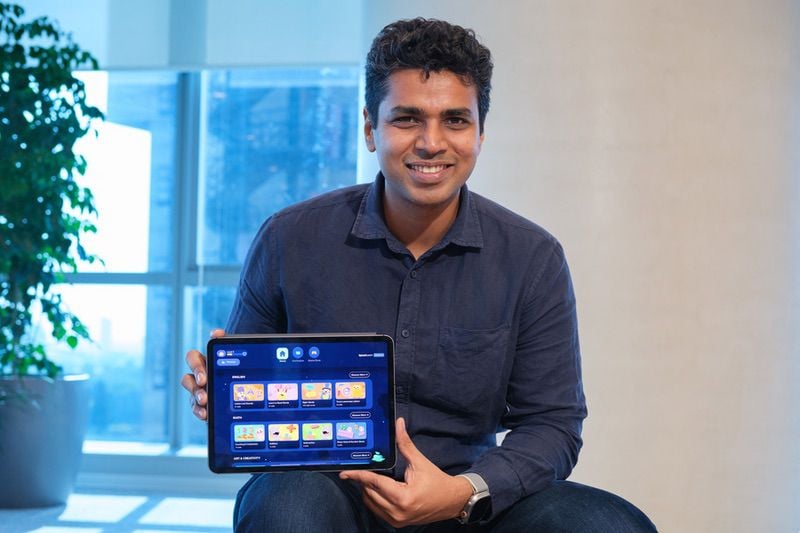
But it’s not just the latest technologies and frameworks that Indian app developers are utilizing. Mayank Jain, the CMO of StudyPad, which has developed SplashLearn, credits Apple for its help in distribution. Despite being an Indian company, SplashLearn has most of its users from countries like the US, UK, Australia, and Canada.
“Yes, newer devices with faster chips help us better our game engine and ensure the app runs super smooth, but it’s Apple’s distribution, which we appreciate as well. I think across the world, sitting from India, it’s easier with Apple. We are able to distribute in 150+ countries with a relatively small team here,” says Mayank.

SplashLearn provides gamified educational content for children aged 2 to 12 (pre-kindergarten through grade 5). It also continuously assesses children’s comprehension levels and shares the information with teachers and parents. The program provides data on which children are making good progress and which need a little more training to understand the concepts taught in school.
It currently offers content for learning mathematics and English. Since its launch in 2011, the company has grown, especially in the US. Splash Learn is now used by one in three schools in the US and claims to have over 50 million learners on the platform, with over 7 million users onboarded in the last 12 months.
WWDC 2024: Anticipating the Next Big Thing
From June 10-14, Apple will host its annual developer conference, WWDC, in Cupertino, California, where the company is expected to unveil the next major releases of its operating systems for its product lineup, including iPhone, iPad, Apple Watch, Apple TV, Vision Pro, and Mac.

