

In Summary
- Apple has released a new iPhone ad, Dependably Durable, focusing on just how tough and resilient the iPhone 15 is.
- While it is a typically short, simple ad, what makes Dependably Durable distinct is that it is made totally in Indian conditions and primarily targeted at an Indian audience. This reflects a strong Indian flavor in many recent ads from Apple.
- While there has been a lot of talk about Apple’s decision to manufacture devices in India and opening stores in the country, we feel that the brand’s decision to go with distinctly Indian ads is a greater sign of its commitment to and interest in India.
Apple recently released a new iPhone ad, Dependably Durable. Like almost all Apple product ads, it is short, focuses on a product feature, drives the point home without needing to use any celebrity or verbal hyperbole, and has just the right touch of humor about it.
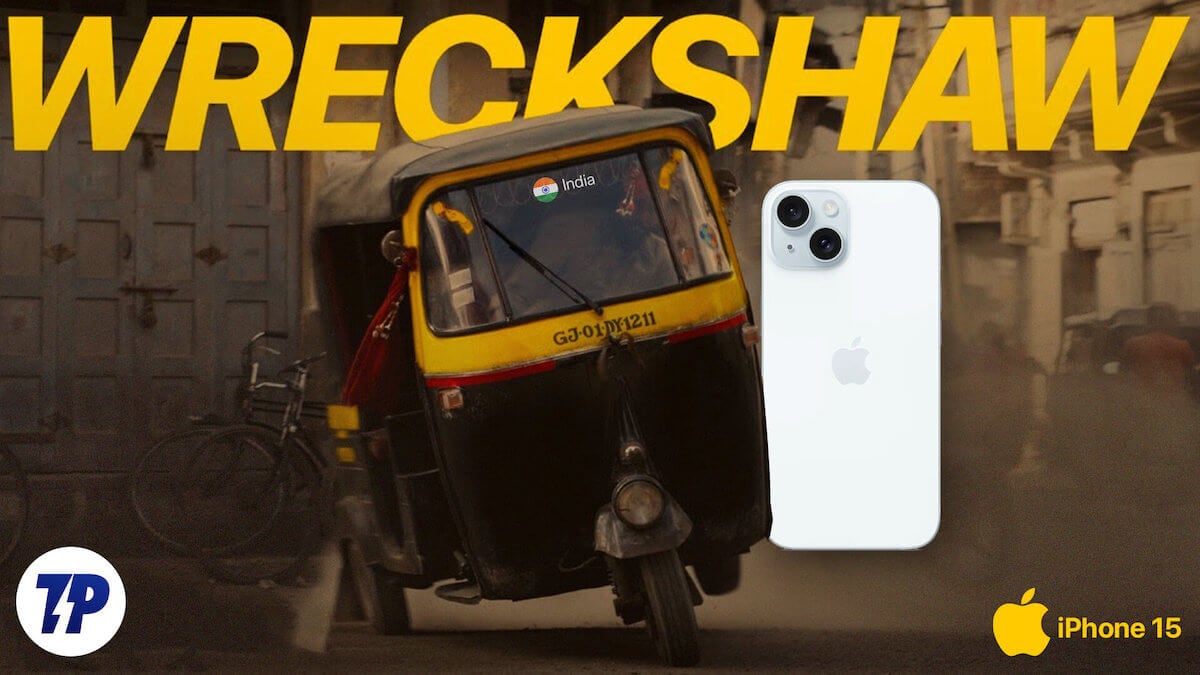
It revolves around a young lady’s ride in an auto-rickshaw, a three-wheeler that’s a very popular means of public transport in India. As anyone who has traveled in these weirdly wonderful vehicles can tell you, the ride is a crazy one, with the auto darting into lanes, taking sharp turns, and racing along to its destination with many bone (and phone) rattling bumps. Right through this super bumpy, the lady keeps watching the ongoing IPL on her iPhone 15, which wobbles every bit as much as the auto and even takes the odd fall but remains in pristine condition through it all.
https://www.youtube.com/watch?v=37bI4ccKLI0
With great sales in India come great ads in India
It is a typically simple and yet effective Apple ad. But this is not really about the ad itself but its target audience. The ad is clearly shot in a city or town in India, and the main character is a very ‘normal’ middle-class Indian (hence the auto).
A few months ago, Apple had again used India to showcase the battery life of the iPhone 15 Plus in an ad titled One More by showing a father shooting a video of his son trying to break a plank of wood in a typical Indian family backyard. Again, a point to note is that the surroundings were very middle-class, very mainstream Indian.

Interestingly, a few years ago, Apple had used the music from one of India’s legendary music composers, RD Burman, in one of its ads, which again showed an iPhone (an iPhone 13 in this case) benign used in a day to day scenario – it accompanies a courier through his various rides through a city, braving rain, bumps and all.

The latest and indeed a number of Apple ads in recent times are an apt reflection of the increasing importance of the Indian market in the brand’s eyes. These are typically Apple ads but with a very distinct flavor – a far cry from the Leo Burnett ad for the iPhone 6, which was incredibly predictable and could have fit any phone, with its attempt to showcase an Indian wedding as a photo op. It also shows Apple’s journey in India – from being something that was premium and a little elite to something that is increasingly becoming a part of mainstream, middle-class India (with some help from shopping festival discounts and EMIs, but that is another story).
Not surprisingly, this Indian flavoring in Apple ads has been on the rise over the past couple of years since the iPhone shot up the sales charts – an IDC report states that Apple shipped more smartphones (iPhones, duh!) in 2023 than the likes of OnePlus, Poco, Infinix, and Tecno, running up a rate of growth of 38 percent in a year in which Samsung, Oppo and Xiaomi actually registered negative growth.
Not just making and selling in India but speaking to India…in an Indian manner
There has been a lot of (deserved) talk about Apple’s plans to manufacture devices in India, its decision to open Apple Stores in the country, and how these moves represent Apple’s increased interest in India. Well, we actually think it is the brand’s ads that are a greater reflection of where India stands on its world map.
Whereas opening a store or manufacturing a device is often targeted at state institutions, an ad is targeted at the brand’s core audience. Apple’s decision to manufacture in India and open Apple stores will, of course, have an impact on the Indian consumer, but these are moves to facilitate the availability of devices.
Ads, on the other hand, are totally directed at generating sales. Apple could have stuck to its international ads for marketing its devices in India (it does so in other product segments), but its choosing to invest in a truly Indian ad (and video ads are expensive!) does give one an idea about where India stands in its plans.
By showcasing the iPhone in the hands of Indian consumers – and that too mainstream consumers who travel by auto and are pestered into shooting videos of karate wannabe offspring – Apple has sent a simple message across to its Indian consumers – the iPhone is right at home in the heart of India. In a subtly sensible move, Apple has avoided using Indian languages (the background soundtracks are often snippets of English tracks) and yet managed to keep the settings and people uniquely Indian – this makes the ads accessible right across the very diverse nation and actually even globally, as you do not need to understand a language to get the ad.

It is interesting to note that Apple followed a similar approach in China, where it advertised extensively but actually is believed to have broken through with its epic ‘Three Minutes’ film that depicted a very brief three-minute meeting between a mother and her child on Chinese New Year (she works on a train so can only see him at the platform for that much time). The seven-minute micro film referred to an iPhone X only at the very end and for a very short period of time, but it had been totally shot in China, contained Chinese dialogue and was about the Chinese New Year, and it is believed to have struck a chord like few ads have in China.
We have not seen an ad of a similar nature from Apple in India yet, but we will not rule it out. Mani Ratnam doing a five-minute film on a typical Indian train journey. It might well happen.

