

In Summary
- The Vivo V60 is the latest in Vivo’s mid-segment camera-centric V series range.
- Like its predecessors, the Vivo V60 comes with a powerful setup, with three 50-megapixel cameras designed in collaboration with the legendary Zeiss. However, its other specs are broadly mid-segment, making it mainly a camera champ.
- At Rs 37,999, the Vivo V60 is priced very close to budget flagships like the OnePlus 13R, and also faces heat from devices like the Poco F7 and the OnePlus Nord 5, which come with very good processors and faster RAM and storage at lower prices.
At a time when most other brands are trying to bring close to flagship level processors in the Rs 30,000 – Rs 40,000 price segment, Vivo has bet heavily on its Zeiss-infused cameras to win the day. The Vivo V60 is the latest device in the brand’s V series of phones that focuses on bringing high quality photography to the mid-segment. But will the Zeiss magic on the Vivo V60 help it prevail over competitors bristling with benchmark busting processors?
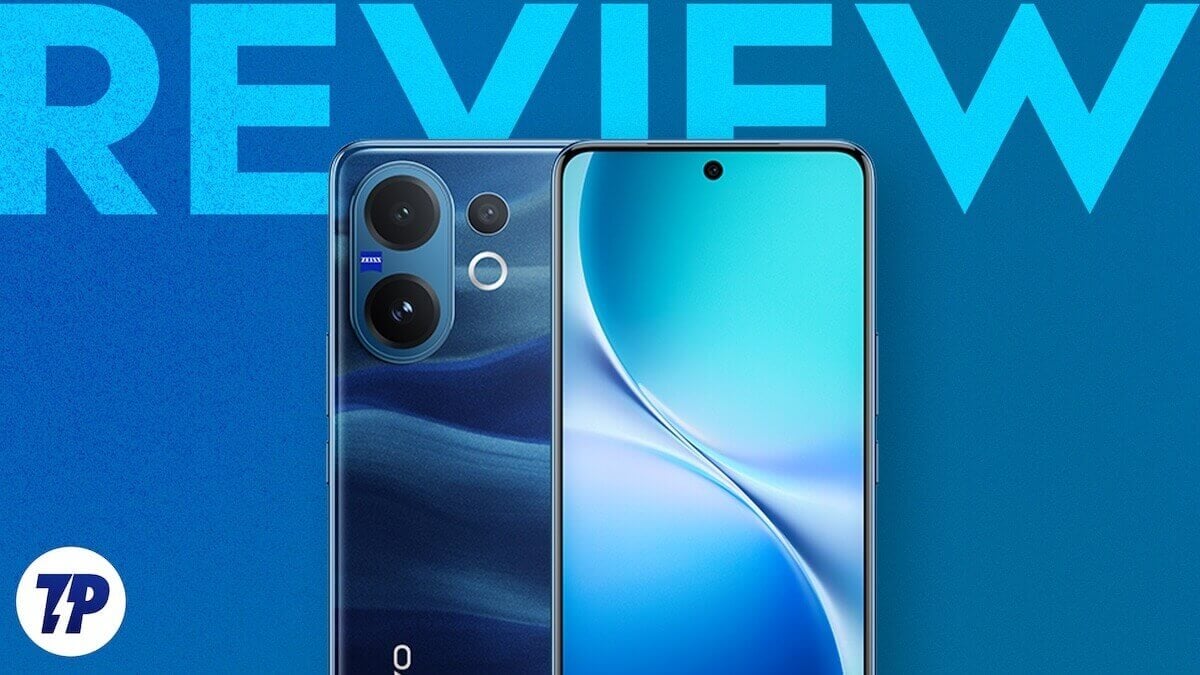
Table of Contents
Vivo V60 Design and appearance: Brilliantly eye-catching blue, shiny gold, and sober black
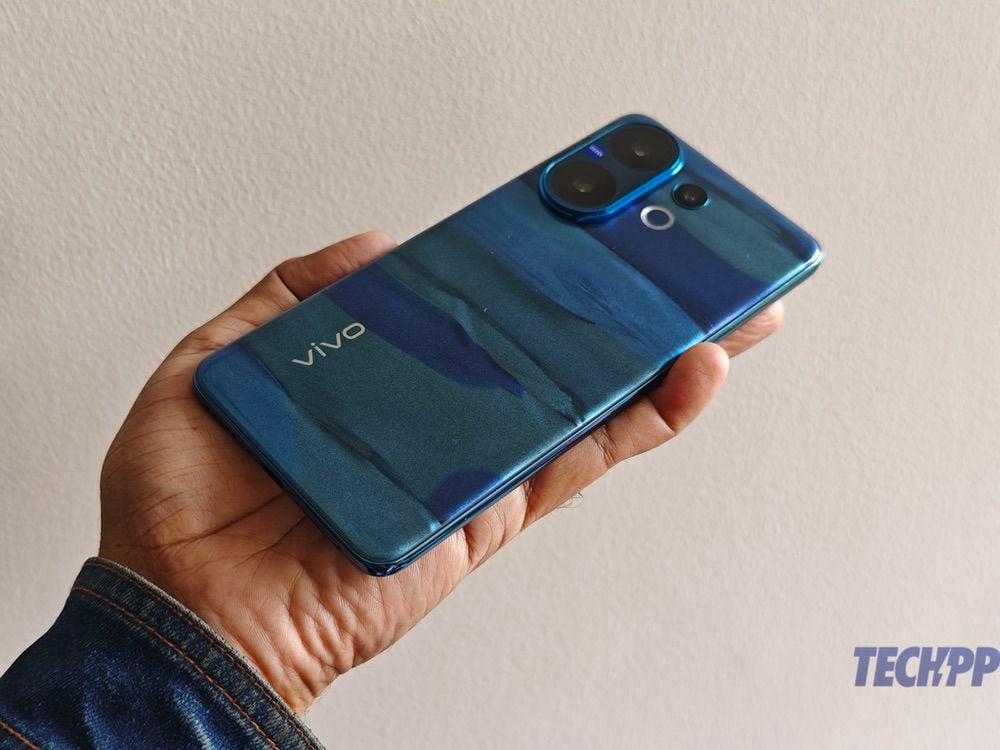
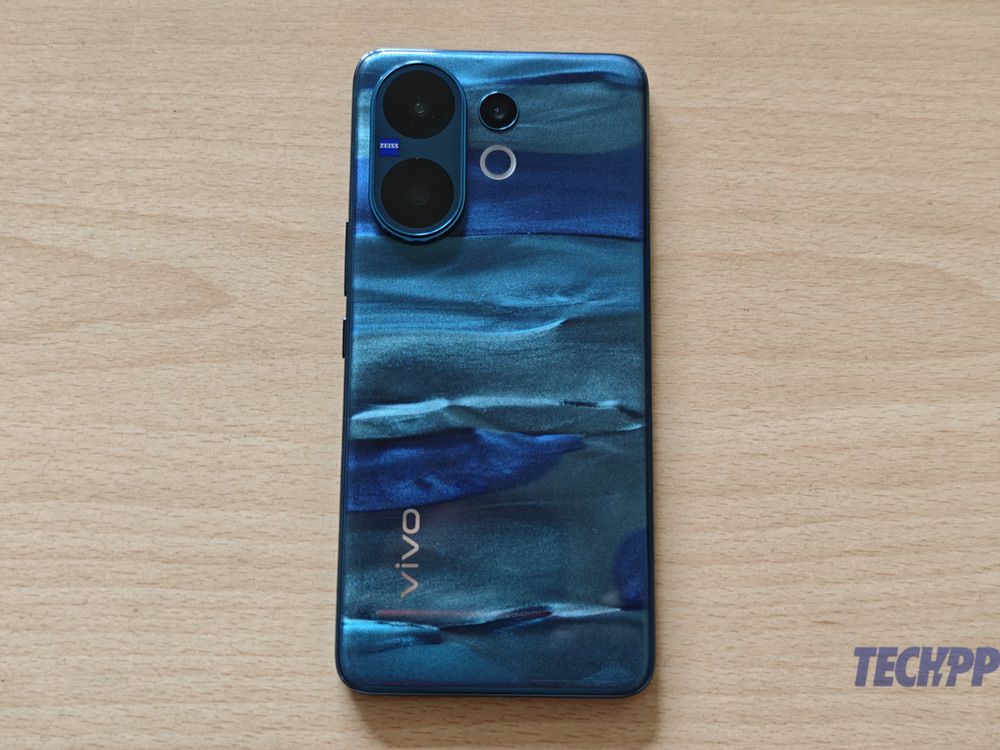
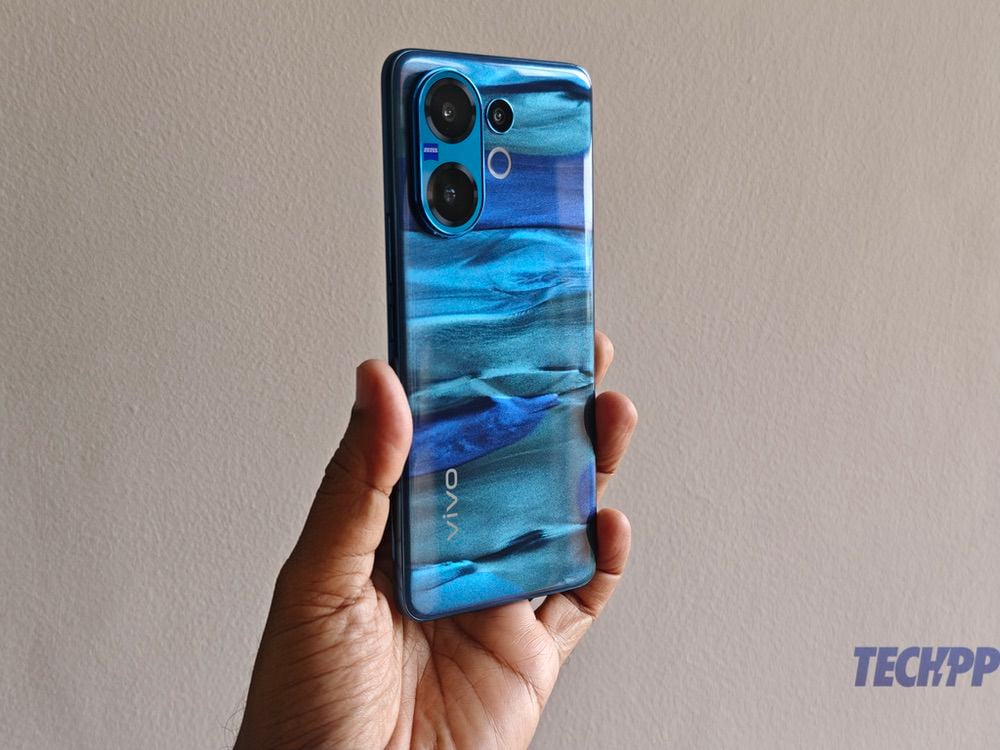
How the Vivo V60 appears really depends on the color you choose. If you go for the Auspicious Gold edition you will get a shiny and sleek device, while the Mist Gray looks more sober and quietly elegant, and will fit right into corporate boardrooms. The variant that will really turn heads, however, is the Midnight Blue, which is a glossy, shiny riot of different shades of blue and silver gray that seem to flow in waves across the back of the phone. We are not sure everyone will like it (we like it, for the record), but it certainly is the most eye-catching phone design in its category!
Apart from the color, the Vivo V60 follows a familiar smartphone design pattern. It steers clear of the straight sides and front and back rule, and instead follows the curved look philosophy, with a slightly curved display, convex sides and a back that slopes towards the sides. On the top right corner of the back is a vertical pill-shaped camera unit with two cameras and Zeiss branding, and next to it is a circular LED flash (Aura Light) and a third camera. At 163.5 mm, the Vivo V60 is a tall phone but is impressively slim at just 7.7 mm, and at around 200 grams, does not seem too heavy.
The Vivo V60 has a solid, well-crafted feel to it. The Midnight Blue and Auspicious Gold shades come with glass fronts and backs, while the Mist Gray has a glass front but a carbonate back (not that you can spot it easily). The frame is carbonate in all three cases, and the display comes with Diamond Shield Glass protection. The phone comes with a IP68/69 rating, which means it can easily survive a fall in the water.
All said and done, the Vivo V60 can be different things to different people in terms of design – the Auspicious Gold is perfect for those who like glitter, the Mist Gray for the more sober types and the Midnight Blue for those who want to turn heads.
Vivo V60 Specs and hardware: A mid-segment cake with premium camera icing!
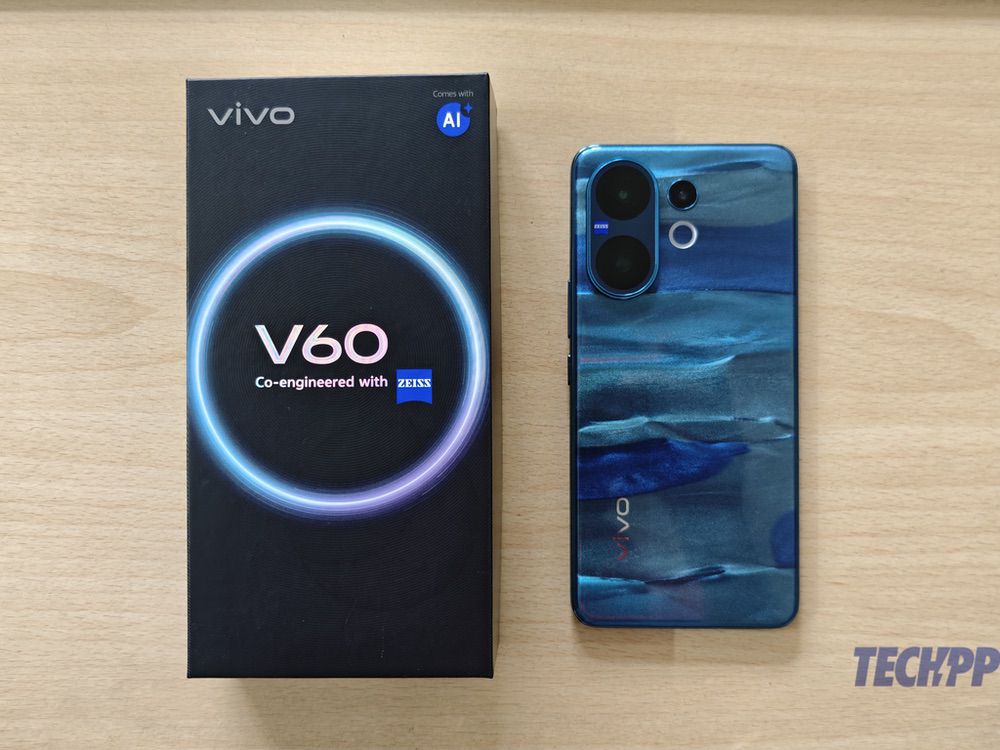
Within that slim and eye-catching (blue) exterior of the Vivo V60 comes hardware that is solidly mid-segment, with a few premium touches. The phone sports a large 6.77-inch AMOLED display with 120 Hz refresh rate and a brightness of 1500 nits. However, it is a FHD+ display with a resolution of 2392 x 1080px, which is lower than the 1.5k resolutions we see on displays in this segment. The phone is powered by the Qualcomm Snapdragon 7 Gen 4, which is an upper mid-segment chipset, but is accompanied by LPDDR4X RAM and UFS 2.2 storage, which are on the slower side, and are a little surprising given that devices in this segment come with UFS 3.1 or higher storage and even LPDDR5X RAM. The phone comes with four RAM and storage options: 8 GB/ 128 GB, 8 GB/ 256 GB, 12 GB/ 256 GB and 16 GB/ 512 GB.
Adding a premium sheen to the mid-segment spec sheet of the Vivo V60 are its cameras. The phone comes with three cameras on the back – a 50-megapixel main sensor with OIS, a 50-megapixel telephoto sensor with OIS and 3x optical zoom, and an 8-megapixel ultrawide camera (an odd choice). In the front, the V60 sports a 50-megapixel camera with autofocus. All three 50-megapixel cameras come with support for 4K video. All four cameras have been designed in collaboration with the legendary Zeiss, which has also worked on the cameras on Vivo’s flagship X series. The phone also comes with stereo speakers, Bluetooth 5.4, NFC, an infrared blaster, and an under display optical fingerprint scanner. It packs in a large 6500 mAh battery with support for 90W charging and a 90W charger in the box as well. The phone runs on Android 15 out of the box with Vivo’s Funtouch OS15 on top of it, and Vivo has committed to four years of OS update and six years of security updates.
Vivo V60 Camera performance: Best in sub-Rs 40,000…actually, sub-Rs 50,000!
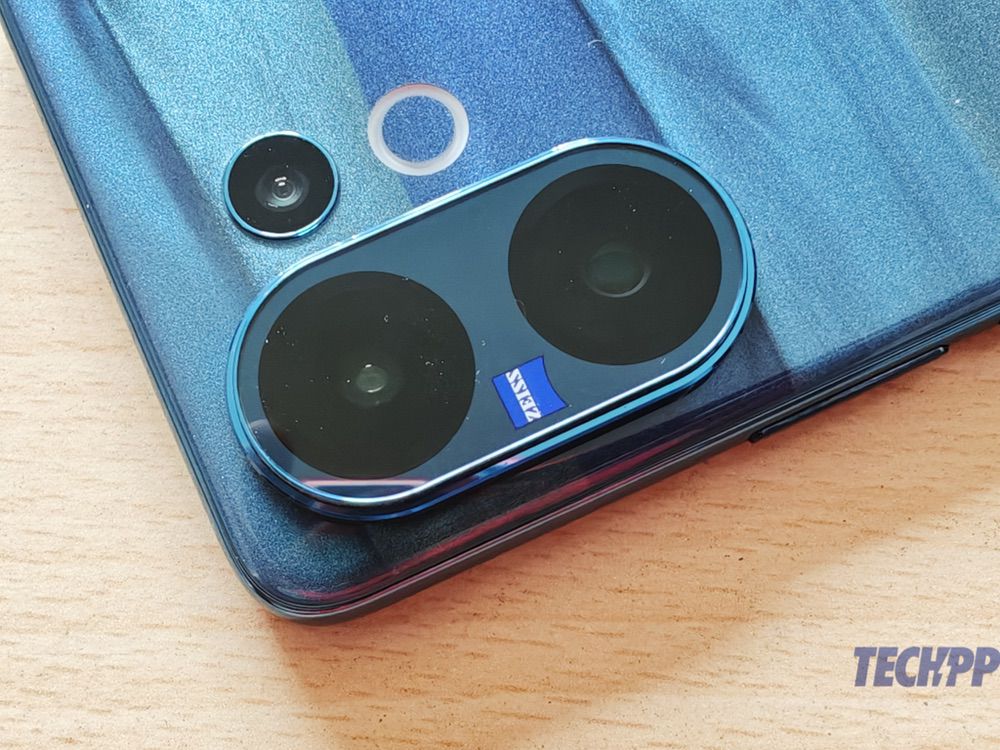
The spec sheet of the Vivo V60 might strike some as being a little underwhelming for its price. However, the phone’s cameras are right from the premium zone. Well, three of them are – the 8-megapixel ultrawide is good enough for a different perspective, but is nowhere near the others in terms of image quality. It is the three 50-megapixel cameras that are the stars of the V60 camera show, aided by a lot of camera sorcery from Zeiss.
As expected, the main sensor is the best camera on the phone, and delivers superb pictures in terms of detail and color, but as with the Nothing Phone (3a) Pro, it is the telephoto sensor that is the real surprise here. The sensor delivers 3x optical zoom, and 10x lossless zoom (which is actually pretty good, as long as you stick to good light conditions) and can even go upto 100x in digital zoom, although we would not recommend going beyond 15x-20x, as images tend to pixellate heavily. Rather remarkably, the telephoto also takes decent enough snaps in low light conditions as well, which is a rarity. The Aura Light flash remains a great solution for low light snaps in which the subject is relatively close.
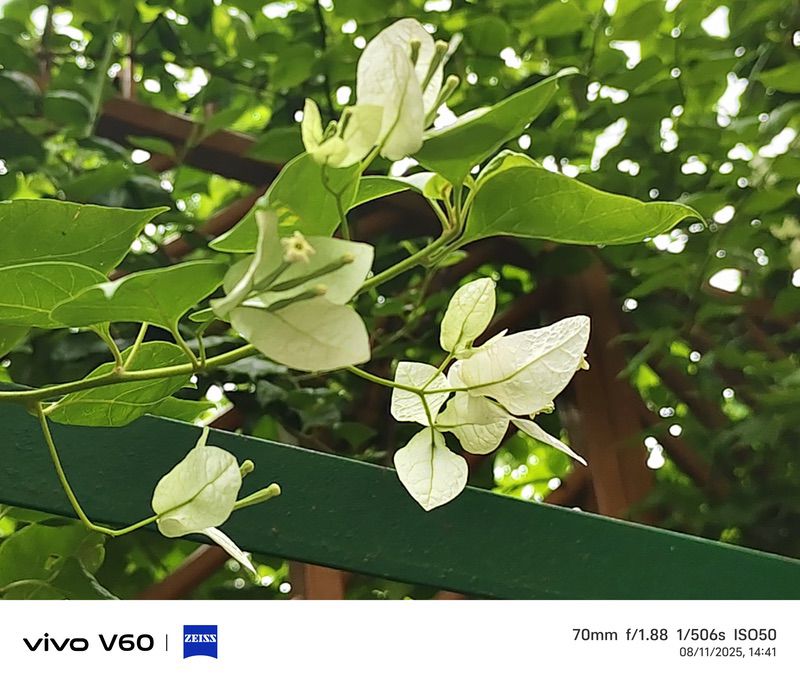
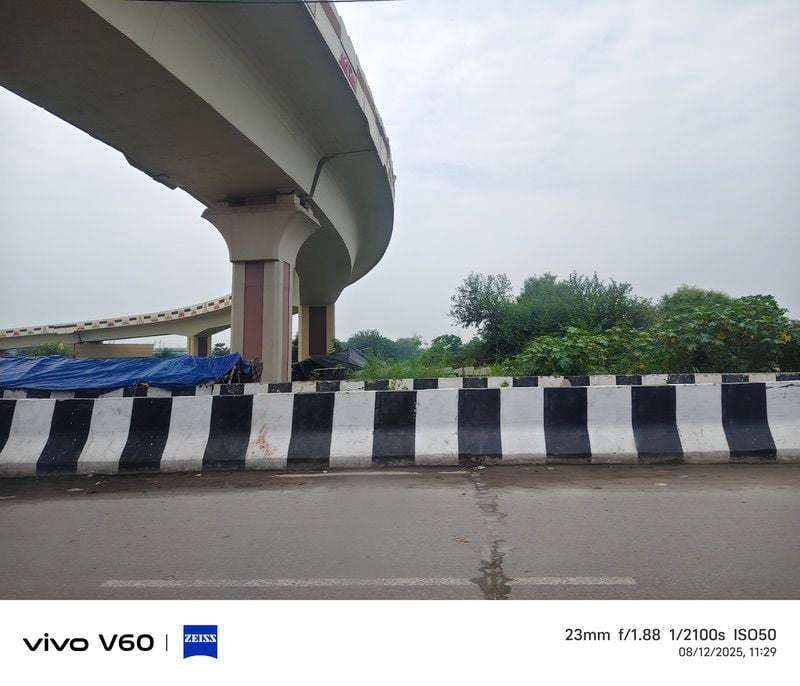
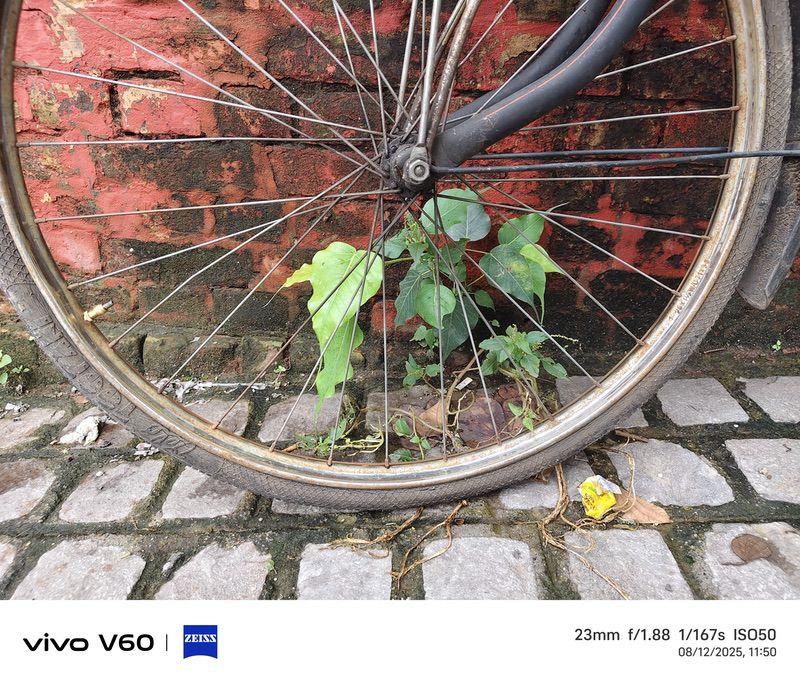
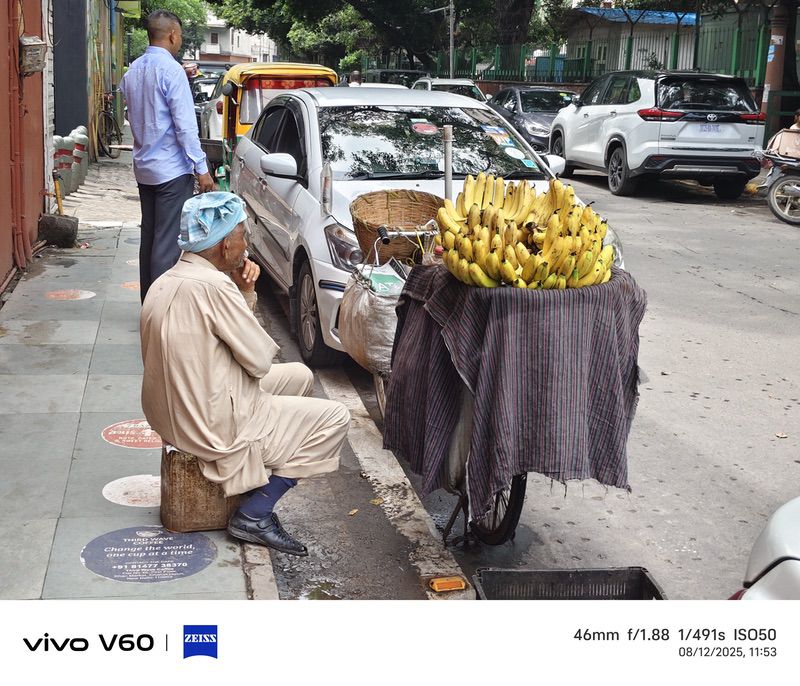
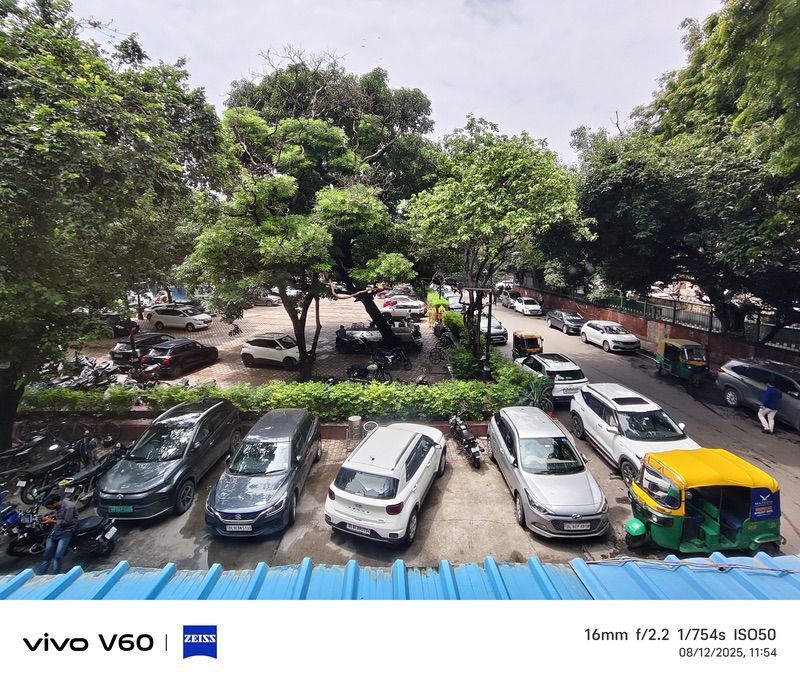

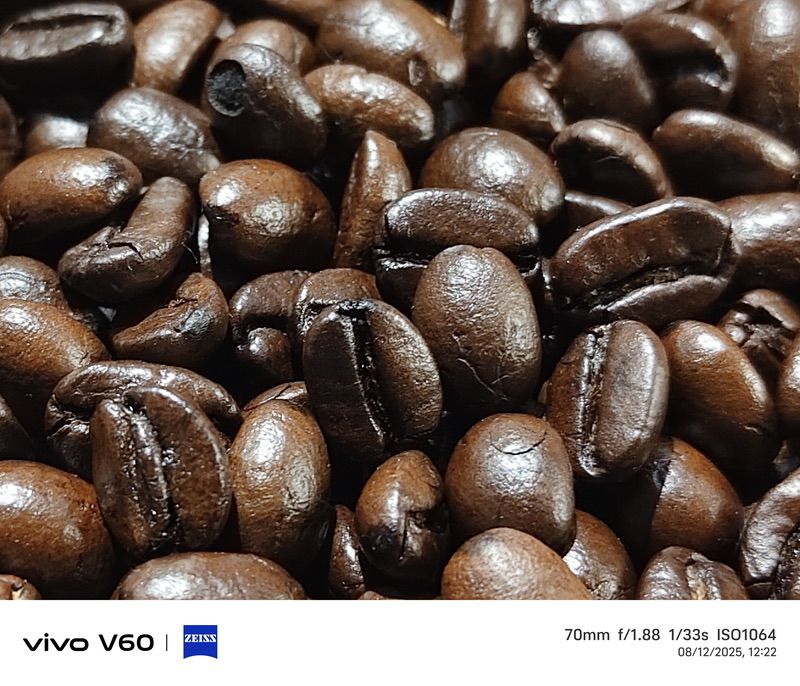

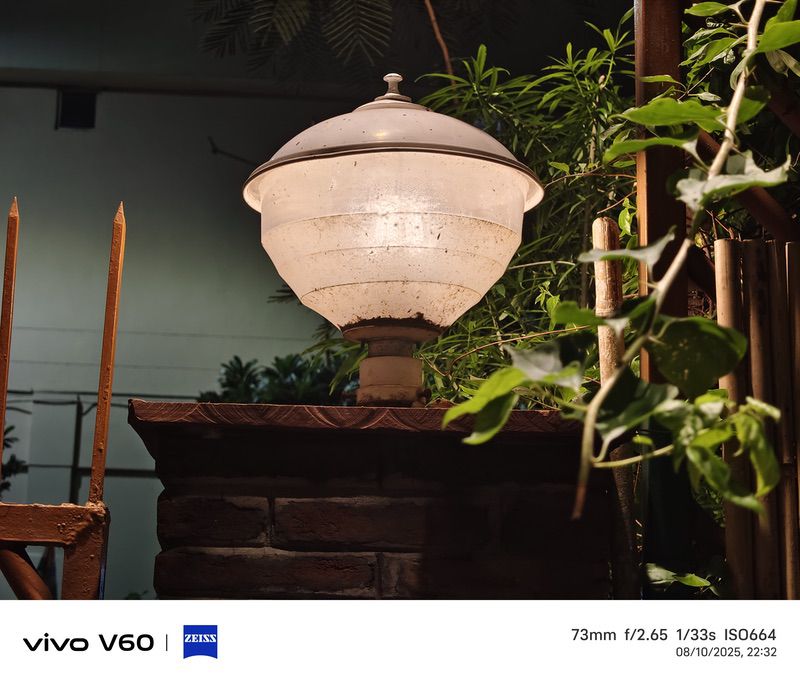
The Vivo V60 also comes not just with special Zeiss bokeh and shooting modes, but five focal lengths for portrait snaps, which is generally not seen. And as in many V series devices, portrait photography is excellent, with well defined subjects and different kinds of bokeh. Colors, especially skin textures, seem a little more saturated in portrait mode, but the results are almost always pleasant. The fact that you can take a portrait snap at about 4x zoom is a major plus point in itself. The front facing camera takes very good selfies and has face detection, allowing one to take great group selfies, but it does not seem as sharp as the selfie snapper on the V50 released earlier this year. Even then, it is streets ahead of every other phone in its price range and some that are well above it. Video quality on all three 50-megapixel cameras is good, but we would suggest sticking to the main sensor for best results. Yes, we are deliberately not mentioning the ultrawide camera, as it seriously does not add much to the camera experience – it can give you a wider perspective, but that’s about it. If you must use it, do it in well-lit conditions.
Making the cameras of the Vivo V60 even more formidable is a vast array of shooting and editing tools. There is a special Micro Movie mode with a number of presets for shooting videos on different occasions (the much-hyped Wedding mode is here too), a Pro mode that lets you fiddle with settings, a food mode, night mode, and even an underwater mode for those who wish to try it out. Also on board are a number of shooting styles such as those that capture textures better and even a mode for shooting a subject who is on stage. The camera is set to Vivid color mode by default, but you can switch it to something more basic, although we prefer staying with Vivid, as the results are very pleasant. Add to all this, a number of filters, editing options and AI tools (the Season Portrait mode where you can change seasons is available) and photography on the V60 can at times seem a little overwhelming. It is also an area where the phone can sometimes lag a little, but the results are almost always worth it. In terms of performance and potential, this is easily the best set of cameras on a phone below not just Rs 40,000, but even perhaps Rs 50,000! The Vivo V60 comfortably beats the likes of the OnePlus 13R and even the Pixel 9a in photography.
Vivo V60 general performance: A steady mid-segmenter
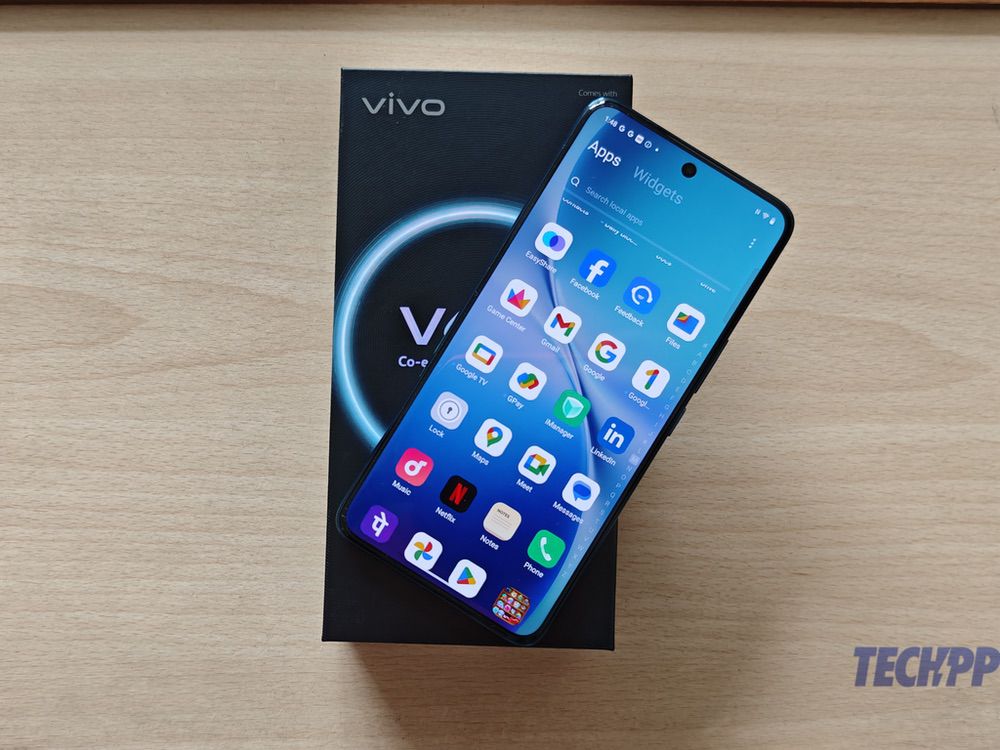
If its cameras pull the Vivo V60 into the flagship zone, its general performance puts it solidly in the mid-segment one. The 6.77-inch display is FHD rather than 1.5K in resolution but is bright and vivid and very good for watching videos and films, with the stereo speakers delivering decent quality audio to make the experience more immersive. The Snapdragon 7 Gen 4 processor is not a gaming beast but sails through every day tasks like browsing the Web, mail and messaging without any problems. Tweak the graphics a little and you can get through Call of Duty and Asphalt Racing without too much trouble, although Genshin Impact definitely wobbles a little. We also did see a few lags in image and video editing, but nothing that can be called deal breaking. The Vivo V60 did not heat up excessively during gaming or photography sessions, which is very impressive, given how slim it is.
FunTouch OS comes with a number of pre-installed apps but these can be uninstalled. The interface seems a little overwhelming initially, but works smoothly and is very feature-rich, once one gets used to it. Apart from the AI tools for photography and image editing, you also get Google Gemini and other AI features like AI Smart Call Assistant, AI Captions and AI spam call protection, and these generally work smoothly enough. Call quality on the device is good and the fingerprint scanner works smoothly. The Vivo V60 comes with four years of OS and six years of security updates, which is pretty much what we expect in the price segment. In terms of performance, the Vivo V60 is solidly mid-segment.
Vivo V60 Battery and charging: Very impressive indeed
After the camera, the battery is the most impressive feature of the Vivo V60. The phone packs in a surprisingly large 6500 mAh battery inside its slim frame, and that battery got us through a day and a half of normal to heavy use quite comfortably. The 90W charger gets it from 0-100 in about 50 minutes, which is quite impressive. As in most phones with big batteries (above 6000 mAh), we found that even 50 percent of charge (which takes about 20-25 minutes) is good enough to see us through a day of use.
Vivo V60 Pricing: Getting into the budget flagship zone
The Vivo V60 is available in the following RAM and storage variants:
- 8 GB/ 128 GB: Rs 36,999
- 8 GB/ 256 GB: Rs 38,999
- 12 GB/ 256 GB: Rs 40,999
- 16 GB/ 512 GB: Rs 45,999
At those prices, the Vivo V60 gets very close to the budget flagship zone, and competes with the likes of the OnePlus 13R, which has a better processor, but inferior cameras and starts at Rs 39,999. Also in the price range are Vivo’s own Vivo T4 Ultra which has a better processor but a smaller display and battery and starts at Rs 37,999. There is also the Pixel 8a which remains a very good device and is now available at Rs 37,999.
Vivo V60 verdict: Do the cameras make it worth it?
Should you be going for the Vivo V60? The answer to that question really depends on how much you value its camera performance. In other regards, it is more than matched by devices like the Poco F7 and the OnePlus Nord 5, which boast far more powerful processors, have comparable or better specs, and are better suited for tasks like high-end gaming. But while its blue variant will turn heads, what makes the Vivo V60 really stand out is its camera performance. The main, telephoto and selfie sensors are easily among the best of its segment, and allied with a good display, very good battery life and a truckload of image editing and shooting options, make the Vivo V60 one of the best options for those who are looking for a phone with very good cameras. It does make compromises, but it does so for the sake of attaining camera supremacy in not just its segment, but perhaps even in the sub-Rs 50,000 one!
- The blue variant is very eye-catching
- Excellent main camera
- Best telephoto camera in segment
- Truckload of good shooting options
- Superb battery life with quick charging
- IP 68/69 dust and water resistance
- UFS 2.2 storage at this price
- Ultrawide camera is of little use
- FunTouch OS has bloatware
- Not as good at gaming as some lower-priced competitors
| Design & Looks |
|
| Software |
|
| Cameras |
|
| Performance |
|
| Price |
|
|
SUMMARY
At Rs 37,999, the Vivo V60 is priced very close to budget flagships like the OnePlus 13R, and also faces heat from devices like the Poco F7 and the OnePlus Nord 5, which come with very good processors and faster RAM and storage at lower prices |
3.9
|

