

In Summary
- The Nothing Phone (4a) is the latest in Nothing’s more affordable ‘a’ series of phones, which is targeted at the mid-segment.
- Like other Nothing phones, the Phone (4a) also comes with a distinct design with a transparent back and LED lights.
- The Nothing Phone (4a) comes with a higher price tag than the Phone (3a), but also brings significantly better specs to the table, including a periscope telephoto sensor, which is rare at its price.
- Will the blend of unconventional design and good cameras help the Nothing Phone (4a) hit a home run in a higher price segment, against tougher competition?
The Nothing Phone (4a) brings with it the “different design” that has become a trademark of Nothing. It also packs in some very decent specs, including a much-talked-about periscope telephoto sensor. But allied to that is a higher price tag. Can the Nothing Phone (4a) continue to carve a niche for itself, as it moves into the brutally competitive premium mid-segment? Let’s find out.
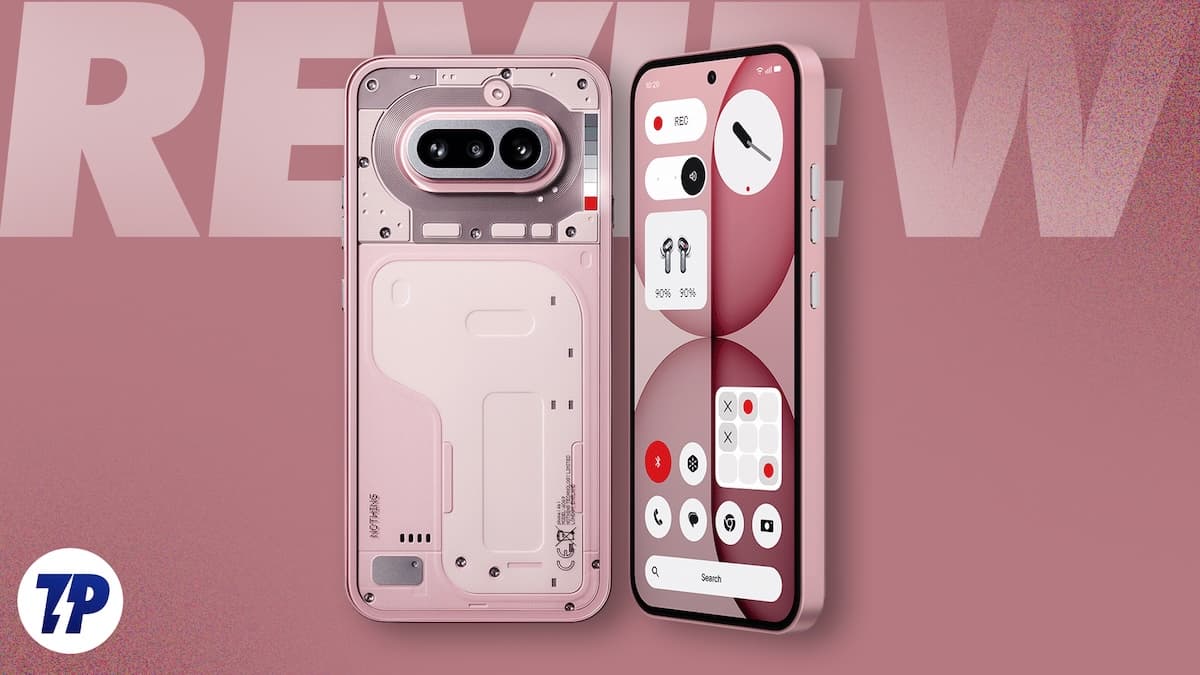
Table of Contents
Nothing Phone (4a) Design and Appearance: Still different, but with fewer lights
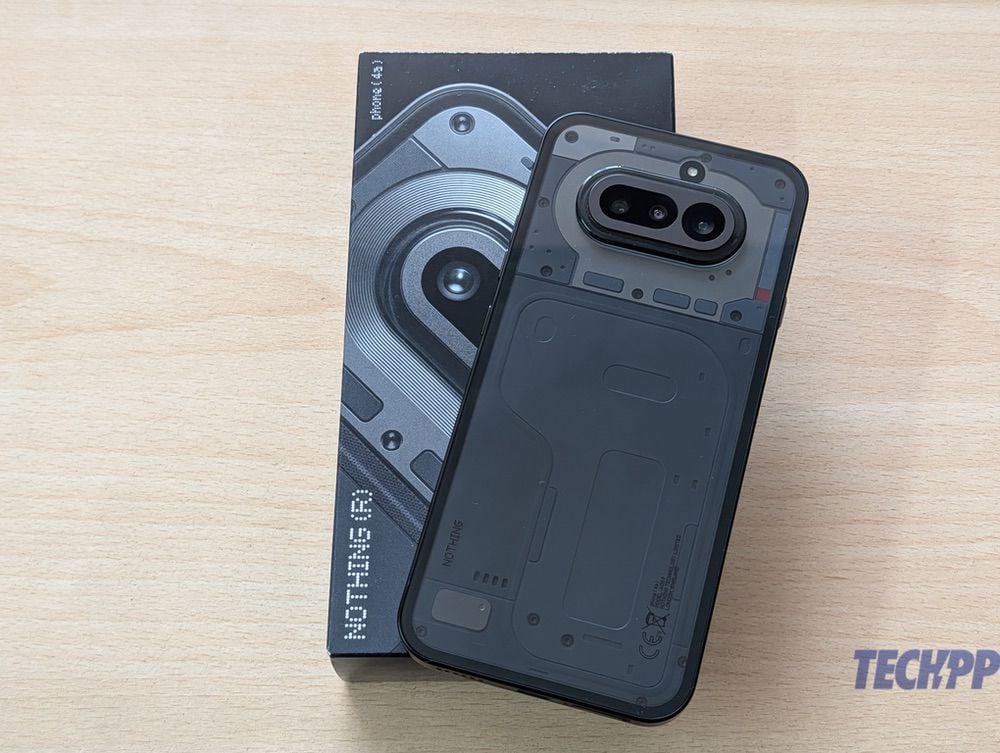
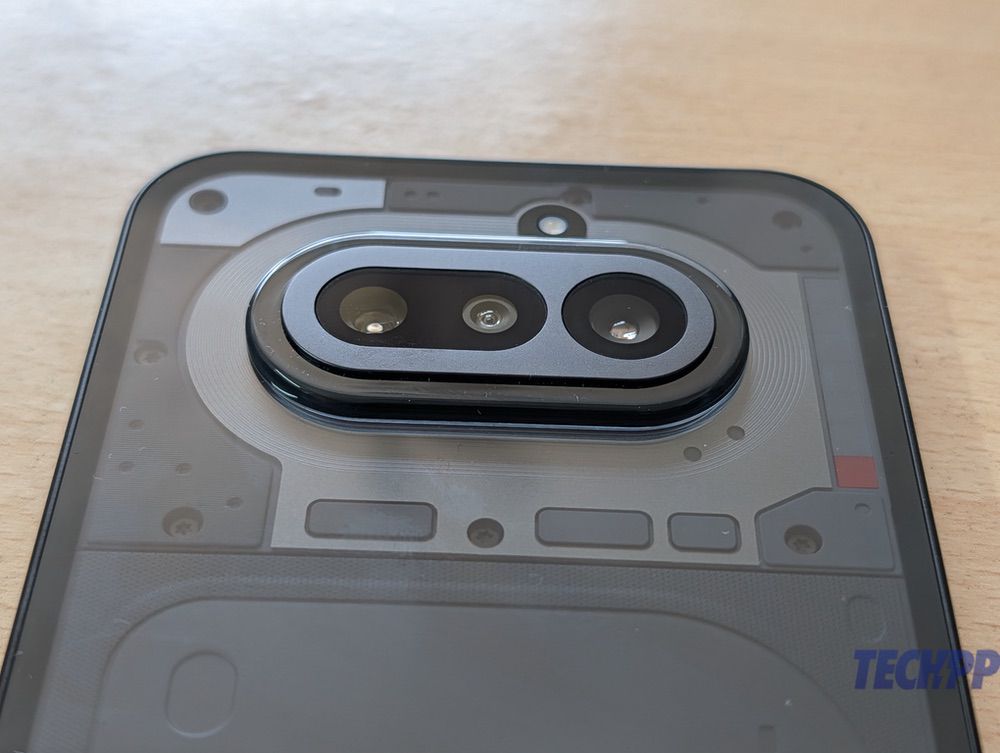
The Nothing Phone (4a) sticks to Nothing’s “stick out in a crowd” design template. It has the same transparent-ish back that we saw in the (Phone 3a) with a horizontal pill-shaped camera unit. There are some tweaks, though – the camera unit is almost raised on a platform and has a slightly metallic look. Most significantly, the camera unit is no longer in the centre of a circle of lights (the Glyph Interface), but instead has a slim bar of LEDs to its right. This is the new Glyph Bar, which comprises six blocks of LEDs that light up when different notifications come in or events occur. At their base is a red LED that lights up when we record video. The rest of the back has the typical ‘industrial’ look that many Nothing phones have – there are a number of screws, plates, and panels that are not the actual innards of the phone, but give the phone a wonderfully geeky look.
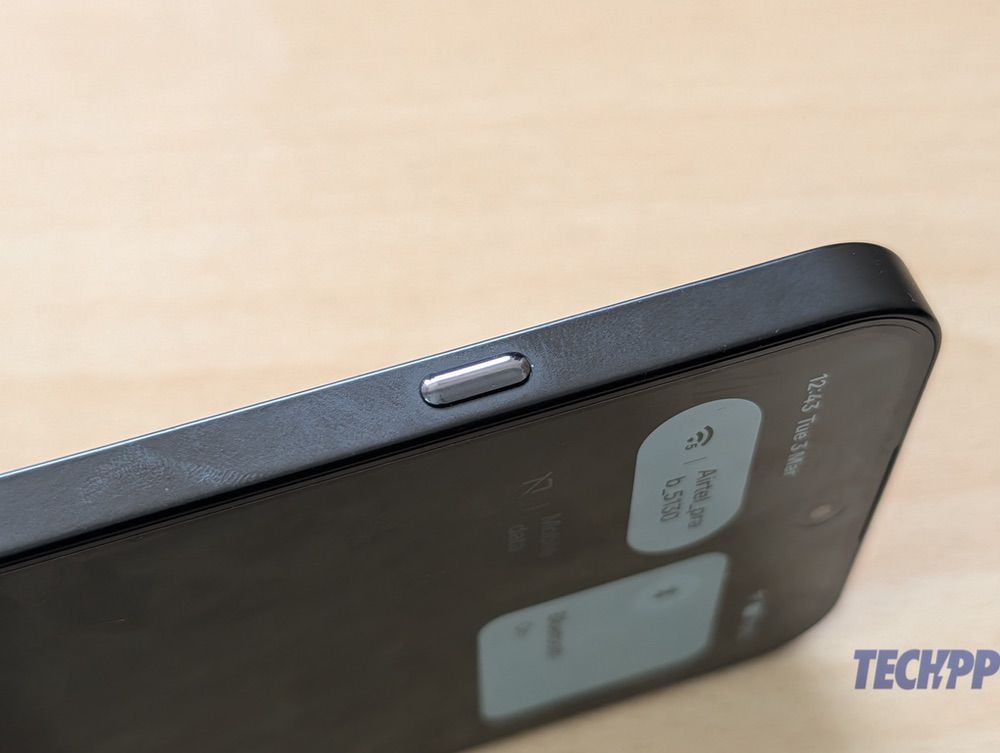
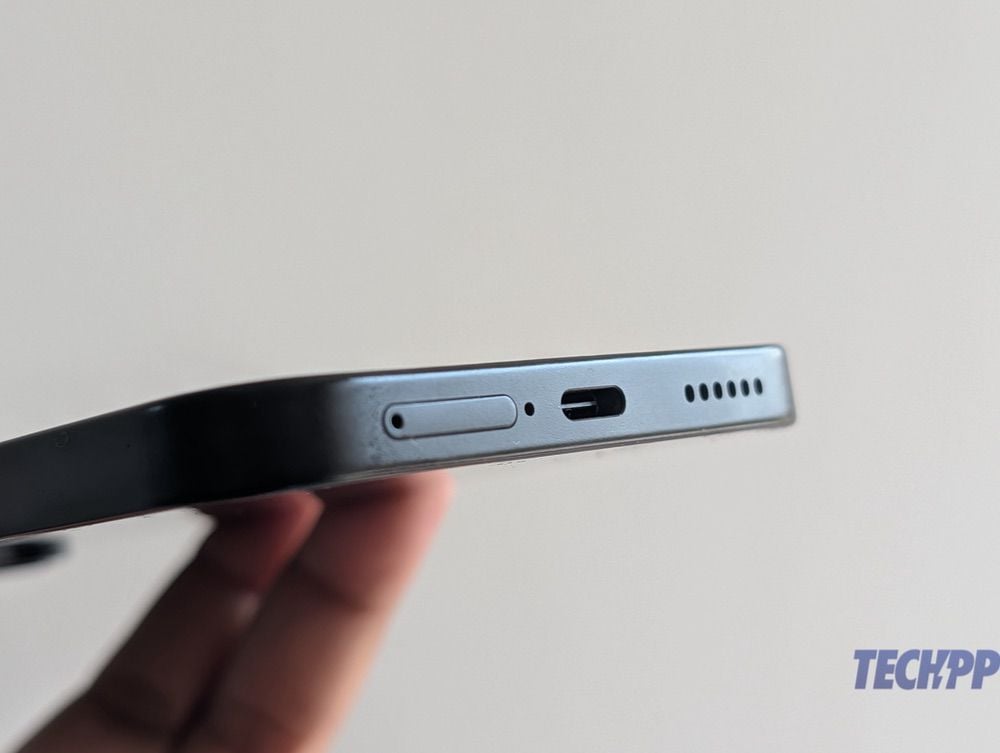
The front is all display, bordered by thin bezels, and the sides are straight. And these sides have another interesting change. While most recent phones from Nothing had the volume buttons on the left, and the power/display button and Essential key (which analyses whatever’s on the display and also lets you make quick notes) on the right, the Phone (4a) moves the Essential key to the left, and moves the volume buttons to the right above the power/display button, which is a more conventional set up. We think the volume buttons are a little high, and so is the Essential button, but we guess one can get used to them over time. The base of the phone has the Type C port, flanked by a speaker grille and the SIM card tray, while the top is relatively bare.
The Phone (4a) is a big phone. In fact, at 164 mm height, it is actually taller than the Galaxy S26 Ultra and the iPhone 17 Pro Max, and at 77.6 mm, it is almost as wide as them (both are 78 mm wide). At 8.6 mm, it is slightly chunky rather than slim, but its 204-gram weight is lighter than its size suggests. This could be because while the front and back of the Phone (4a) are glass, its frame is still polycarbonate. It is generally a pretty tough phone too, with the front being protected by Gorilla Glass 7i and the phone coming with IP64 protection, with Nothing claiming that the phone has been tested to be immersed in 25 cm of water for up to 20 minutes.
The Phone (4a) is available in four shades – white, black, blue, and a new color, pink. We got the black variant, which is perhaps the closest a Nothing device can come to a formal look, but it is the blue and pink ones that look the most striking, and add some color flair to what is already a very distinct design.
Nothing Phone (4a) Spec Sheet and Hardware: Boosting that display, zooming into the camera
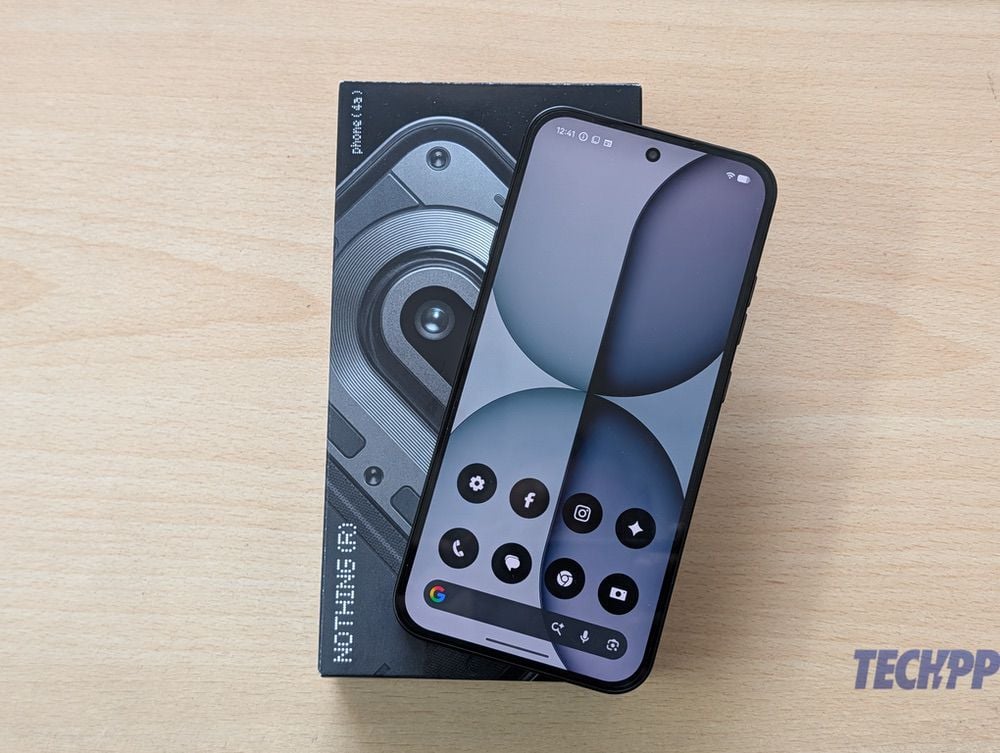
The Nothing Phone (4a) is a massive step ahead of the Phone (3a) in terms of hardware. The flexible AMOLED display is slightly larger (6.78 inches as compared to 6.77 inches), but more significantly has a higher resolution, 2720 x 1224, as compared to 2392 x 1080, resulting in significantly higher pixel density for sharper images and text. The refresh rate remains at 120 Hz, but peak brightness has been increased from 3000 nits to 4500 nits, with a typical brightness of 800 nits. The processor takes a generation step ahead to the Snapdragon 7s Gen 4 (the Phone 3a has Gen 3). This is paired with RAM and storage options of 8 GB/ 128 GB, 8 GB/ 256 GB, and 12 GB/ 256 GB. The RAM is LPDDR4X, but the storage is now UFS 3.1, up from the much-attacked (and defended) UFS 2.2.
The biggest attraction of the Phone (4a) is its cameras, most notably its telephoto, which is a periscope telephoto, something that is not common in this segment. The main camera is a 50 megapixel camera with OIS, while the much-hyped telephoto is another 50 megapixel camera and comes with 3.5x zoom as well as 7x in-sensor zoom (basically zooming without losing too much detail) and 70x digital zoom. Nothing says that this is the same zoom sensor that was used in its flagship Phone (3) launched last year, which was considered expensive but was generally praised for its performance. The third camera at the back is an 8-megapixel ultrawide, and the selfie camera is a 32-megapixel camera, both similar to the ones we saw on the Phone (3a). Sound is handled by a pair of stereo speakers.
The battery gets a boost too, going up to 5400 mAh as compared to 5000 mAh on the Phone (3a), but the charging speed remains at 50W, and although Nothing has included a transparent cover in the box, there is still no charger. On the software side, the phone runs on the relatively clean NothingOS 4.1 on top of Android 16, and comes with an assurance of three years of major OS updates and six years of security patches. The Glyph Bar takes the place of the Glyph UI for those who want to keep track of notifications on their phones while keeping it face down.
Nothing Phone (4a) Cameras and Photography: Steady main, super zoom
The Nothing Phone (4a)’s camera experience is very good indeed, and comfortably among the best in the segment. The main camera captures an impressive amount of detail, and Nothing seems to have made the colors a little warmer as compared to the (3a) series, so one sees brighter reds, greens, and blues. This results in some very pleasant photographs in good light conditions. Low-light photography is decent, too, if your subject is relatively steady. Many people will love the bright colors it delivers, even in relatively low light conditions.
The telephoto sensor is the real star of the camera world of the Phone (4a). We found we could get impressively clear shots at even 7x, which is a rarity at this price point. The colors are broadly similar to those on the main camera, although we thought they were a shade less warm. While the camera does let one zoom up to 70x, the results are not too great, with a fair deal of smudging creeping in. That said, we were able to get very good social network-friendly snaps at up to 12x – 15x zoom, which is amazing at this price point. There was some processing when we used higher zoom levels, but the phone worked briskly enough and did not pause as much as some others do. We would not recommend going beyond 3.5x when it gets dark, though, as detail goes out of the window. Portraits are good and come with three focal lengths, very good edge detection, and realistic bokeh. We, however, miss the option of being able to increase or decrease bokeh after taking a snap, something which is possible on other devices.
Videos are best on the main sensor, which delivers very good results in good light and can even serve up some usable video in low light conditions. There are plenty of editing options, and thankfully, the Nothing’s Gallery app does not thrust AI into the whole process, giving one more control over the process. AI smarts are available through Google Photos, of course, for those who want them.

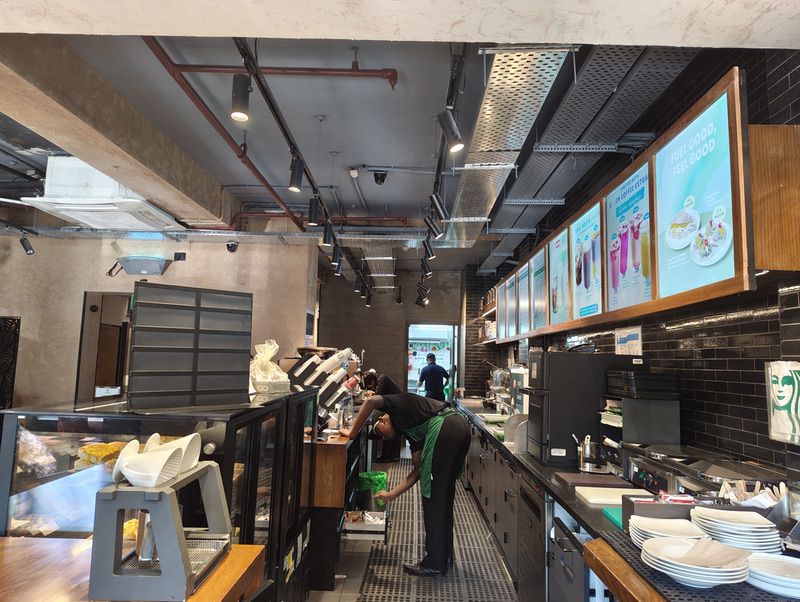


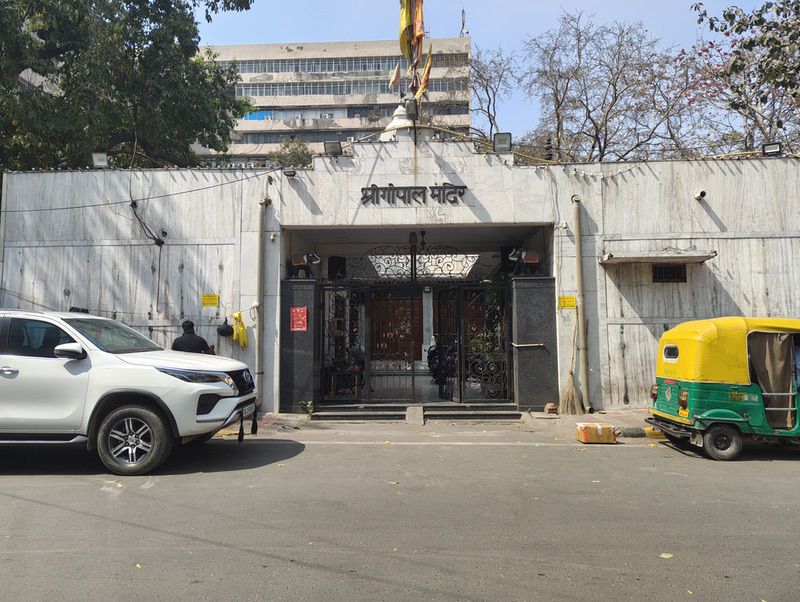

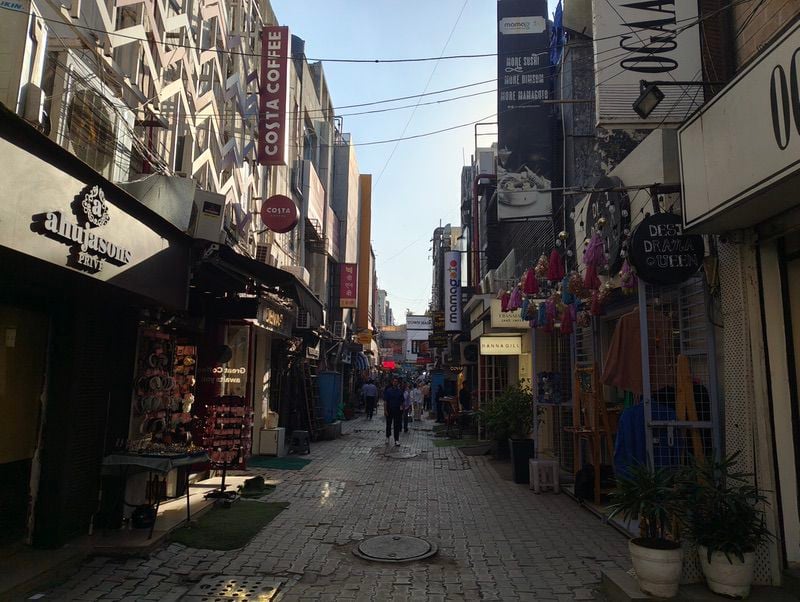






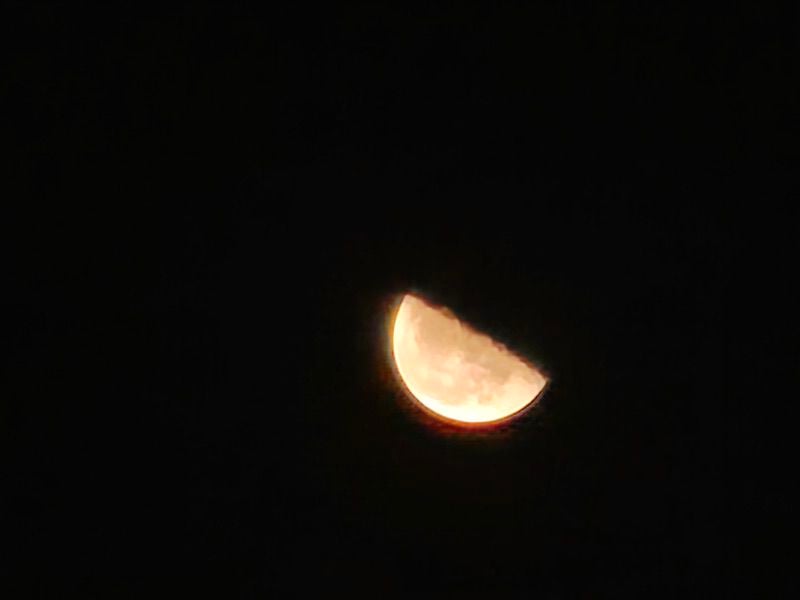
While the image quality from both the main sensor and the telephoto cameras is very good, we loved the versatility we could get in our photography with the dozen presets that came with the app. These presets are more nuanced than regular filters and literally add a new dimension to photography on the Phone (4a). Mind you, finding them is a bit of a challenge – one needs to tap on the tiny arrow at the base of the camera app when it is open.
The ultrawide and selfie sensors are a little underwhelming in comparison with the other cameras. The ultrawide delivers a wider perspective, but loses out on detail. The selfie snapper is a consistent performer and can capture a fair amount of detail in good light conditions, with the Retouching option giving us the option to have slightly smoother and more pleasant snaps or more realistic ones. Neither is bad, but neither is exceptional either.
Nothing Phone (4a) Performance: Smooth and steady, but glyphs are losing their aura
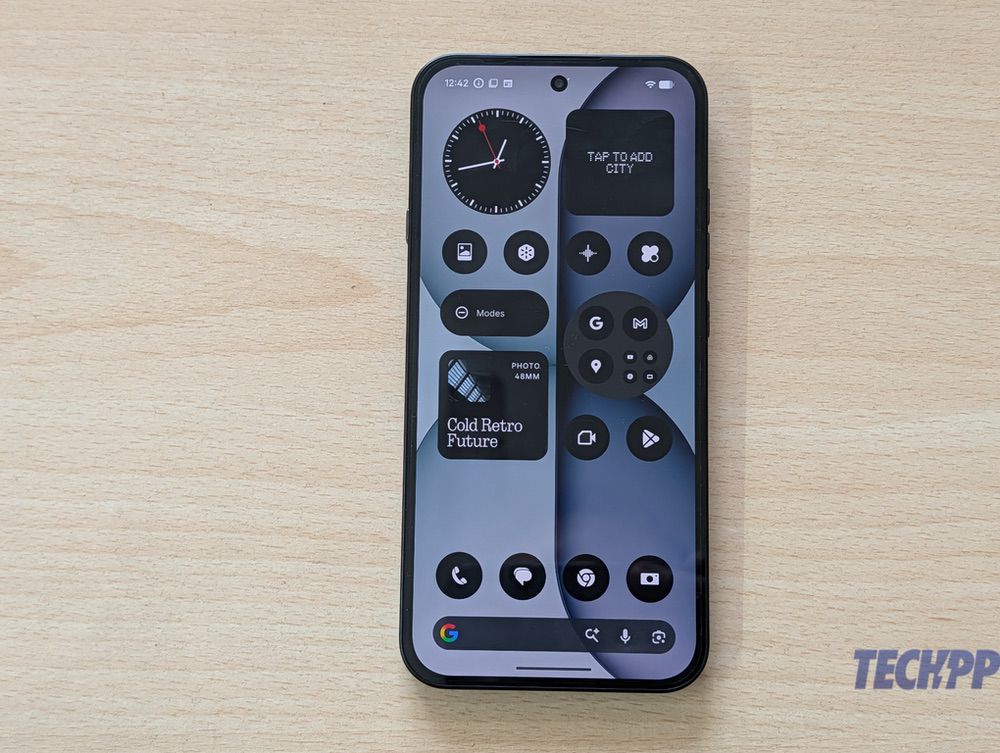
Nothing’s phones have been known for their clean, almost stock-Android-like interface, and although third-party apps have now entered the picture, Nothing OS still retains a lot of its simplicity. The Snapdragon 7s Gen 4 processor is not a gaming beast, but it handles everyday tasks (Web browsing, emails, messages, social media, etc.) super smoothly. We even got some decent CoD and Asphalt sessions in, although we would advise tweaking the graphics. Casual games like Candy Crush Saga and Alto’s Odyssey run very smoothly. The higher resolution display also makes the Phone (4a) great for viewing content, and combined with good stereo speakers, this is a very good option for those who love to consume multimedia on the move.
The Essential key on the left side of the phone allowed us to capture and analyse what was on our screens, analyse images, and also make quick notes. It is a handy tool, but it is still not very intuitive; perhaps we have gotten too used to the likes of Gemini and others. Speaking of Gemini, it works beautifully on the Phone (4a), and so do other AI tools like Circle to Search. The phone also comes with Nothing’s Essential AI tools. These include Essential Search, which allows users to search for anything on the phone or on the Internet by simply swiping up from the homescreen. There is plenty of AI wizardry around on the phone, and knowing Nothing, more will keep arriving via updates.
We have mixed feelings about the Glyph Bar on the back replacing the more visible Glyph UI, While it is more subtle and allowed us to keep track of notifications, calls, and even be used as a stopwatch and to keep track of the progress of certain events (Zomato orders, Uber arrivals), we preferred the older Glyph Interface, perhaps simply because it was easier to see and interpret. It also gave the phone a much more distinct personality. But this might be just a matter of habit.
The in-display fingerprint scanner works smoothly, and the call quality is very good. The phone is a little on the large size but we guess we will get used to it by and by.
Nothing Phone (4a) Battery life and charging: All day operator
The Nothing Phone (4a) comes with a 5400 mAh battery, which is larger than its predecessor. However, its battery life is actually the same as the Phone (3a). This is most likely because of the brighter and higher-resolution display. We were comfortably able to get through a day of normal to heavy use with about two hours of phone calls, some casual gaming, and with social networks, messages, and emails running in the background. More careful handling got us through a bit more than a day.
The Phone (4a) charges at 50W, and although there is no charger in the box. A Stuffcool Zeno 65W charger got the Phone (4a) from empty to full in about 65-70 minutes. While this is not bad by itself, it is slow when compared to many phones in the segment, which come with larger batteries that not only get charged faster but also come with chargers in the box.
Nothing Phone (4a) Price: From mid-segment to premium mid-segment

The Nothing Phone (4a) is available in the following RAM and storage variants at these prices:
- 8 GB/ 128 GB: Rs 31,999
- 8 GB/ 256 GB: Rs 34,999
- 12 GB/ 256 GB: Rs 37,999
These prices are considerably higher than the Phone (3a), which was launched at Rs 24,999. In fact, it is even higher than the launch price of the Phone (3a) Pro, which was introduced at Rs 29,999. While this increase in price was largely expected, given the increased prices of components, especially memory, it is still considerable and puts the Phone (4a) in the premium mid-segment, against much tougher competition.
Nothing Phone (4a) Competition and challengers: A Nordic OnePlus, a Note-able Redmi, and an older Pro bro

OnePlus Nord 5: Piling on the processor pressure
Rs 33,999 onwards
The Nord 5 comes with a classy design, and although it lacks the telephoto sensor of the Phone (4a), it compensates with a more powerful chip (Snapdragon 8s Gen 3), bigger display, and bigger
Redmi Note 15 Pro: Always Note worthy
Rs 29,999 onwards
The Note 15 Pro sports a very impressive 200 megapixel main camera and comes with a bigger display and battery, but again has no telephoto, and its Dimensity 7400 Ultra is considered slightly behind the Snapdragon 7s Gen 4 on the Phone (4a)
Vivo T4 Pro: Periscope zoom and power too
Rs 29,999 onwards
The T4 Pro brings an elegant and more conventional design and also packs in a periscope telephoto sensor as well as a Snapdragon 7 Gen 4 chip and a bigger battery.
Nothing Phone (4a) Review Verdict: For those wanting lots of zoom on a mid-segment phone

The Nothing Phone (4a) is more expensive than its predecessor, but it definitely is a step ahead in terms of performance and specs. In some ways, it takes the place of the Pro version of its predecessor. While reviewing the Nothing Phone (3a) Pro, we had said that while the phone was a good performer, it could not be matched in terms of camera performance and design. And what made its cameras different from the others was the presence of a powerful zoom.
The same applies to the Nothing Phone (4a) too. Finding phones with more powerful chips and bigger displays, and batteries at their price is not going to be difficult (hey, just look up our challengers), but those very good cameras and very edgy design change the equation. And just as in the Phone (3a), what makes the Phone (4a) special in the camera department is the presence of the zoom. If you are looking for a phone that looks different and has exceptional cameras in the mid-segment, then it is difficult to beat the Nothing Phone (4a).
- Eye-catching design
- Large, bright display
- Very good main and telephoto cameras
- Smooth operation
- Useful AI tools and Essential key
- One of the cleanest UIs (even now)
- Very good camera preset styles
- No charger in the box
- Slightly big in size
- Glyph Bar is not as effective as Glyph Interface
- The ultrawide camera is disappointing
| Design & Appearance |
|
| Software |
|
| Cameras |
|
| Performance |
|
| Price |
|
|
SUMMARY
The Nothing Phone (4a) costs more but steps up in performance and specs, almost replacing the 3(a) Pro. Rivals may offer bigger chips or batteries, but its zoom cameras and bold design make it hard to beat. |
4.0
|

