

As with so many smartphone-y things, folks love to blame Apple for this one too – the whole thing of people lining up hours (sometimes, even days) to be among the first to get their hands on a new iPhone. Samsung and a few other rivals have even mocked those who have lined up, and many critics have referred to them as ‘sheep.’ And as with so many smartphone-y things, the very brands that mocked the lines of consumers waiting for a new iPhone soon switched to showing lines of consumers waiting for their own devices.

Today, be it a new phone from Apple or Samsung or Xiaomi or even newcomer Nothing, it is common for media, social and traditional, to feature lines of consumers waiting eagerly to get their hands on the latest shiny (or matte finished) new phone.
New shiny phone or a bug-laden gizmo?
Well, given what has been happening over the past year, we feel that perhaps people should stop wasting their time queuing up for new phones. It is just not worth the trouble. The early adopter – those who invest early in a device or technology – has been reduced to a guinea pig by most brands. What’s worse, they are being asked to pay a premium in terms of both price and hardship (queuing up is not fun) for this “privilege.”
If that sounds a little extreme, let us cast an eye over some of the high-profile phone launches of recent times. Why high-profile phones? Well, because those are the ones that people generally line up for. Be it the OnePlus 12 and 12R, the Samsung Galaxy S24 series, the Pixel 8 series, or even the recently released Nothing Phone (2a), almost every high-profile device has come in what can only be described as a slightly unfinished condition at the time of hitting the market. As a result, those who queued up for it, sometimes even shelled out an advance for the device, ended up with something that was not quite finished and needed updates to set it right.
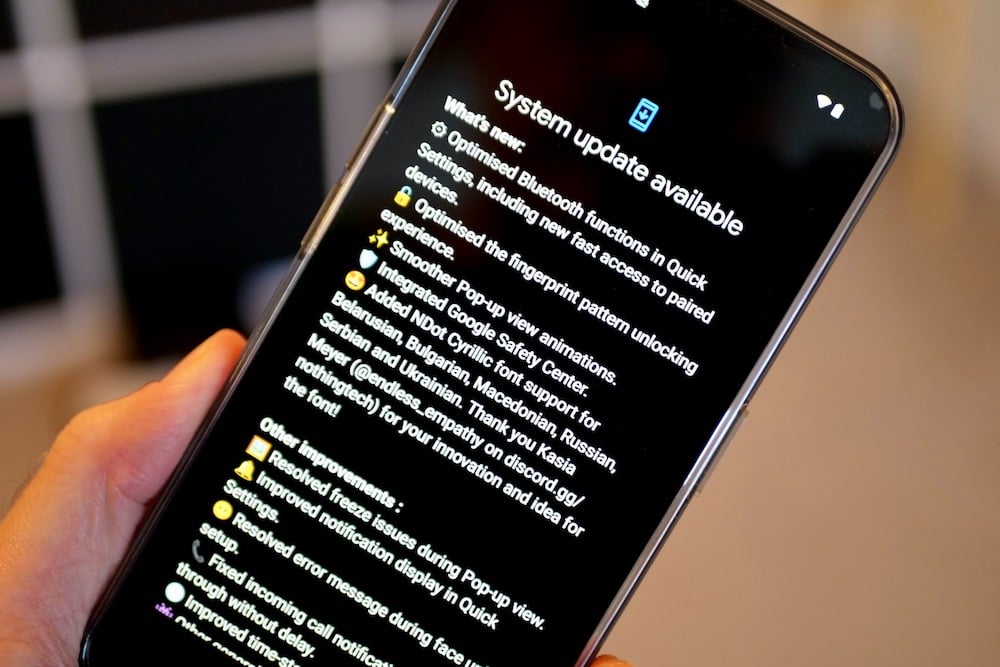
In fact, almost every major phone launch these days seems to be followed by a spate of software updates shortly after launch that claims to “improve” the performance of different phone features and “fix errors.” We are not referring to “feature drops” (thank you for the term, Google), but to updates that often tend to deal with the sort of issues that you would expect brands to have worked out well before launching a device – matters pertaining to heating, battery life, display calibration and of course, the always present “camera optimizations.”

It is even becoming common to see phones being launched at premium prices, finally delivering features that had been hyped up at the time of the release, well after (sometimes even months after) the launch. Even the mighty iPhone has not been immune to this phenomenon – Apple released software updates to fix alleged heating in the iPhone 15 Pro and Pro Max within a month of the phone’s release.
Phone launched? An update will soon come to fix “errors” and “optimize performance”
What makes matters worse is the fact that most brands not only release devices with issues but attempt to deny that those issues exist in the first place and often issue updates only after considerable public outcry. We have heard executives of brands admit that their devices “might” have issues but that nothing was likely to be done about them as “no one has made a fuss – the reviews are positive, the public seems happy.”
In some ways, this reduces the early adapter or purchaser to the status of a guinea pig – one on whom something new is tested, and changes made only if the tests do not go well. What is more, these guinea pigs are even lining up and sometimes even paying a premium for this “privilege.” If anything, they should be the ones being paid.
Why so many premium products are being released in such a bug-ridden fashion is a matter of some debate and well beyond the scope of this article. Our sources within some brands tell us that with expanding portfolios and multiple launches, it is often not possible to test products as intensely as in the past, and also that in many cases, certain bugs only emerge after the passage of a certain amount of time.
Another issue that is encountered often is that the version of the software that is placed on the launch edition of the product has been finalized so close to the launch that there simply has not been enough time to test it adequately. Some brands also claim that there are driver issues from hardware (camera, display, processor, etc.) providers that can sometimes result in devices not behaving properly at the launch.
Is it worth queuing up for a new phone? Yes, if you love paying a premium for bugs
Whatever be the cause, the stark fact is that today, those queuing up to get a new phone at its launch are more often than not spending time and effort on a product that is far from finished. The product they will get for their efforts and money is very likely to have some issues, which might or might not be resolved with a software patch, which could be released in a few days or maybe even a few months. The supremest irony is that someone who purchases the same phone a few weeks or months later is likely not just to get a more stable and consistently performing device but also one that comes with a slightly lower price tag.
We are reasonably sure that this state of affairs will not persist for long and that the era of a device being as good as new will literally mean one in perfect condition and not as infested by bugs as an old quilt stuck in an attic. But until that happens, our advice to all those bravehearts who are willing to brave weather, crowds, and financial challenges to line up to get the distinction of being among the first to hold a new device in their geeky hands can be summed up in two simple words:
Do not.

