

In Summary
- The Redmi Pad Pro is the most expensive tablet launched by Xiaomi under the Redmi brand, with a starting price of Rs 21,999.
- Although the Redmi Pad Pro is mainly a tablet, it attains a different dimension when combined with a specially designed keyboard and stylus, becoming almost like a proper notebook. All this at a combined price of under Rs 30,000.
- It might not possess the bells and whistles and power of a flagship tablet, but the Redmi Pad Pro is, in our opinion, the best device one can get if one wants not just a tablet but a tablet that can also double up as a notebook.
When you review a tablet, well, you review a tablet. In some cases, such as that of Samsung’s tablets, you might talk of the S Pen stylus that accompanies it, and in some other cases, you might mention a few accessories like a keyboard or a cover. But in most cases, when you speak of the value a tablet delivers, your attention is mainly on the tablet itself rather than on how it performs in combination with its accessories.
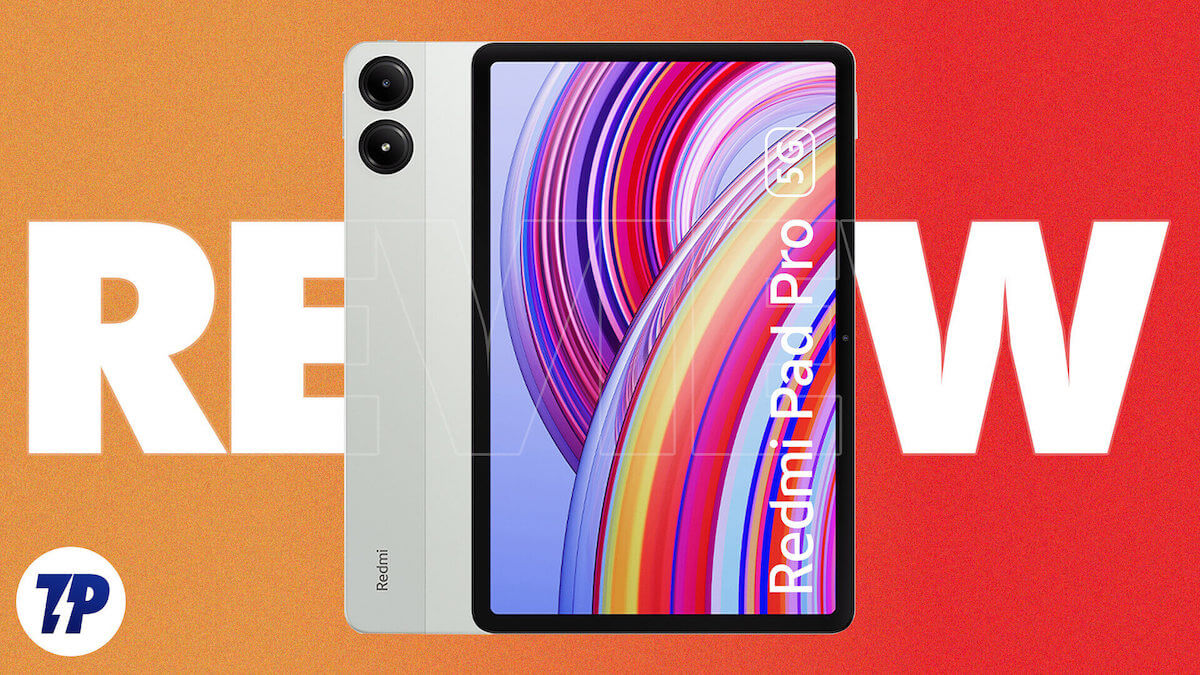
The Redmi Pad Pro tears that script up. We are going to be upfront about it from the beginning itself – it is the equivalent of a singer who is a decent vocalist in their own right but attains legendary status when part of a rock band (think of George Harrison or even Mick Jagger). But will there be takers for its ‘good-tablet-that-can-be-a-handy-notebook‘ offering? Let’s find out in this Redmi Pad Pro review.
Table of Contents
Redmi Pad Pro Design and appearance: Formed for function, not flaunt
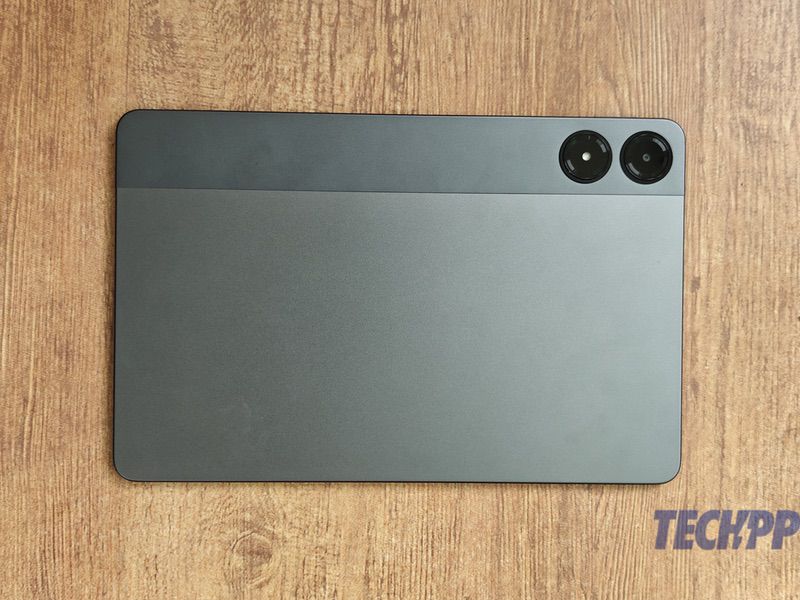
The Redmi Pad Pro sticks to basic tablet fundamentals in design terms, preferring to be solid and smart rather than flashy. Its flat, dual-toned back and straight sides will not get much attention, but the fact that they are made of metal gives them a reassuringly solid feel. The back has a slightly darker panel on the right side with two large spheres that can be mistaken for dual cameras but are actually one camera and a flash, but that is about it in terms of design. The front is all display with relatively narrow bezels. What people are most likely to note about the sides are the presence of a 3.5 mm audio jack, quad speaker grilles and a SIM card slot (a memory card slot in the Wi-Fi only model).
The Redmi Pad Pro is a tall tablet at 280 mm, as tall as the 13-inch iPad Air, but is relatively narrow at 181.85 mm (the 13-inch iPad Air is 214.5 mm), giving it a very rectangular look, and not the more square-ish form favored by the likes of the iPad and the OnePlus Pad. At around 568 grams, the Redmi Pad Pro is actually lighter than the similarly sized 13-inch iPad Air, which is 618 grams (though it sports a larger display). It is quite slim at 7.52 mm but seems solid enough to chuck into a bag thanks to that metal back and the front having Corning Gorilla Glass 3 protection. We got the Graphite Grey variant of the tablet (you also get a slightly lighter shade called Quick Silver), but while it is smart enough, it does not scream for attention.
Redmi Pad Pro spec sheet: Solidly mid-segment stuff, with some premium flair

Within that solid exterior lies some equally solid mid-segment hardware with some premium touches. The display is a 12.1-inch one with what Xiaomi calls a 2.5K resolution of 2560 x 1600 pixels, giving it a 16:10 aspect ratio, as compared to the 7:5 aspect ratio of the slightly wider OnePlus Pad 2. The display has a refresh rate of 120 Hz but can switch to 30/48/50/60/90Hz, depending on content. Running the tablet is a Qualcomm Snapdragon 7s Gen 2 chip, similar to the one seen on the very good Redmi Note 13 Pro released earlier this year, with RAM and storage variants of 6 GB/ 128 GB (only for the Wi-Fi variant), 8 GB/ 128 GB and 8 GB / 256 GB, with all of them having support for expanding storage up to 1.5 TB using memory cards. The RAM is LPDDR4X and the storage is UFS 2.2 – not the fastest, but they comfortably enable the tablet to handle routine tasks well and even dabble a little in the gaming zone.

The tablet also comes with an 8-megapixel rear camera with autofocus and an 8-megapixel front-facing camera (on the longer side of the tablet, making it more suitable for being used in landscape orientation) with face recognition that keeps you in the center of the frame. The battery is a large 10000 mAh one with support for 33W charging, and there is a charger in the box as well. Sound is handled via quad speakers and the 3.5 mm audio jack, with Dolby Atmos support. The tablet comes with Xiaomi’s HyperOS on top of Android 14. In terms of connectivity, you get Wi-Fi and 5G variants – a 5G variant of a tablet with this sort of spec sheet is rare (you normally get older chips and/or smaller displays with lower refresh rates). All said and done, it is a very good spec sheet for the price segment.
Redmi Pad Pro Keyboard and Stylus: Dear Tablet, you are now a…notebook and sketchpad (and at a crazy price)
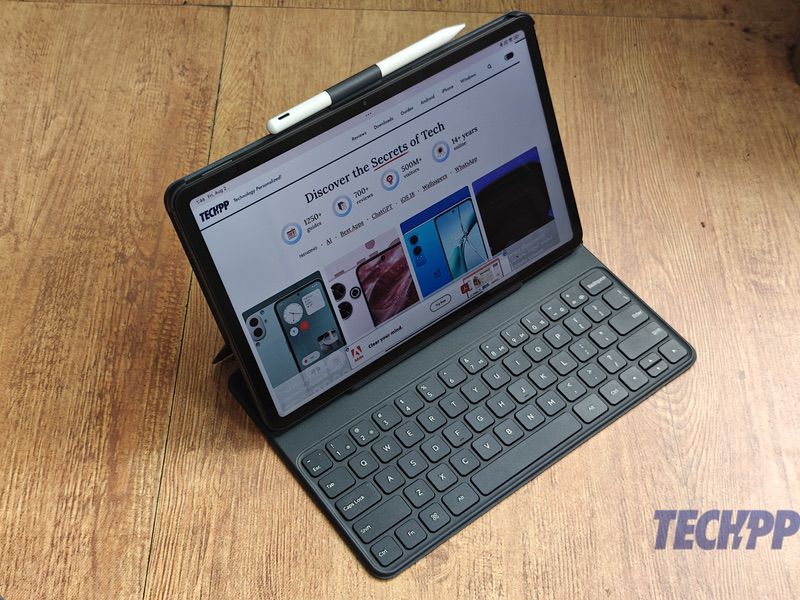
The Redmi Pad Pro might tick most mid-segment tablet boxes in its tablet avatar, but where it pulls away from its competition is in terms of its accessories. While the tablet will work with just about any Bluetooth keyboard and can support certain styluses, Xiaomi’s Redmi Pad Pro Keyboard and Redmi Smart Pen are easily the best in terms of value for money. They are not as snazzy as some of the competition – they do not connect magnetically to the tablet, they use Bluetooth connectivity, and need to be charged over USB Type-C rather than drawing charge wirelessly from the tablet. But they work. They work very well indeed.
The Redmi Pad Pro Keyboard is actually a keyboard and a cover, which protects the back of the tablet, while attaching a keyboard to its front. The tablet fits snugly into it, and although there is only one viewing angle, the cover feels solid and, at 450 grams, does not add too much weight to the tablet (the combined weight of the two is slightly over a kilogram!). The keyboard is a five-row one with large keys with surprisingly good travel. There’s no touchpad, but we prefer the larger-sized keys (they are bigger than the ones on the keyboard accompanying the OnePlus Pad 2), and a number of keyboard shortcuts make things easier. Battery life (you have to charge this keyboard separately, remember) is decent enough – a single charge should get you through 59 hours of use as per Xiaomi, or in our terms, about 7-10 days of work. Bluetooth connectivity is good, and you can actually even use the keyboard without attaching the tablet to it, although it’s not convenient to do so. It also comes with an attachable slot for a stylus, which brings us to the stylus.
The Redmi Smart Pen is snow white and comes with a removable tip and two shortcut buttons that can be used for writing and sketching, turning pages, and taking screenshots. It is 157 mm long and weighs 12 grams, and its size and sensitivity (4096-level, as per Xiaomi) make it very comfortable to use. Thanks to some HyperOS tweaks, it also comes with handwriting recognition, making it a great scribble and sketch companion. It, too, needs to be charged separately, but a single charge gets you about a dozen hours of usage, which is good enough for most users.
You would struggle to get a good keyboard cover for the price of the Redmi Pad Pro keyboard and Redmi Pen put together – the OnePlus keyboard for the OnePlus Pad 2 is priced at Rs 8,499, and Logitech’s keyboard covers for tablets generally go beyond Rs 10,000! This stylus and keyboard pair are actually among the best reasons to go for the tablet they are designed for.
Redmi Pad Pro Performance: Steady tab + Decent notebook = Super hero performer

Purely as a tablet, the Redmi Pad Pro is a very steady performer. As with all tablets, the display is key to the value a tablet brings to the consumer, and here, the Redmi Pad Pro delivers in spades. The 12.1-inch display is impressively bright, and if the colors on it seem a little too lively, that is because the color scheme of the display is set to “Vivid” by default. Change it to “Standard,” and you will get more realistic colors. The quad speakers are of good quality, making this a super device for viewing content on, whether it is the latest episode from your favorite show or a football match.
The 16:10 aspect ratio of the display makes the tablet great for multimedia consumption in landscape mode. The Redmi Pad Pro is not quite a gaming beast, but tweak the settings a little and you will be able to get a decent Genshin Impact or Call of Duty experience. Mind you, titles like Monument Valley, Alto’s Odyssey, and The Room, which are more leisurely paced, really shine on it. The tablet is very good for image and video editing, although it does not quite fly through them the way even a basic iPad does.

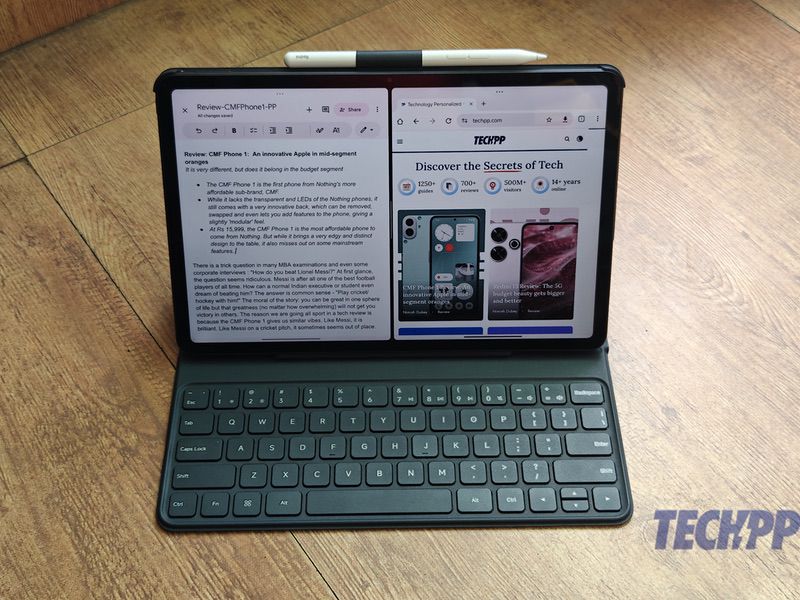
Xiaomi’s HyperOS interface works very smoothly on the Redmi Pad Pro and is surprisingly uncluttered, with Netflix and WPSOffice being the only third-party apps on our unit. Multitasking works well, and Xiaomi’s floating windows feature allows you to use apps next to each other, although it does take a little getting used to. Android remains a little hit-and-miss on tablets, sometimes behaving like a stretched phone UI, with the occasional freeze and crash, but by and large, the experience is a good one.
Both front and rear cameras are disappointing in terms of colors and details and are best used for video calls and the odd document scan. Battery life is very good, though. We got about 10-12 hours on the tablet with 5G running and got a few more hours on Wi-Fi. The bundled 33W charger charges the tablet in about 100 minutes, which is very good for a tablet in this category. We do wish there had been a fingerprint sensor on the device, though – the face unlock works smoothly but is not as secure.

It is a very impressive Tony Stark as a tablet, but add that keyboard and stylus to it, and the Redmi Pad Pro becomes an Iron Man. The Redmi Pen stylus is great for sketching and making notes, and while palm rejection is not mentioned in its specs, we did not experience any accidental touches while using it. The addition of handwriting recognition is a massive plus, as it works very smoothly across all applications and not just Xiaomi ones – part of this story was written using the Redmi Pen in Google Docs (our word processor of choice). It would have been nice to be able to attach the stylus to the tablet to carry it along, but given its price and performance, we are not complaining.
The Redmi Pad Pro Keyboard is another steady performer, adding that notebook feel to the tablet. The size and travel of the keys are its strongest points, and while you get only one viewing angle and no touchpad, we actually found it easier to just reach out and touch the display to navigate. Most of this review was written on the Redmi Pad Pro attached to the keyboard. You do need to switch on the keyboard to use it and remember to keep it charged, but again, given the performance and price, there is very little to complain about. The stylus and keyboard both charge off Type-C ports, and while they cannot be charged wirelessly from the tablet, they can be charged using the tablet’s Type-C port – the battery is big enough to charge them both easily.
Redmi Pad Pro Price: Competitive for tab, crazy for accessories

The Redmi Pad Pro is available in the following RAM, storage, and connectivity options at these prices:
- 6 GB/ 128 GB Wi-Fi: Rs 21,999
- 8 GB/ 128 GB 5G: Rs 24,999
- 8 GB/ 256 GB 5G: Rs 26,999
That pricing makes the Redmi Pad Pro one of the best value-for-money propositions in its segment. Add to that the Rs 3,999 price tags of the Redmi Pad Pro Keyboard and Redmi Pen each, and the Redmi Pad Pro’s value proposition touches another level.
Yes, there are other options in the price segment, but Samsung’s bestselling veteran, Galaxy Tab S6 Lite, comes with its legendary S Pen stylus at Rs 24,999 but has a smaller and lower resolution and older processor (Snapdragon 720). The more recent Galaxy Tab A9 Plus at Rs 22,999 has a good 11.0-inch display but loses out on the processor (Snapdragon 695) and has no S Pen support. The OnePlus Pad Go has a brilliant display and very eye-catching design, as well as 4G connectivity at Rs 23,999. Still, its MediaTek Helio G99 processor is not in the same class as the Snapdragon 7s Gen 2 on the Redmi Pad Pro. The Lenovo Pad Plus comes with a very good display at Rs 22,999 but also runs on a MediaTek Helio G99.
Redmi Pad Pro Review Verdict: A good tab by itself, a great one with accessories

At its base price of Rs 21,999, the Redmi Pad Pro is a very good proposition, and its 5G variant is perhaps the best 5G tablet you can get for Rs 24,999. However, we think that while it slays a lot of the competition in tablet form, it totally slaughters all opposition when combined with its stylus and keyboard.
If that sounds like an exaggeration, then do consider that the highest-end Redmi Pad Pro (8 GB/ 256 GB 5G) with a keyboard and a stylus would set you back by Rs 34,997 (26,999 + 3,999 + 3,999). For context, a Wi-Fi-only iPad (10th Generation) with 64 GB storage on its own would make your price lighter by Rs 34,900! The Redmi Pad Pro is perhaps the best value for money 5G tablet that can also make the cut as a handy notebook.
Tony Stark is pretty cool on his own (“Genius, Billionaire, Playboy, Philanthropist,” as he rather humbly described himself to an annoyed Captain America), but add the suit, and he becomes a superhero. The Redmi Pad Pro is a lot like that. And every bit as Marvel-ous. Pun intended.
- Smooth performance
- Superb display
- Very good keyboard and stylus
- Good speakers and a 3.5 mm jack
- Good battery life
- Wi-Fi and 5G connectivity
- Relatively clean HyperOS
- Pricing (of tablet and accessories)
- Mediocre cameras
- No fingerprint scanner
- Keyboard and stylus have no magnetic attachments and need to be charged separately
- Android on tablets remains iffy.
| Design & Looks |
|
| Software |
|
| Performance |
|
| Battery |
|
| Price (with accessories) |
|
|
SUMMARY
It might not possess the bells and whistles and power of a flagship tablet, but the Redmi Pad Pro is, in our opinion, the best device one can get if one wants not just a tablet but a tablet that can also double up as a notebook. |
4.2
|

