

In Summary
- If you are in the market for a tablet with productivity muscle, it is likely that you will end up having to choose between the Xiaomi Pad 7 and the OnePlus Pad Go 2.
- Both tablets are officially priced slightly above Rs 25,000, but can be purchased for under that sum with the right offers and during sales.
- While OnePlus recently released its OnePlus Pad Go 2 tablet, priced at Rs 26,999, the Xiaomi Pad 7 was released earlier in the year but has benefited from both a software update and a price cut. So which of the two tablets should you go for?
One was launched at the very beginning of 2025. The other was towards the end of the same year. One is relatively compact and somewhat rectangular; the other is unabashedly large and square-ish. Both come with stylus support and are targeted at consumers wanting tablets with a productivity side at a price in the vicinity of Rs 25,000. So which of the two should you go for – the Xiaomi Pad 7 launched in January or the recently launched OnePlus Pad Go 2? Let’s work that out for you.
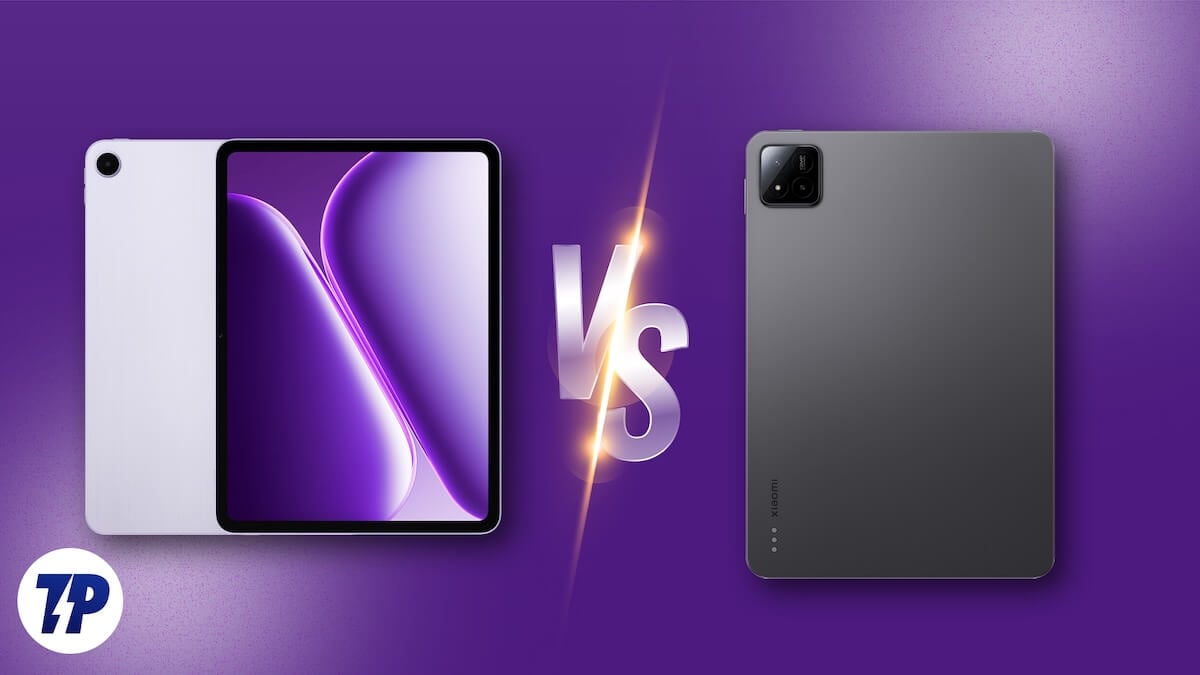
Table of Contents
OnePlus Pad Go 2 vs Xiaomi Pad 7: Design and Appearance
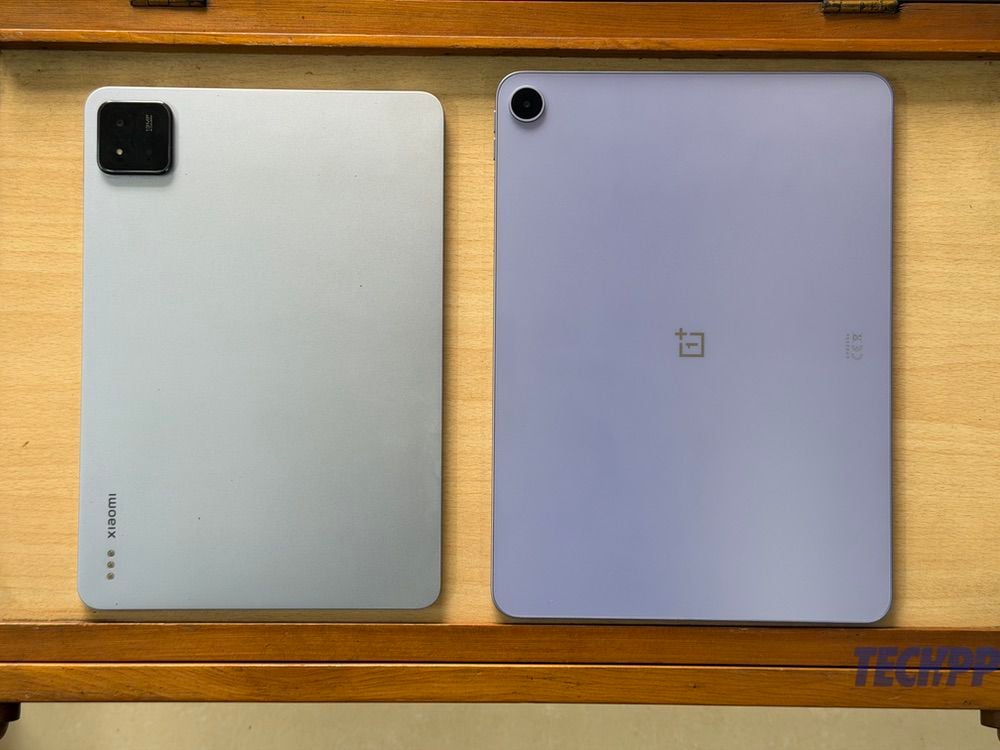
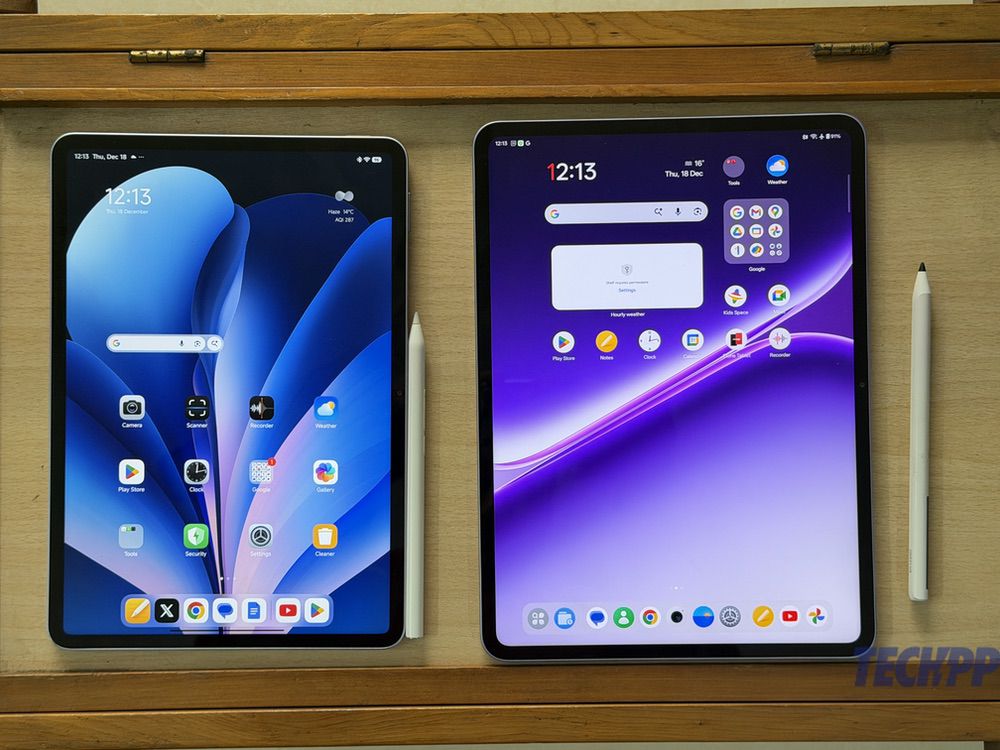
The OnePlus Pad Go 2 and the Xiaomi Pad 7 are extremely different-looking devices. The OnePlus Pad Go 2 is a much larger device – it is 266 mm tall and 192.8 mm wide, compared to the 251.22 mm length and 173.42 mm width of the Pad 7. The Pad Go 2 also has a more square-looking (iPad-ish) appearance, while the Pad 7 is more rectangular.
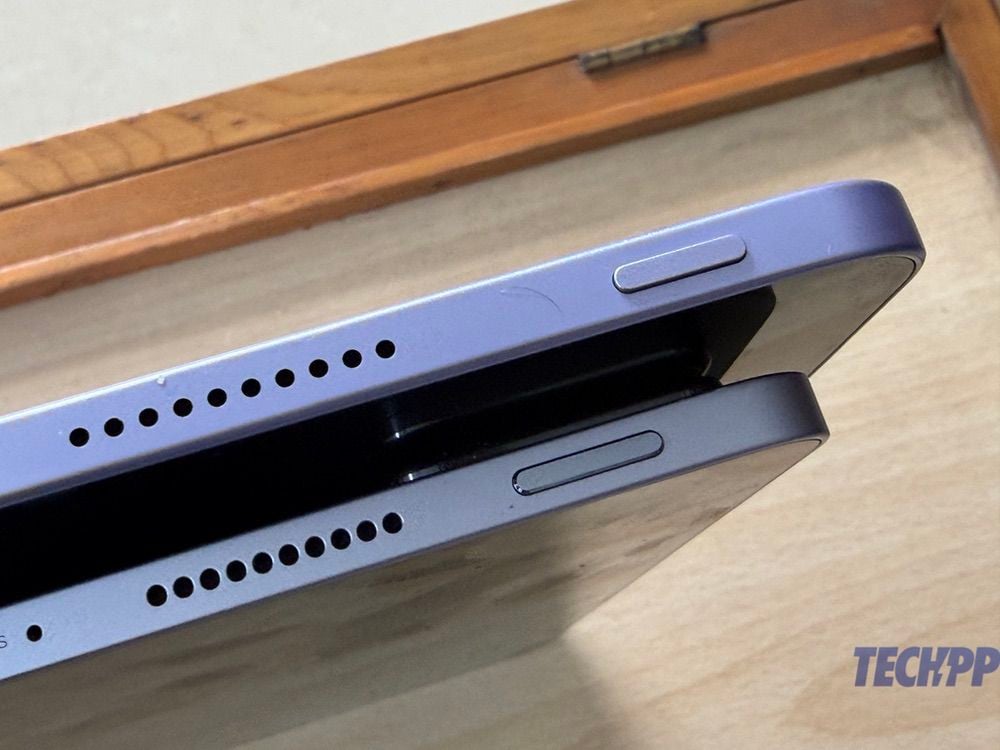
Both are extremely slim devices; the Pad Go 2 is 6.8 mm, while the Pad 7 is even slimmer at 6.18 mm. The bigger size makes the Pad Go 2 significantly heavier than the Pad 7 – it is 597 grams as compared to 500 grams for the Pad 7. Both tablets have a very premium look to them with metal frames with straight sides and flat metal backs. The Pad 7 has a large square camera unit while the Pad Go 2 has a smaller, circular camera unit. The fronts are predictably dominated by displays with narrow, symmetrical bezels.
The OnePlus Pad Go 2 comes in two shades – the very striking Lavender Drift and the more routine Shadow Black. The Pad 7, on the other hand, comes in Sage Green, Mirage Purple, and Graphite Grey.
The Pad 7 has the advantage of being far more compact, but we found the OnePlus Pad Go 2 to be better looking, especially in its shade of Lavender Drift, which stands out in a crowd and is more striking than the more pastel-ish Green and Purple of the Pad 7. We are voting for the OnePlus Pad Go 2 on this one.
Winner: OnePlus Pad Go 2
OnePlus Pad Go 2 vs Xiaomi Pad 7: Display

This is a battle of two very different displays. The Xiaomi Pad 7 comes with an 11.16-inch display with a 3200 x 2136 resolution and a 144 Hz refresh rate, and a maximum brightness of 600 nits and an HBM of 800 nits. The OnePlus Pad Go, on the other hand, comes with a larger 12.1-inch display with a lower 2800 x 1980 resolution and refresh rate of 120 Hz, and a similar maximum brightness of 600 nits but a slightly higher HBM of 900 nits. Which one is better is really subjective – the Xiaomi Pad 7’s display has a higher resolution, pixel density, and refresh rate, but those who like larger displays will be attracted to the OnePlus Pad Go.
Another point of difference between the two displays is their orientation – the Xiaomi Pad 7 has a 3:2 aspect ratio, giving it a very rectangular look, while the OnePlus Pad Go 2 follows OnePlus’ tab tradition of 7:5 aspect ratios, giving it a more ‘square appearance.’ In simple terms, the OnePlus Pad Go 2’s display is slightly better for generally reading content in portrait orientation, while the Xiaomi Pad 7 is better for watching videos and films and being used in landscape orientation. These are two very good displays either way – the Pad 7 has the numbers, but the Pad Go 2 has the size. We are calling this one a tie.
Winner: Tie
OnePlus Pad Go 2 vs Xiaomi Pad 7: Hardware and specs
This is where it gets interesting. In simple terms:
- The OnePlus Pad Go 2 has the larger display as we pointed out earlier, but the Xiaomi Pad 7 has a display with a higher resolution, and also has a special nano-texture display option.
- The Pad 7 comes with a slightly more powerful processor – a Qualcomm Snapdragon 7+ Gen 3 – as compared to the MediaTek Dimensity 7300 Ultra on the Pad Go 2.
- In terms of RAM and storage, the Pad 7 has 8 GB/ 256 GB and 12 GB / 256 GB variants, while the OnePlus Pad Go 2 has 8 GB/ 128 GB and 8 GB/ 256 GB variants.
- While both tablets come with LPDDR5X RAM, the Pad 7 uses UFS 4.0 storage, while the Pad Go 2 uses UFS 3.1.
- The Pad Go 2 has a 5G variant, which the Pad 7 lacks.
- Both the Pad Go 2 and the Pad 7 come with quad speakers and Bluetooth 5.4.
- Both tablets have 8 megapixel selfie cameras, but the Pad 7 has a 13 megapixel rear camera, while the Pad Go 2 has an 8 megapixel one.
- In terms of battery, the OnePlus Pad Go 2 has a massive 10050 mAh battery compared to the 8850 mAh one on the Pad 7, but the Pad 7 charges faster at 45W, compared to the 33W on the Pad Go 2.
We think the Xiaomi Pad 7 has a clear edge here, thanks to its faster processor, storage, and the presence of a 12 GB RAM variant, as well as faster charging. The Pad Go 2 is not too far behind, though, and its support for 5G, bigger battery, and of course, bigger display might sway some.
Winner: Xiaomi Pad 7
OnePlus Pad Go 2 vs Xiaomi Pad 7: Software and interface

The Xiaomi Pad 7 comes with Android 15 out of the box but has since been upgraded to Android 16 with HyperOS 3, while the OnePlus Pad Go 2 comes with Android 16 with OxygenOS 16 on top. To be fair, Android 16 had not been released when the Xiaomi Pad 7 was released.
Both interfaces are relatively clean and uncluttered and come with a number of features and functions, including using apps side by side. There’s not much to choose between them in terms of experience. Those interested in updates, however, might prefer the Pad Go 2 as it comes with an assurance of five years of OS updates and six years of security updates, as compared to four years of OS updates and six years of security updates on the Pad 7. That update record wins the OnePlus Pad Go 2 this round.
Winner: OnePlus Pad Go 2
OnePlus Pad Go 2 vs Xiaomi Pad 7: Gaming and multimedia
This is a tough round to call. The Xiaomi Pad 7 has a higher resolution display with a higher refresh rate, but the OnePlus Pad Go comes with a much larger and brighter display. In terms of processor power, too, the Snapdragon 7+ Gen 3 chip powering the Pad 7 handles games slightly better than the MediaTek Dimensity 7300 Ultra, although neither is a gaming chip – we could play Genshin Impact and Call of Duty on both with a few tweaks.
Both tablets come with quad speaker arrangements, but while the Pad 7 delivers better quality audio, the volume levels are discernibly higher on the OnePlus Pad Go. Picking between them really depends on what one’s priorities are – we think that the larger display gives the OnePlus Pad Go 2 a slight edge in the viewing experience, which is why we are picking it. But it is a very close call – those who are comfortable with a slightly smaller display will be better off with the Xiaomi Pad 7.
Winner: OnePlus Pad Go 2
OnePlus Pad Go 2 vs Xiaomi Pad 7: Productivity (or “can it work as a notebook”)
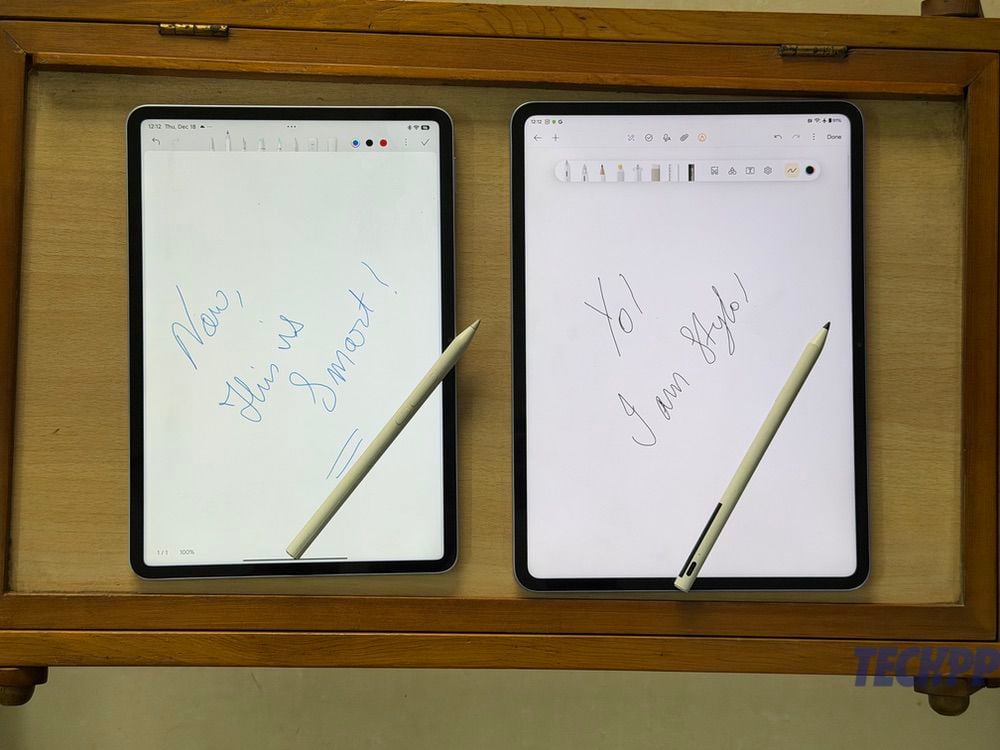
This is perhaps the most one-sided round of them all. Both tablets come with support for styluses – the OnePlus Pad Go Stylo 2 is tailored to work with the OnePlus tablet, while the Focus Pen handles sketches and scribbles with the Xiaomi Pad 7. But in terms of performance, the Focus Pen is streets ahead of the Stylo, with double the sensitivity level (8192 levels as against 4096 levels), and also a special Spotlight button that allowed us to use the stylus as a pointer and also as a remote shutter. The Focus Pen also has two functions, as opposed to one on the Stylo, and charges wirelessly off the side of the Pad 7, while the Stylo charges off a Type-C port.
The difference in performance between the two is also very clear – while the Stylo is a decent stylus, it cannot match the smoothness and fluency of the Focus Pen, which is pretty much a flagship-level performer. The Pad Go 2 did give us more space to write and sketch on, and the Stylo is more affordable than the Focus Pen, but if you are looking for really serious writing and sketching with some smart features thrown in, the Focus Pen runs out a comfortable winner.
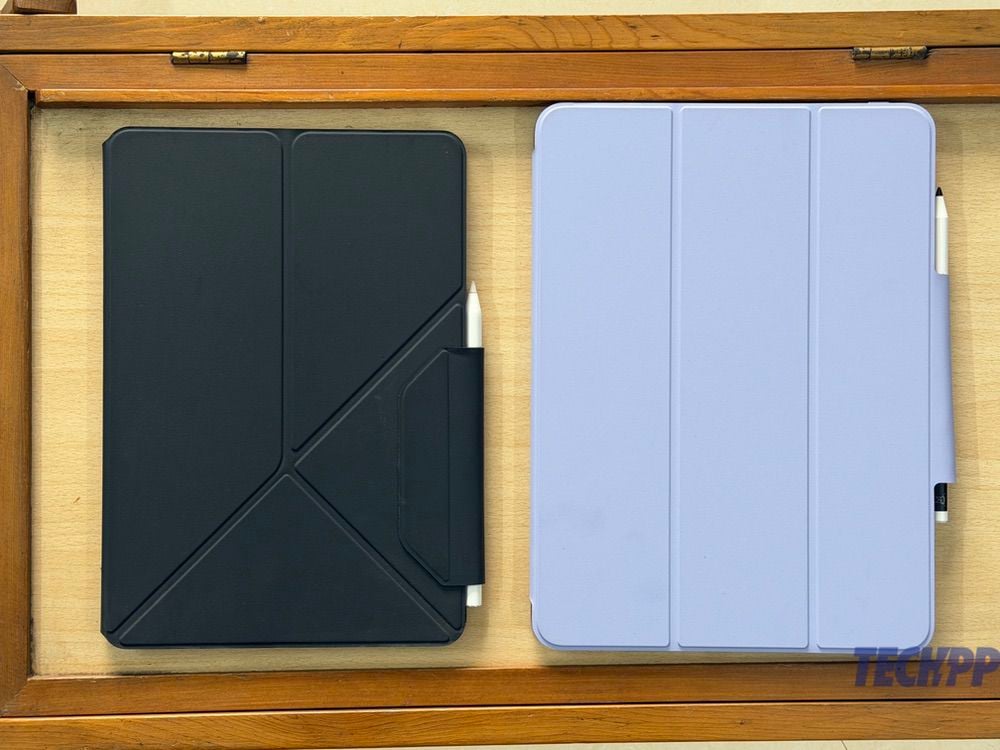
And if you plan to use these tablets as a notebook substitute or backup, then the Xiaomi Pad 7 wins by a mile. This is because even though the Pad Go 2 has a larger display, it has no keyboard covers that convert it into a notebook. The Pad 7, on the other hand, has not one, but two keyboard covers – a Focus Keyboard that holds the tablet above the keys, like Apple’s Magic Keyboard, and a more routine Smart Keyboard.
All of which makes the Xiaomi Pad 7 a runaway winner in this section – it does way more as a sketchpad and can also be used as a laptop.
Winner: Xiaomi Pad 7
OnePlus Pad Go 2 vs Xiaomi Pad 7: Day-to-day usage
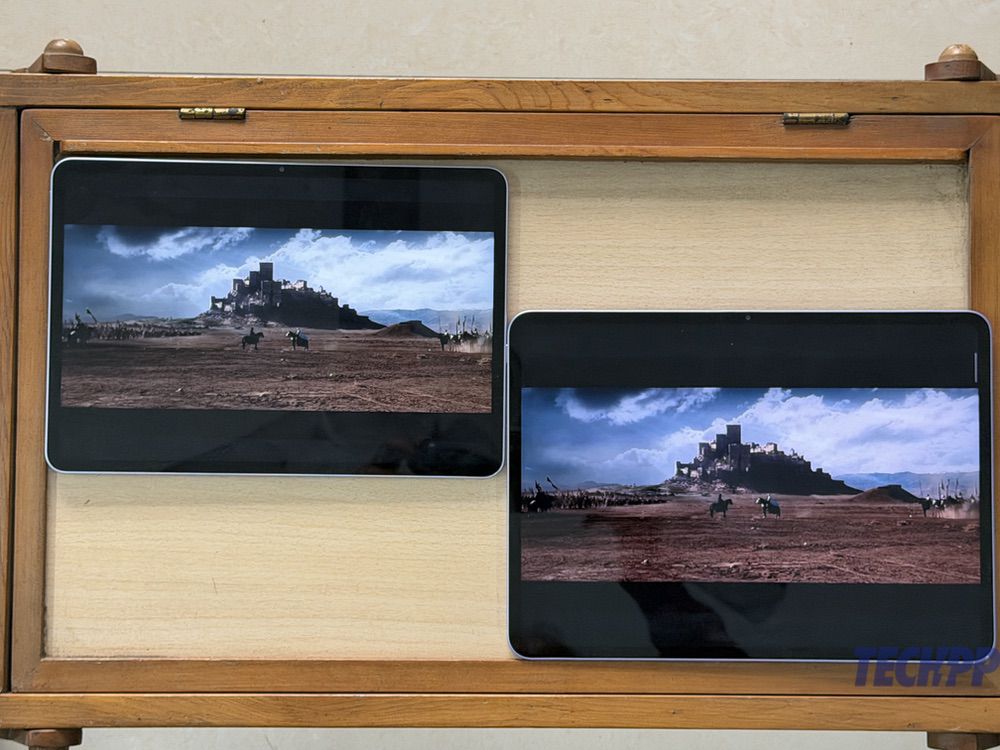
In terms of everyday use, both the Pad Go 2 and the Pad 7 are very able performances. We were able to browse the Web, compose emails and messages, read PDFs and books, and doomscroll social media endlessly (those high refresh rates sure help) on either tablet without any problems. Multi-tasking, however, seemed just a little smoother on the Pad 7, although the difference is not a major one. The Pad 7 also has better cameras, whether it is for quick snaps and scans or video calls, delivering more detail.
We generally found the Pad 7 easier to use because of its smaller form factor and lighter weight – the Pad 7 can actually be used with one hand, while the Pad Go 2 is pretty much a tablet you use with both hands, and preferably while sitting down. Yes, the Pad Go 2 does have a 5G variant, but given how frequently we use our phones as Wi-Fi hotspots, this is not a deal maker, which means another win for the Xiaomi Pad 7.
Winner: Xiaomi Pad 7
OnePlus Pad Go 2 vs Xiaomi Pad 7: Battery and charging speed
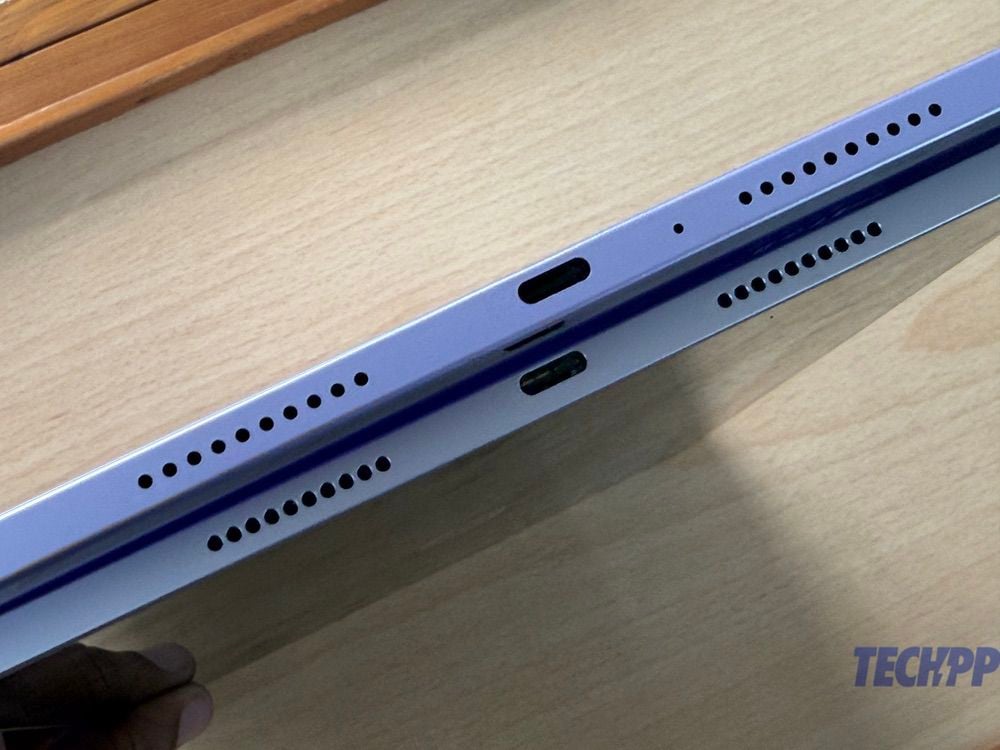
In sheer numerical terms, the OnePlus Pad Go 2 has a much larger battery than the Xiaomi Pad 7 – a 10050 mAh battery compared to a 8850 mAh one. However, the OnePlus Pad Go 2 also comes with a much larger and brighter display, which increases battery consumption. As a result, both tablets last about 10-12 hours of heavy usage and can go an extra 3-4 hours with more careful handling. In either case, you can comfortably go through an entire day without worrying about recharging. Recharge speeds are different, though. Although both tablets come with 45W chargers in the box, the Pad 7 charges at 45W while the Pad Go 2 charges at 33W. As a result, the Pad 7 recharges from 0-100 in about 90-100 minutes, while the Pad Go 2 takes about 130-140 minutes. The faster charging speed wins this one for the Xiaomi Pad 7, given that both tablets have broadly similar battery lives.
Winner: Xiaomi Pad 7
OnePlus Pad Go 2 vs Xiaomi Pad 7: Price
The OnePlus Pad Go 2 is officially available at these prices:
8 GB / 128 GB: Rs 26,999
8 GB/ 256 GB: Rs 29,999
8 GB / 256 GB 5G: Rs 32,999
The Xiaomi Pad 7 is also available in three options at these official prices:
8 GB/ 128 GB: RS 27,999
12 GB/ 256 GB: Rs 30,999
12 GB/ 256 GB Nano Texture Display: Rs 31,999
These are, however, “official” prices. In a number of online and offline stores, both tablets are available at starting prices of Rs 25,999. The OnePlus Pad Go 2 does have a 5G variant, and the Xiaomi Pad 7 has a nano-texture display option, but we think that the Xiaomi Pad 7 holds an edge here, thanks to its 12 GB/ 256 GB RAM version.
Winner: Xiaomi Pad 7
OnePlus Pad Go 2 vs Xiaomi Pad 7: Stylus and Keyboard prices
In terms of productivity-related accessories, the OnePlus Pad Go 2 comes with the OnePlus Pad Go 2 Stylo, which is priced at Rs 3,999. The Xiaomi Pad 7, on the other hand, comes with a Focus Pen, which is more expensive at Rs 5999. What, however, wins this round for the Xiaomi Pad 7 is the fact that it offers not one, but two keyboard options – a Magic Keyboard like Focus Keyboard priced at Rs 8,999 and a more basic Keyboard at Rs 3,199.
At the time of writing, OnePlus was offering the Stylo with the Pad Go 2 for a limited period of time, but this is more than offset by the product bundle options that Xiaomi offers with the Pad 7, which include an option to get the keyboard and tablet together for about Rs 30,000.
Winner: Xiaomi Pad 7
OnePlus Pad Go 2 vs Xiaomi Pad 7 Verdict: Which is the better one for you?

They might have largely similar price tags, but the OnePlus Pad Go 2 and the Xiaomi Pad 7 are two very different tablets. While the One Plus Pad Go 2 is likely to appeal to those who want a large display, the Xiaomi Pad 7 works much better as a notebook substitute or even replacement, thanks to its very good accessories, particularly the keyboard.
We will make it simple: if you do not plan to purchase any accessories with your tablet, the OnePlus Pad Go 2 would be just fine, but if you are intending to bring keyboards and styluses into the picture, the Xiaomi Pad 7 is a better choice. Its larger display makes the OnePlus Pad Go 2 very good for content consumption – it is great for viewing stuff, and with its good speaker setup, it is perfect for binge-watching. However, if you want a tablet for serious productivity work, and which can also step into the shoes of a notebook, then the Xiaomi Pad 7 is a clear winner, as it has much more of a Pro feel to it.

