

In Summary
- The Galaxy A56 is targeted at the higher end of Samsung’s mid-segment A series of devices.
- In the best Samsung tradition, the Galaxy A56 comes with a sleek design, great cameras, and a superb display. It also comes with assured software updates, making it future-proof!
- At Rs 41,999, the Samsung Galaxy A56 faces challenges from not just premium mid-segment devices but also from budget flagships like the OnePlus 13R.
The Galaxy A series has been the bridge between the premium and the budget smartphone offerings from Samsung. And one of the most recent additions to the series is the Galaxy A56. One of the most premium of this year’s “A series” devices with a starting price of Rs 41,999, the phone comes with a solid spec sheet and also brings a number of AI features to the table, making it on paper the best Samsung phone on offer between the flagship Galaxy S series and the budget M series. But its price tag puts it in the midst of some very stiff competition from other brands and places it very close to the budget flagship segment. Is the Galaxy A56 sharp enough to dodge competitive bullets and make space for itself in the market?
Samsung Galaxy A56 Design: No head turner, but definitely very classy
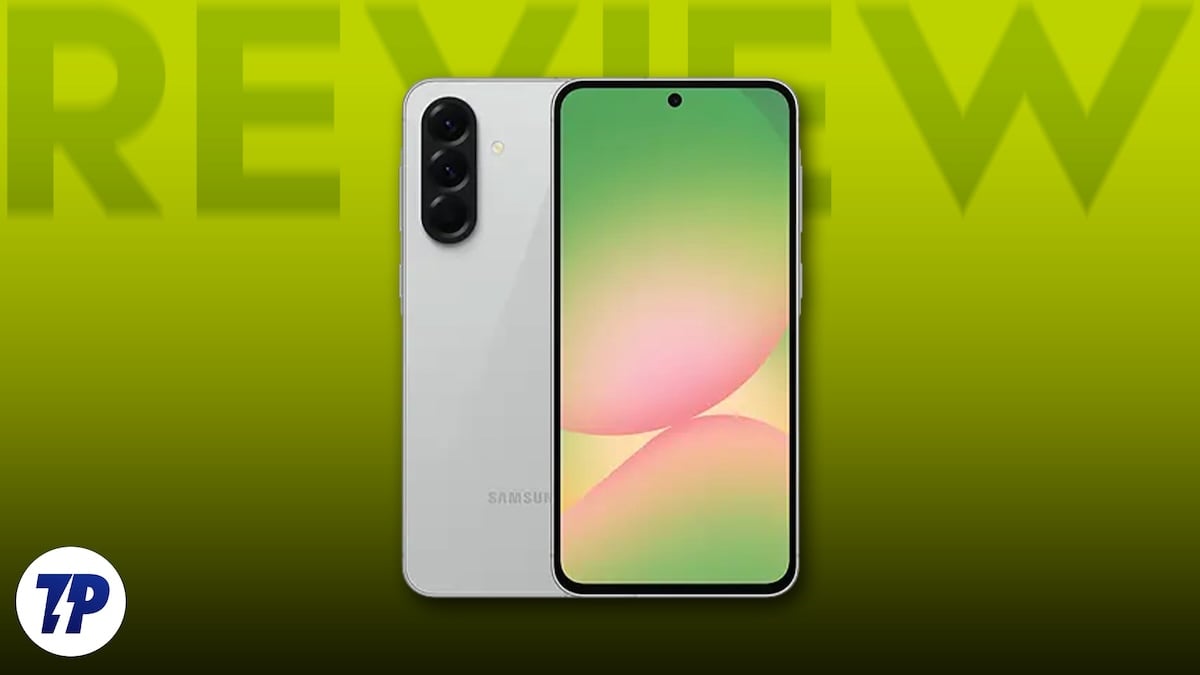
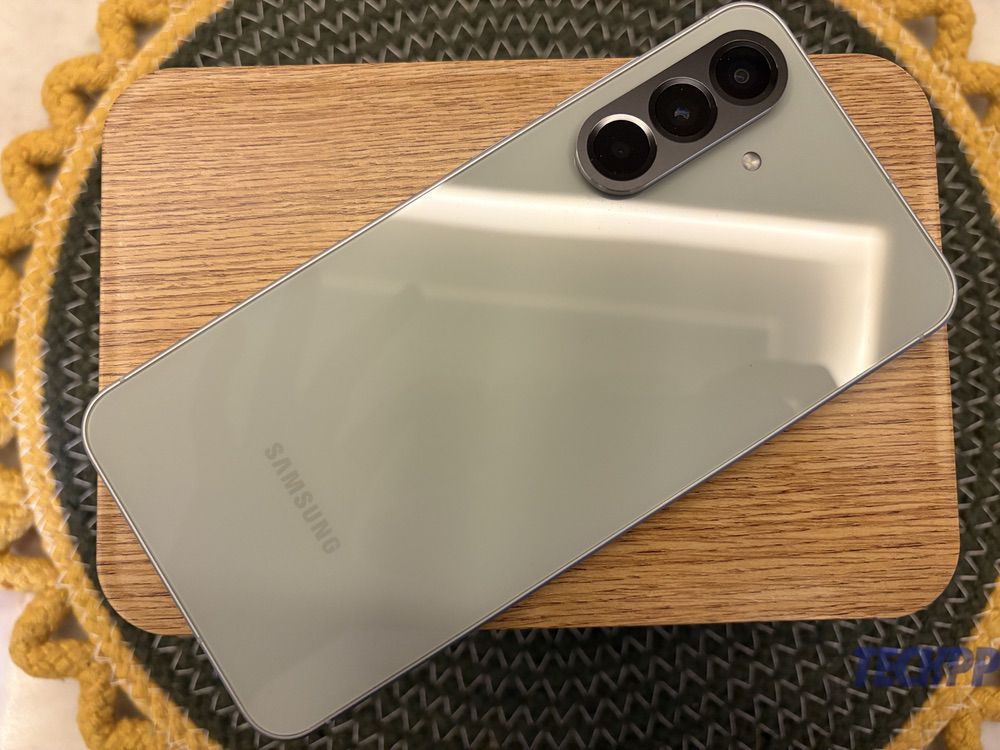
The Galaxy A56 comes with a design language very similar to its predecessor, the Galaxy A55, but with a few refinements. The biggest tweak is on the back of the phone – the A56 brings a single capsule-shaped camera unit that juts out a little instead of the three individual lenses that the Galaxy A55 had on its back. The camera unit comes with a chrome accent and has an LED flash placed right next to it. The slightly raised camera unit means that the phone does not lie flat when kept on its back and wobbles a bit.
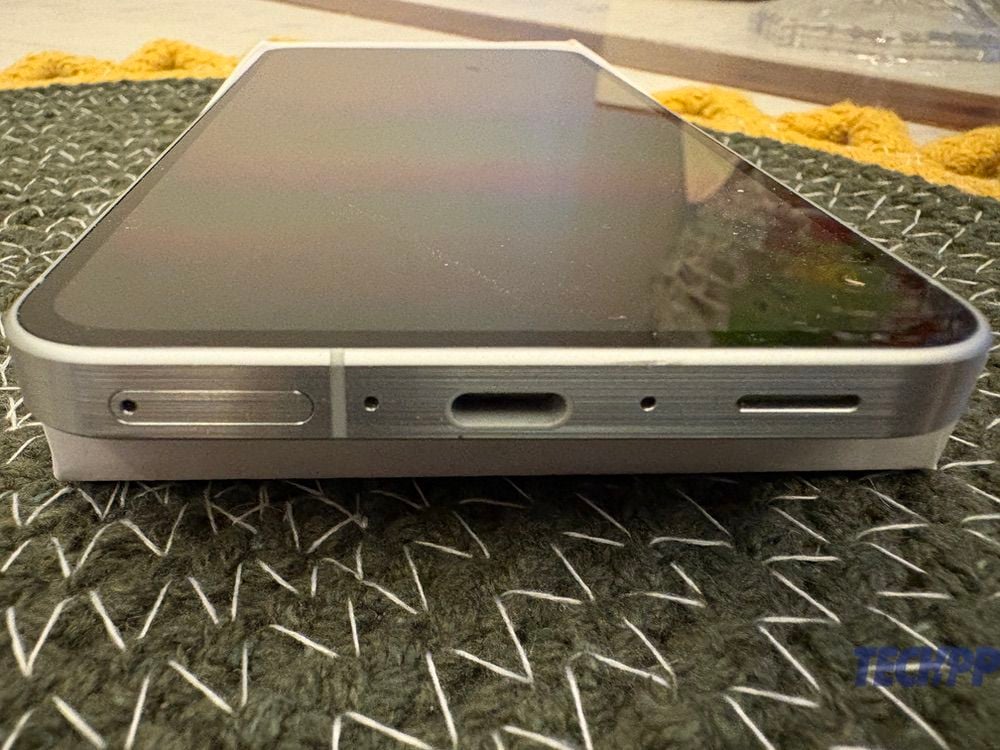
We received the Awesome Olive variant, which has a very muted Olive tone and actually might appear just gray too many. There is a Samsung logo that sits near the base but in a slightly darker shade of olive. The frame is aluminum, and keeping with the trend, the sides are shaved straight. The right side holds the volume rocker and the power/ lock button on a slightly curved key island, making it easier to reach, and the base is home to the SIM card tray, the USB Type-C port, and the loudspeaker. The top and the left side of the frame remain bare. The smooth glass back adds a premium feel to the phone.
The front of the Galaxy A56 sports a typical Samsung look with a bright, colorful display, bezels that are thin but not non-existent, and a dot notch. There is Gorilla Glass Victus+ protection on both front and back, and an IP67 rating means that the phone can handle dust and even a fall in water. At 162.2 mm, the phone is on the tall side but is impressively slim at 7.4 mm. It does not feel like a ‘big’ phone by modern standards, but it is not a single-handed use device either. At 198 grams, the Galaxy A56 is not too heavy for its size, and we could use it comfortably. The phone may have a design that is ‘inspired’ by its predecessor, but it still looks and feels very premium. The back does not catch smudges or scratches easily, and its glossy finish adds a layer of premiumness to its build. The Galaxy A56 is no head-turner but is definitely a very classy offering from Samsung.
Samsung Galaxy A56 Specs and performance: Mid-segment solidity, but some high-end stutters
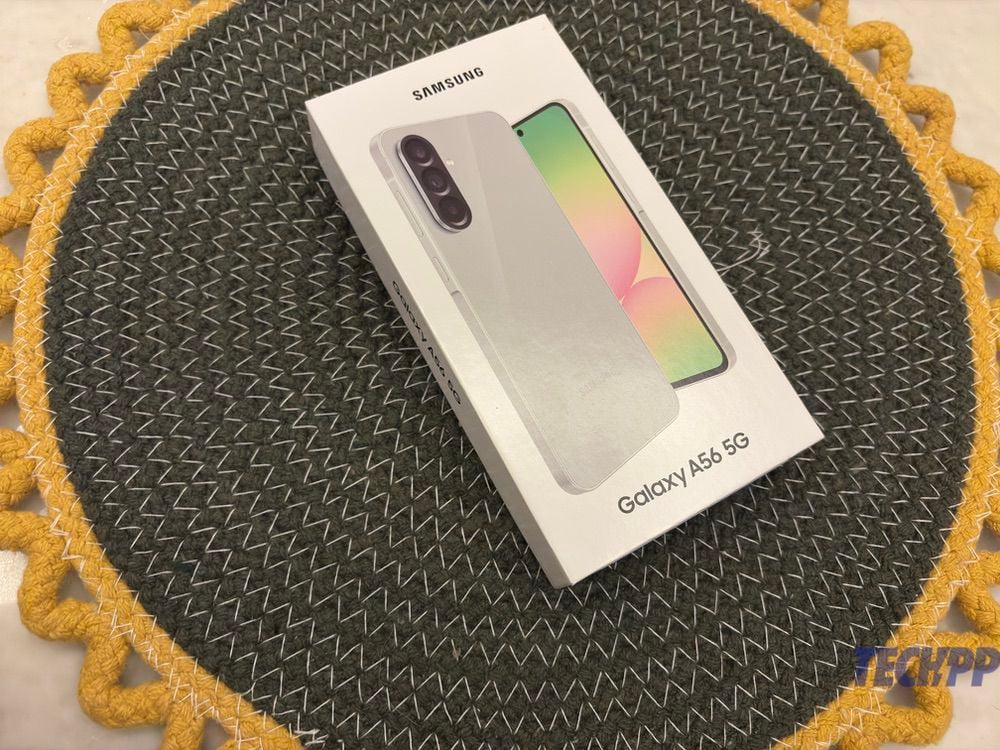
Running the Galaxy A56 is the job of Samsung’s in-house Exynos 1580 chipset. Samsung has paired this with three RAM and storage variants – 8 GB/ 128 GB, 8 GB/ 256 GB, and 12 GB/ 256 GB (we received the 12 GB/ 256 GB one). It was no surprise that the phone sailed through everyday tasks with ease. Web browsing, emails, WhatsApp, messaging, social media scrolling, the phone does everything without any hiccups. Multitasking is pretty smooth on the device, and casual games are a treat as well. However, the smooth experience gets a bit laggy once you move into high-end, power-hungry task territory. Heavy-duty games like BGMI, Fortnite, or Call of Duty Mobile do not play very well on the phone, and you face lag even with tweaked settings. The phone also tends to heat up when pushed for a long time. We would advise you to stick to basic and mid-segment smartphone-ing instead of traversing through the galaxy of power-hungry tasks without crashing.
What makes the everyday smartphone experience on the Galaxy A56 a very pleasant one is the phone’s beautiful display. The Galaxy A56 sports a brilliant 6.7-inch full HD+ Super AMOLED display with a 120 Hz refresh rate and with this being a Samsun, it is hardly a surprise that the display is vibrant, produces deep blacks, and even though its brightness levels max out at 1900 nits, it manages to look bright even under a harsh light. Very good stereo speakers make it a multimedia master and also make it a great device for content consumption. The fingerprint scanner under the display works smoothly and accurately most of the time, and the phone does very well when it comes to handling phone calls as well. Overall, as long as you keep an arm’s distance from high-end games, the Galaxy A56 will prove to be an ace performer.
Samsung Galaxy A56 cameras: Main camera game, but others chip in too

The Samsung Galaxy A56 brings a triple camera setup to the table, consisting of a 50-megapixel main sensor with OIS, a 12-megapixel ultrawide sensor, and a 5-megapixel macro sensor. The main sensor is the star of the Galaxy A56 show. It takes photos with impressive detail, has excellent dynamic range, and produces sharp images. The only area where it misses the mark is in color reproduction, where it tends to oversaturate colors. Many might not mind these slightly oversaturated tones, though. The main sensor works well in low light as well. Yes, details do get a bit compromised, but you still get decent shots. The phone also has a Night mode, but it does not make a massive difference to the end result.
Portrait shots come out nicely as well. The details were not always as sharp as we liked, but the bokeh appeared very natural and deep. The 12-megapixel ultrawide sensor is a pleasant surprise. It expands your photography horizon (quite literally), all while managing to keep a decent amount of detail on board. The colors look even more unnatural on the ultrawide sensor, but once again, we do not see people minding. The 5-megapixel macro is obviously not as impressive as the other two sensors on the back but as long as your subject is still and you take your time taking the photo, you can capture a good macro shot with it, which is a whole lot better than those token 2-megapixel macro sensors we get on some phones these days.


The phone can capture good-quality 4K videos at 30fps, and along with OIS, the phone also has a Super Steady mode, both of which combined offer some very good video output with a good amount of detail. On the front, the Samsung Galaxy A56 brings a 12-megapixel selfie sensor, and it does not offer performance that would particularly blow your mind. It handles colours well and details turn out well too, but neither of those aspects is especially impressive. It is on par with what we have seen many smartphones offer in this price band.
The camera app comes with multiple features and functions. You can switch from 12-megapixel to 50-megapixels with a tap of a button, and can also turn on Motion photos or apply a very subtle filter in real-time. There are Snapchat-like animated filters built right into the app as well as other settings and modes. The Galaxy A56 is also equipped with some impressive AI features to take its photography game a level up. The phone has features like Object Eraser, Best Face, Auto Trim, and Instant Slow-Mo, which make editing and fine-tuning photos and videos that much easier on the phone itself. That said, you will need to have a Samsung account to use all of these AI features.
Samsung Galaxy A56 Battery and UI: Good battery life and long-term update promise

The Samsung Galaxy A56 runs on a 5,000 mAh battery. This is not a big number given industry trends (we are reviewing a phone with a 7000 mAh battery as we write this), but the Galaxy A56 can easily see you through a day of heavy usage, comprising doom-scrolling, Web browsing, some gaming, and photography, all on one single charge. And if you are careful with it, the phone can even last a little beyond a day. It comes with 45W charging support, which is again not up to speed with what the competition has to offer, but is a step up from what its predecessor came with. It takes one hour and 15 minutes roughly to get the phone charged completely, which is not as fast as many of its competitors but will suffice for most users. A real disappointment, however, is the absence of a charger in the box, which is almost a must-have at this price point.
The Galaxy A56 runs on Android 15 out of the box with Samsung’s OneUI 7 on top. Samsung promises six years of security and major updates on the phone, and given the brand’s track record, one can be sure that it will deliver. When it comes to UI, the Galaxy A56 comes with a number of pre-installed apps, and while you can uninstall most of them and make the interface simpler, the presence of so much bloatware is disappointing. The phone comes with a number of AI features that fall under what Samsung calls “Awesome Intelligence” and not Galaxy AI.
Apart from all that you get in the photography zone, which we covered earlier, you also get Google’s Circle to Search feature, which lets you look up the things you have selected, and AI Select, which suggests actions to highlight or selected sections on the screen. The phone comes with Knox security, supports Samsung Pay, and has the Now Bar, which delivers real-time updates from different apps. Do not get distracted by the bloatware – there is a lot of handy functionality in the UI of the Galaxy A56.
Samsung Galaxy A56 Review Verdict: Pricey, surrounded by competition, but holds its ground
With a starting price of Rs. 38,999 for its 8 GB/ 128 GB variant (the 8 GB/ 256 GB one is priced at Rs 41,999 and the 12 GB/ 256 GB one at Rs 44,999), the Samsung Galaxy A56 finds in the tricky middle ground, inhabited by premium mid-segment devices as well as flagship killers and even the odd old flagship itself. Perhaps its biggest challenger is the OnePlus 13R which is available at Rs 42,999, runs on the Snapdragon 8 Gen 3 chip, and has a very good set of dual 50-megapixel cameras (one main, one telephoto) and not only has a larger 6000 mAh battery bit also charges it at 80W and has a charger in the box for good measure too.
Also lurking in the vicinity is the compact-ish Xiaomi 14 Civi, which has a smaller display but boasts Leica cameras, a Snapdragon 8s Gen 3 processor, and although having a smaller 4700 mAh battery, charges it at a brisk 67W and also has a charger in the box. There is also the veteran Pixel 8a, which is available at a price in the region of Rs 39,000, and is an Android fanboy favourite with its clean Android and very good cameras, although it too charges slowly and has no charger in the box. So why should anyone invest in the Galaxy A56? Well, simply because it does the mid-segment basics brilliantly and adds a very premium design, AI of the Awesome Intelligence sort, six years of major software updates, an impressive camera setup, and a typically beautiful display.
It is not the most powerful in its league, and you will need to invest in a charger to get the most out of its 45W charging speed (which is not up-to-speed by today’s standards) but it is a sleekly designed smooth performer in the mid-segment zone and given Samsung’s update record, is unlikely to be outdated for a while. If you want a phone for the long run for under Rs 40,000, the Galaxy A56 is as good as it gets.
- Beautiful display
- Good main camera, and decent ultrawide too
- Premium design with IP67 rating
- Good speakers
- Generally smooth performance
- Six years of promised security updates
- Slow charging speed
- No charger in the box
- Not a gaming beast by any standards
| Design |
|
| Performance |
|
| Cameras |
|
| Software |
|
| Price |
|
|
SUMMARY
At Rs 41,999, the Samsung Galaxy A56 faces challenges from not just premium mid-segment devices but also from budget flagships like the OnePlus 13R. |
3.9
|

