

In Summary
- The Vivo V50 is the latest phone in Vivo’s V series, and it is largely a mid-segment device known for its photography.
- The Vivo V50 boasts three 50-megapixel cameras (including the selfie camera), all with autofocus, all supporting 4K video, and all made in collaboration with the legendary Zeiss.
- Although the Vivo V50 comes with high-quality cameras, its other specs (most notably the processor and display) are relatively less impressive, leaving it facing some tough competition in its price segment.
Vivo’s V series has been known to come with some of the best cameras in the mid-segment of the smartphone market. And 2024 saw the series get a whole new photography dimension with the inclusion of Zeiss optics, something that was previously limited to its flagship X series. However, with great cameras in the V series generally come relatively less powerful other specs, and this is the challenge the Vivo V50 faces in a segment that is dominated by spec warriors.

Table of Contents
Vivo V50 appearance and design: Slim, sleek, and outstanding if you can see stars!
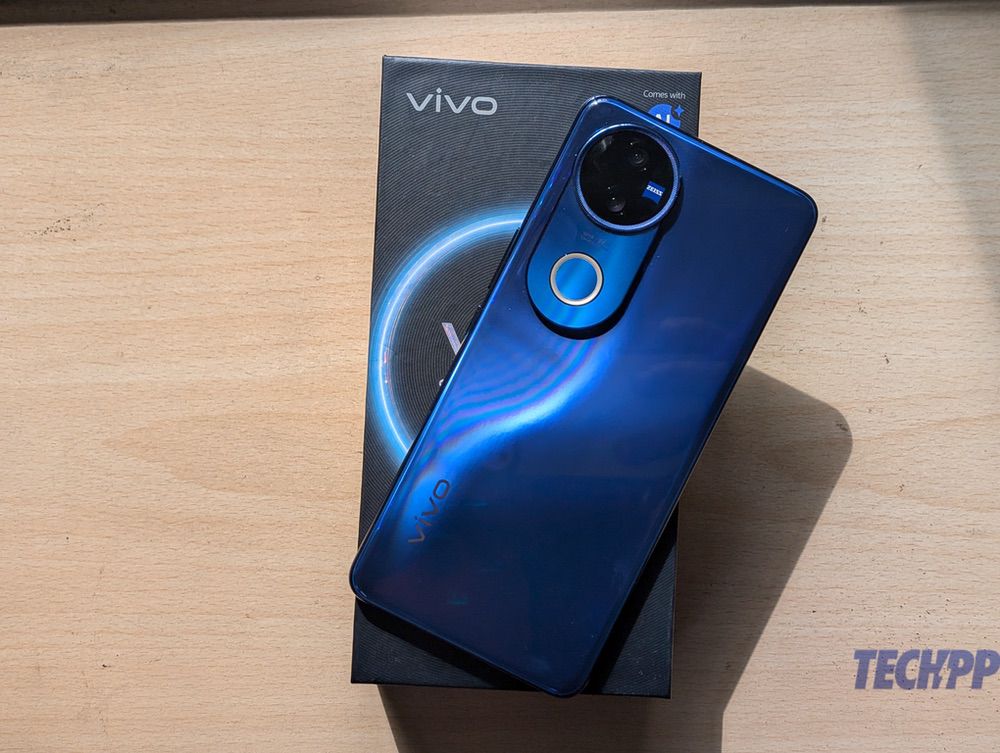
Vivo has, of late, been sticking to a steady template when it comes to phone design in its middle segment, and the V50 does not go too far from this. At a time when many brands are opting for straight sides and flat back and front design, Vivo has stuck to keeping the back and sides of the V50 curved. Even the display in front is given a slightly curved feel with the corners dipping towards the sides, what Vivo terms a ‘quad curved display.”
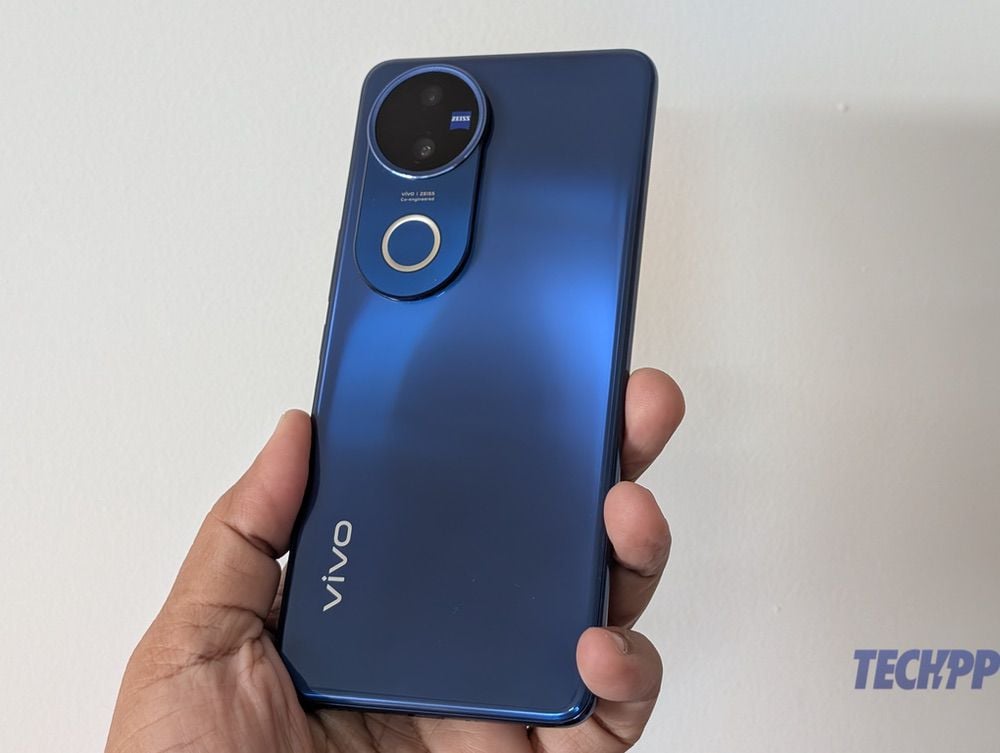
The most distinct design feature remains the horizontal capsule-shaped camera unit with a large sphere, which contains two cameras, and a smaller sphere, which is the aura flashlight, which is a Vivo V-series standard feature. The V50 is a tall phone (163.2 mm) but is surprisingly light at around 199 grams and is impressively slim: just 7.62 mm. Diamond Shield Glass protects the front from Schott, and the back is either glass or carbonate.
Although the frame is carbonate, it can be mistaken for metal. It is a pretty tough phone and comes with IP68/69 certification, which means it can easily survive a fall in the water.
The Vivo V50 can look smart, beautiful, or dazzling, depending on the color variant you choose. The Titanium Grey is quietly elegant, the Rose Red is a beautiful blend of deep pink and wine that is not often seen, and then there is the Starry Night, which seems like a glossy dark blue from a distance but reveals shimmering and shining stars when tilted. We got the Starry Night unit for review, and while it did pick up smudges rather easily, it is one of the most head-turning phones we have used in a while.
Vivo V50 spec sheet: Some steps forward, some steps back
Within that very sleek frame is a spec sheet that will evoke mixed reactions because, in many regards, it seems far too similar to its predecessor and even seems like a step back. The step back is most obvious in the choice of display. The Vivo V50’s display is the same size as that of its predecessor (6.78-inch) and is AMOLED with a 120 Hz refresh rate and an impressive maximum brightness of 4500 nits, but rather oddly has a resolution of 2392 x 1080 (FHD+), which is lower than the 2800 x 1260 of the Vivo V40. It also retains the Qualcomm Snapdragon 7 Gen 3 chip that was seen on the Vivo V40, as well as the RAM and storage variants of 8 GB/ 128 GB, 8 GB/ 256 GB, and 12 GB/ 512 GB. As in the V40, RAM is LPDDR4X, and storage is UFS 2.2, which is well behind what the competition is offering.
Where the V50 pulls ahead of the competition is in the twin towers of camera and battery. It comes with three 50-megapixel cameras, two in the back (a main and an ultrawide) and one in front, all designed in collaboration with the legendary Zeiss. While only the main one has OIS, all three come with autofocus and support for 4K video.
While these might seem similar on paper to the ones on the Vivo V40, they are still well ahead of what the competition has to offer. Vivo has also added some special shooting modes to the mix.
Then there is the battery. The Vivo V50 packs a 6000 mAh battery inside that slim frame as compared to 5500 mAh on the V40 and also comes with faster charging, 90W as against 80W. The phone comes with stereo speakers and runs on Android 15, with Vivo’s Funtouch OS 15 on top of it. While this is a decent spec sheet, it relies heavily on the cameras and battery to keep it on par with the competition, many of whom have more powerful processors and quicker RAM and storage. But then, the V series was always more a camera beauty than a spec monster.
Vivo V50 Cameras: Say cheese to the best snappers in the segment (even if you are not at a wedding)
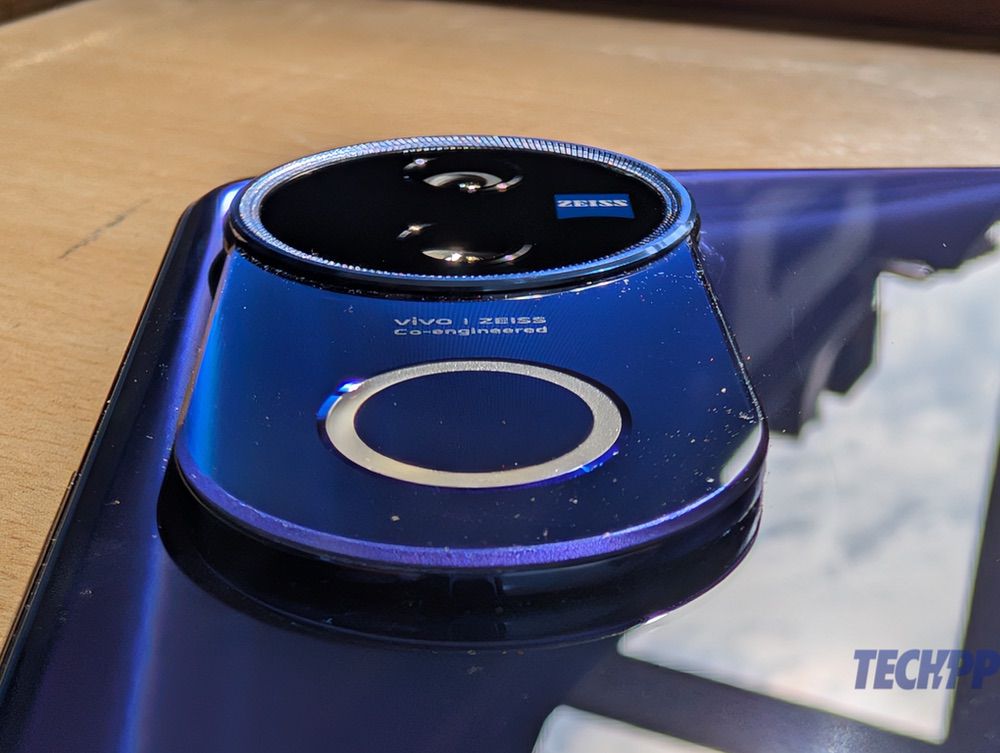
Vivo has marketed the Vivo V50 as the perfect phone camera to be used at an Indian wedding and has even come with special shooting modes for the occasion. However, using the V50 mainly for weddings would be a bit like having a cappuccino just for the froth. The simple fact is that the Vivo V50’s cameras are easily the best in the segment by quite a distance. The main sensor is the star of the camera show, delivering bright colors and a lot of detail, both in good light as well as low light situations – its low light performance is especially impressive as it outguns the likes of the more expensive OnePlus 13R and even the Leica flavored Xiaomi 14 Civi in this department.
The ultrawide and selfie cameras tend to work better in good light conditions, but again, they capture a good amount of detail, and although their colors might be considered a little too bright, we cannot see too many people complaining. Videos from all three cameras are comfortably at the top of the segment, and video from the selfie camera is comfortably better than what we get in some phones that come with more than double the price tag of the Vivo V50. The aura light flash remains one of the few flashes on phones that is actually usable, lighting up a decent amount of the area being photographed and even changing colors.

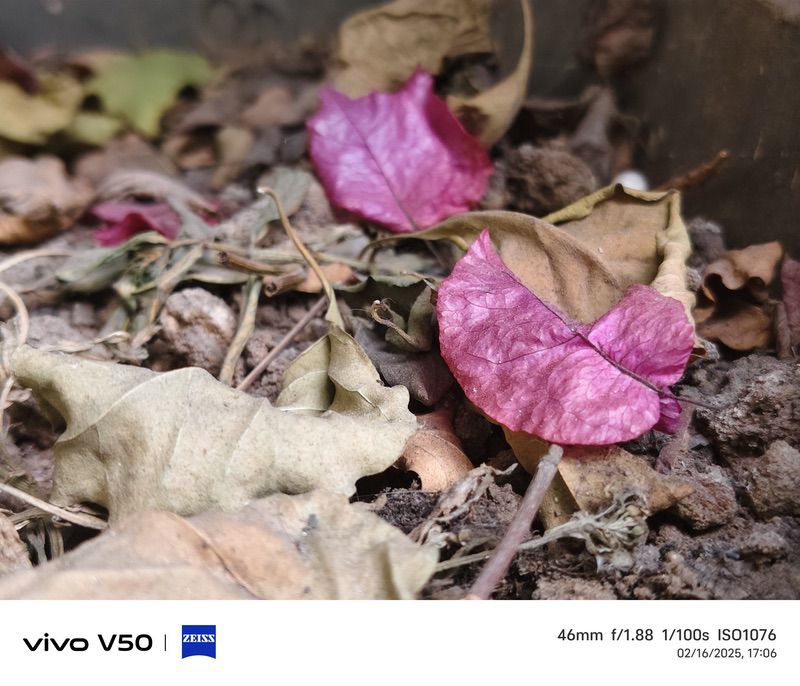


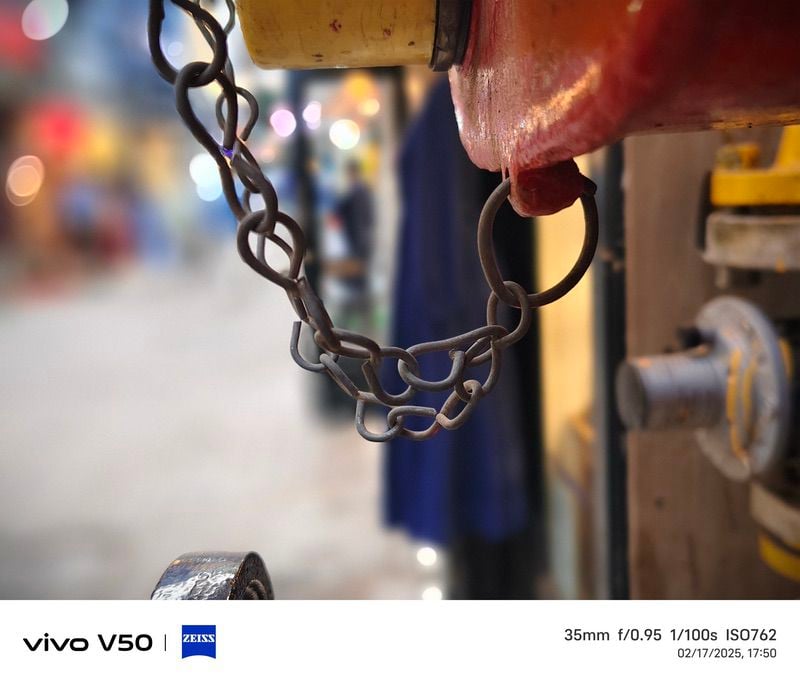
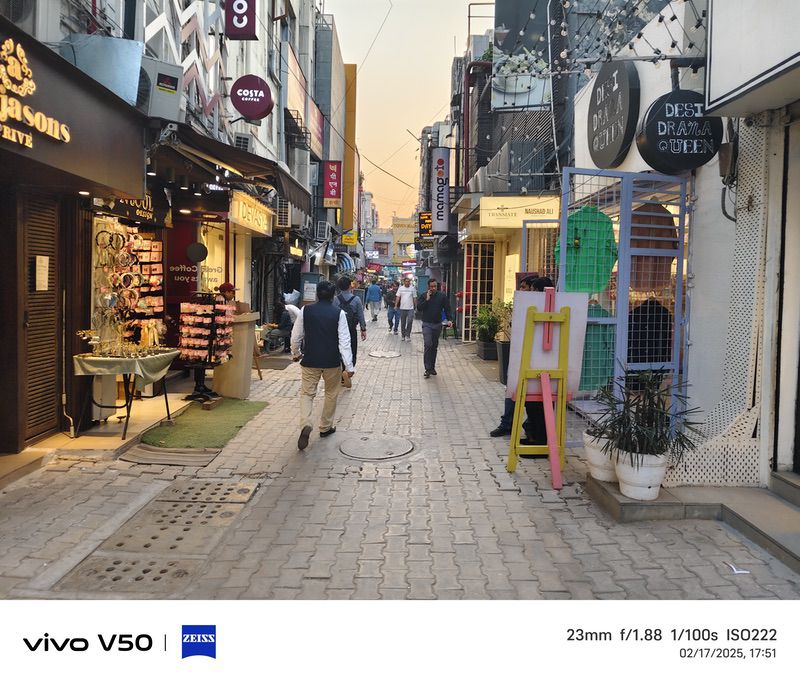





The Vivo V50 also comes with a number of shooting and editing modes that make it a bit of a camera powerhouse in its segment. Although the phone does not have a telephoto sensor (which is generally used by most brands for portrait photography), it packs in a truckload of portrait shooting options, with three (23 mm, 35 mm, and the classic 50 mm) lens options, four special portrait modes (23 mm landscape, 35 mm street, 50 mm natural and 50 mm classic), and more than a dozen shooting modes. You can also tweak the digital aperture settings on all three cameras and choose from a number of Zeiss-designed bokeh modes. It can all get a little overwhelming initially (and there are several other modes that we have not even mentioned), but once you get the hang of matters, you will realize that there is a whole lot you can do with the cameras on this phone.
Yes, we did miss a telephoto here (you can get 2x lossless zoom, which is not of much use), but in terms of performance, these are easily the best cameras in the segment, with the ultrawide and selfie being better than the ones we get even on some flagships. The only catch is that the gallery app seems to take some time to process a snap after it has been taken. So, if you take a picture, you will have to wait a few seconds before you can see it as the gallery fine-tunes it. It is more inconvenient than a deal breaker, though.
Vivo V50 Performance: A decent everyday player rather than a gaming monster
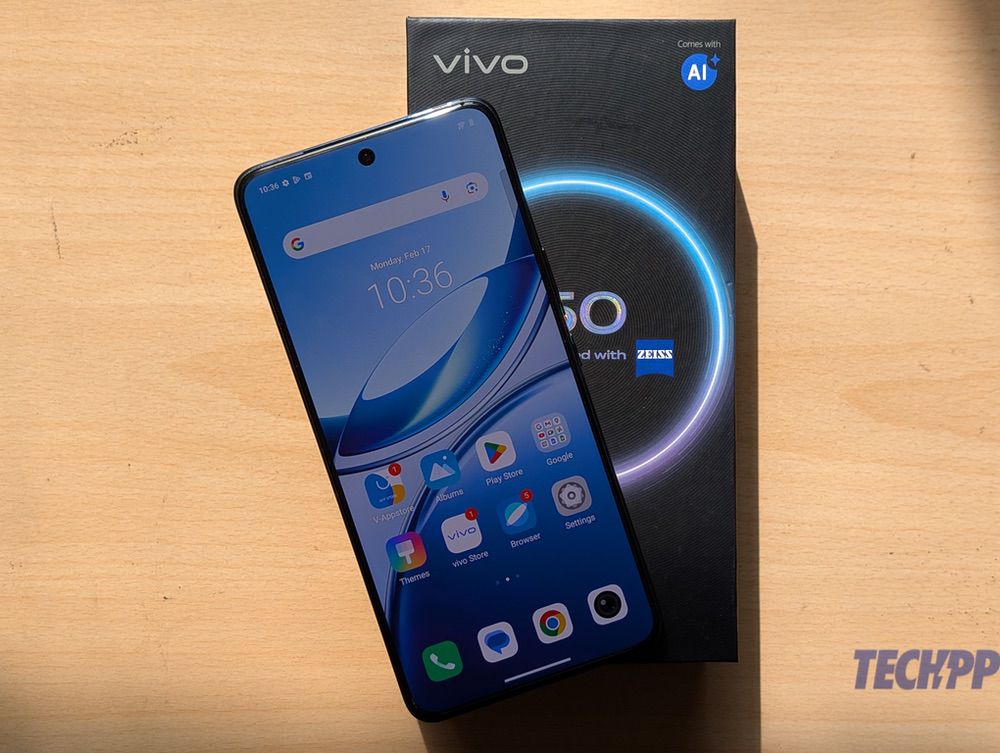
The Vivo V50’s bright display and good speaker make it a good device for viewing content, be it series or live telecasts – the slightly lower resolution of the display will not leap out at you unless you place it next to one with a higher resolution. While the phone can handle most casual games easily, the processor holds it back from being very good at gaming. You will be able to play most high-end games with graphics turned down a little but forget about getting a good session of Call of Duty or Genshin Impact.
Funtouch OS 15 is a little cluttered as compared to other interfaces, but it works smoothly enough, as long as you do not go crazy opening too many apps. There are some third-party apps on the device, too, but these can be uninstalled. The phone comes with some AI tools, including Gemini as the assistant, and also options to erase people and objects from images, as well as enhance them, but like most devices in the segment, the Vivo V50 is a little sluggish in the AI department – use the AI tools only if you are willing to be patient (and go with the 12GB RAM variant if you wish to use AI).
In all other regards, the Vivo V50 proves itself to be a good daily driver. Call quality is very good, the in-display fingerprint scanner works smoothly, and although the phone is on the taller side, its relatively light weight makes it easy to carry. We faced no major heating issues while using it. It did get a little warm while shooting and editing videos and also while playing some games, but never uncomfortably so.
Vivo V50 Battery life and charging: Big battery in that small frame
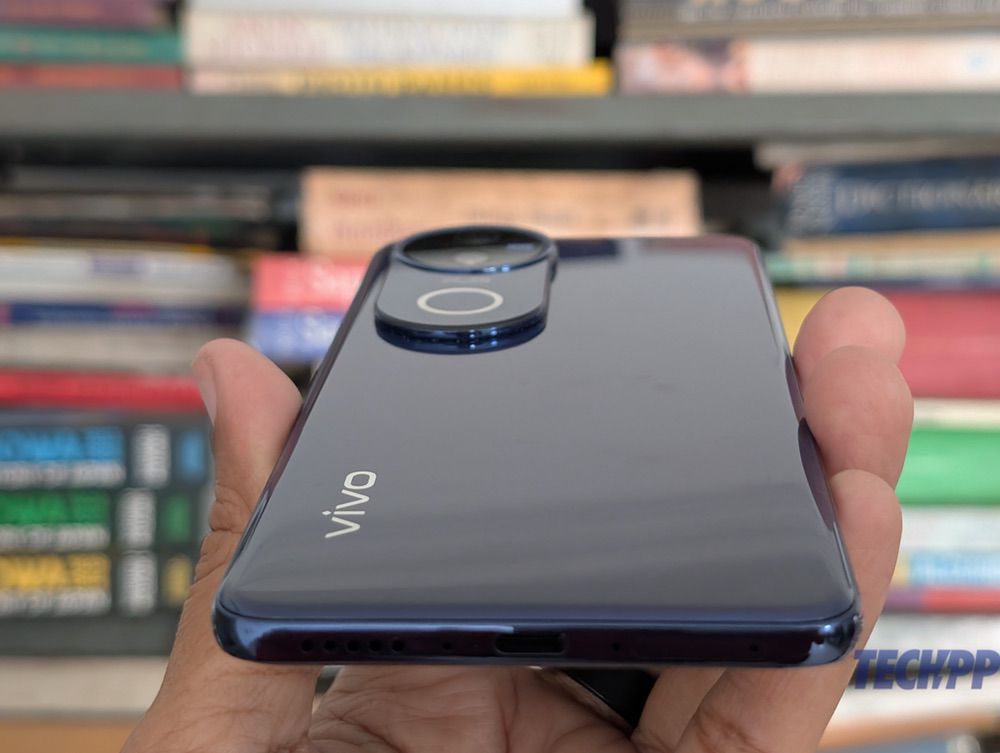
The Vivo V50 packs in a surprisingly large 6000 mAh battery inside its very slim frame – Vivo claims it is the slimmest phone with a battery of that size. And well, in combination with that relatively low-resolution display and efficient processor, we saw the phone getting through a day and a half of normal to heavy use quite easily, which is among the best in the segment. The phone comes with a 90W charger, which charges the phone fully in about 45-50 minutes, which is very impressive given the size of the battery.
Vivo V50 Pricing: Looking at the premium mid-segment

The Vivo V50 is available at the following RAM and storage prices at these prices:
- 8 GB/ 128 GB: Rs 34,999
- 8 GB/ 256 GB: Rs 36,999
- 12 GB/ 512 GB: Rs 40,999
Those prices pitch the Vivo V50 right into the premium mid-segment. And while its camera excellence is undoubted, those looking for more powerful processors and faster RAM and storage might be tempted by the likes of the OnePlus Nord 4 (Rs 31,999 onwards), which runs on a Snapdragon 7 Plus Gen 3 chip, has faster RAM and storage, and comes with a very competent main camera and eye-catching metallic design. And if you are looking mainly for power, then there is the Poco F6, which brings a Snapdragon 8s Gen 3 and speedy RAM and storage at a much lower price, although it loses out on design and cameras. Another headache for the Vivo V50 is the Xiaomi 14 Civi (Rs 36,999 onwards), which also brings two 50-megapixel cameras (one of them telephoto) designed in collaboration with another camera legend, Leica, runs on the Snapdragon 8s Gen 3 chip and has a very eye-catching, compact design. Also in the running now is the Pixel 8a (Rs 35,999), which has only two cameras on its back but comes with Google’s computational photography sorcery and assured Android updates with Google’s smarts.
Vivo V50 Review Verdict: Get it if cameras matter
We will keep it very simple: Go for the Vivo V50 if photography matters the most for you on a smartphone. Let’s face it: the phone is more than matched by lower-priced competitors in departments like display, processor and RAM, and storage. Bring those three cameras into play, however, and the Vivo V50 zooms into a zone of its own in spite of not having a telephoto sensor. This is pretty much a phone for those who put cameras well ahead of gaming. The battery life and sleek design are just the toppings on what is mainly a camera cake. Do you want great photography in terms of rear and front cameras and have a budget in the region of Rs 35,000 – Rs 40,000? The Vivo V50 is hands down your best option.
- Slim, striking design (especially starry night)
- Best in segment cameras - rear as well as back
- Superb battery life (with fast charging)
- Dust and water resistance
- Not the fastest processor
- Relatively slow RAM and storage
- Somewhat cluttered UI
| Design |
|
| Software |
|
| Cameras |
|
| Performance |
|
| Price |
|
|
SUMMARY
Although the Vivo V50 comes with high-quality cameras, its other specs (most notably the processor and display) are relatively less impressive, leaving it facing some tough competition in its price segment |
4.0
|

