

Apple is done with its “Awe Dropping” event, where it unveiled the iPhone 17 series. This year, along with plenty of upgrades, the iPhone 17 series also got a new sibling, the iPhone Air (not iPhone 17 Air as previously rumored), which replaces the ‘Plus’ model in the lineup. With the iPhone 17 Pro and Pro Max featuring an extended plateau on the back, housing the rear camera, which Apple says gives more room for internals, a bigger sensor, and a bigger battery, the same is the case with the iPhone Air. The iPhone Air also gets a plateau but houses a single 48MP Fusion camera.
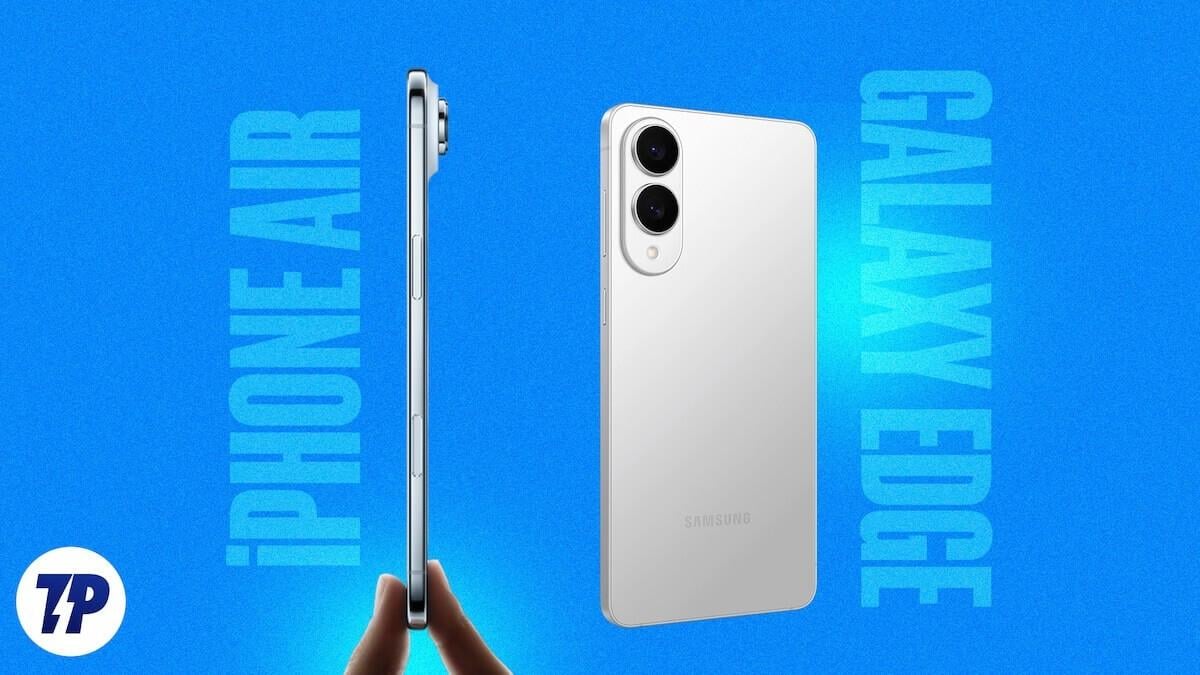
But Apple isn’t the only brand in this new category of slim phones. A few months ago, Samsung unveiled its slimmest Galaxy phone, the Galaxy S25 Edge. Now that two of the biggest smartphone companies have entered this segment, it is natural for others to follow. But if you are confused whether to pick the iPhone Air or the Galaxy S25 Edge, this guide will help you get a better picture of which one to choose. With that said, let’s jump right into it.
Table of Contents
iPhone Air vs Galaxy S25 Edge: A Comparison
Design and Display
Starting off with the design, the iPhone Air and Galaxy S25 Edge both have main highlights in how slim they are. Both phones are quite slim to hold, and they are also quite light. The iPhone Air features a 6.5-inch display, protected by the Ceramic Shield 2 on both the front and back, while the Galaxy S25 Edge comes with a slightly larger 6.7-inch display, Corning Gorilla Glass Victus 2. Both phones feature a 120Hz refresh rate display, making content consumption and social media scrolling a breeze. The Galaxy S25 Edge weighs 163 grams, whereas the iPhone Air weighs 165 grams, which is essentially the same.

As for the thinness, the Galaxy S25 Edge measures 5.8mm, which is far less than the 7.2mm of the Galaxy S25, 7.3mm of the Galaxy S25+, and 8.2mm of the Galaxy S25 Ultra. On the other hand, the iPhone Air is even slimmer than the Galaxy S25 Edge, measuring a mind-blowing 5.64mm. Currently, the slimmest phone title belongs to the OPPO Find N5 foldable, which measures just 4.2mm when unfolded. And in the slab-like phone category, the OPPO R5 (2014) is the slimmest phone ever at just 4.9mm.
The shiny titanium frame on the iPhone Air makes it stand out and gives it a much more premium feel compared to the Galaxy S25 Edge’s matte frame. That gives the iPhone Air some extra brownie points, because you are spending almost $1,000.
Here’s a comparison:
Feature |
Galaxy S25 Edge |
iPhone Air |
|---|---|---|
Display Type |
Dynamic LTPO AMOLED 2X, HDR10+ |
Super Retina XDR OLED |
Display Size |
6.7 inches (full), 6.5 inches (rounded) |
6.5 inches (diagonal) |
Resolution & Density |
3120 x 1440 px, ~513 ppi |
2736 x 1260 px, 460 ppi |
Refresh Rate |
1-120 Hz adaptive |
Up to 120 Hz (ProMotion) |
Max Brightness |
1600 nits (HDR) |
1600 nits (HDR), 3000 nits (outdoor) |
Contrast Ratio |
2,000,000:1 |
2,000,000:1 |
Panel Protection |
Corning Gorilla Glass Ceramic 2 |
Ceramic Shield 2 (front & back) |
Design & Build |
5.8 mm thin, 163 g, titanium frame, GG Ceramic 2 front, GG Victus 2 back |
5.6 mm thin, 165 g, Grade 5 titanium frame, Ceramic Shield 2 front & back |
Colors & Finish |
Multiple color options, polished titanium, slim bezel |
Sky Blue, Light Gold, Cloud White, Space Black, mirror titanium finish |
Water/Dust Resistance |
IP68 (up to 1.5 m for 30 min) |
IP68 (up to 6 m for 30 min) |
Additional Features |
Vision Booster, Always-On, ProScaler AI upscaling |
True Tone, Always-On, Dynamic Island, Anti-reflective coating |
Winner: iPhone Air
Processor and software
The Galaxy S25 Edge comes with the same Qualcomm Snapdragon 8 Elite processor as the other Galaxy S25 series phones. Plus, it is paired with 12GB of RAM, giving it a place among the flagships of the smartphone world. With such a combination, you can expect smooth gameplay and a usage experience.

As for the iPhone Air, it features the A19 Pro chipset, which is the same as the one found inside the iPhone 17 Pro and Pro Max models. While the iPhone Air packs 8GB RAM, Apple’s optimization between RAM and its in-house processor provides a much better experience. Both devices are packed with AI features, but Apple has been quite behind in terms of AI features and their performance.
Besides, the iPhone Air comes with iOS 26, and the Galaxy S25 Edge comes with Android 15 based on One UI 7 out of the box. To put it simply, the One UI 7 is far more customizable and feature-rich compared to iOS 26. And now the phone is also getting ready to receive Android 16-based One UI 8, that brings additional features. While iOS 26 is the most fun to have OS ever on an iPhone, it is way behind the tweaks the One UI 7 offers. So, if you want to have powerful AI imaging tools, an assistant, other AI tools, and a feature-loaded phone, without a doubt, the Galaxy S25 Edge should be your choice.
Feature |
Galaxy S25 Edge |
iPhone Air |
|---|---|---|
Processor |
Qualcomm Snapdragon 8 Elite (Octa-core: 2×4.47 GHz Oryon V2 + 6×3.53 GHz); Adreno 830 GPU |
Apple A19 Pro (6-core CPU, 6-core GPU, 16-core Neural Engine, N1 modem) |
Fabrication Process |
3nm |
3nm |
RAM |
12 GB LPDDR6 (standard) |
8 GB LPDDR6X |
Storage Options |
256 GB / 512 GB |
256 GB / 512 GB / 1 TB |
Software |
Android 15 with One UI 7 |
iOS 26 |
Software Features |
|
|
Winner: Galaxy S25 Edge
Camera
It is one vs two. The Samsung Galaxy S25 Edge, despite being so slim, packs a couple of cameras. It has a 200MP primary camera, the same as the Galaxy S25 Ultra, while there is a 12MP ultra-wide shooter. The 200MP camera produces sharp and balanced images, while the 12MP ultrawide camera is okay-ish at best. In the front, the Galaxy S25 Edge features a 12MP camera, which does its job well.
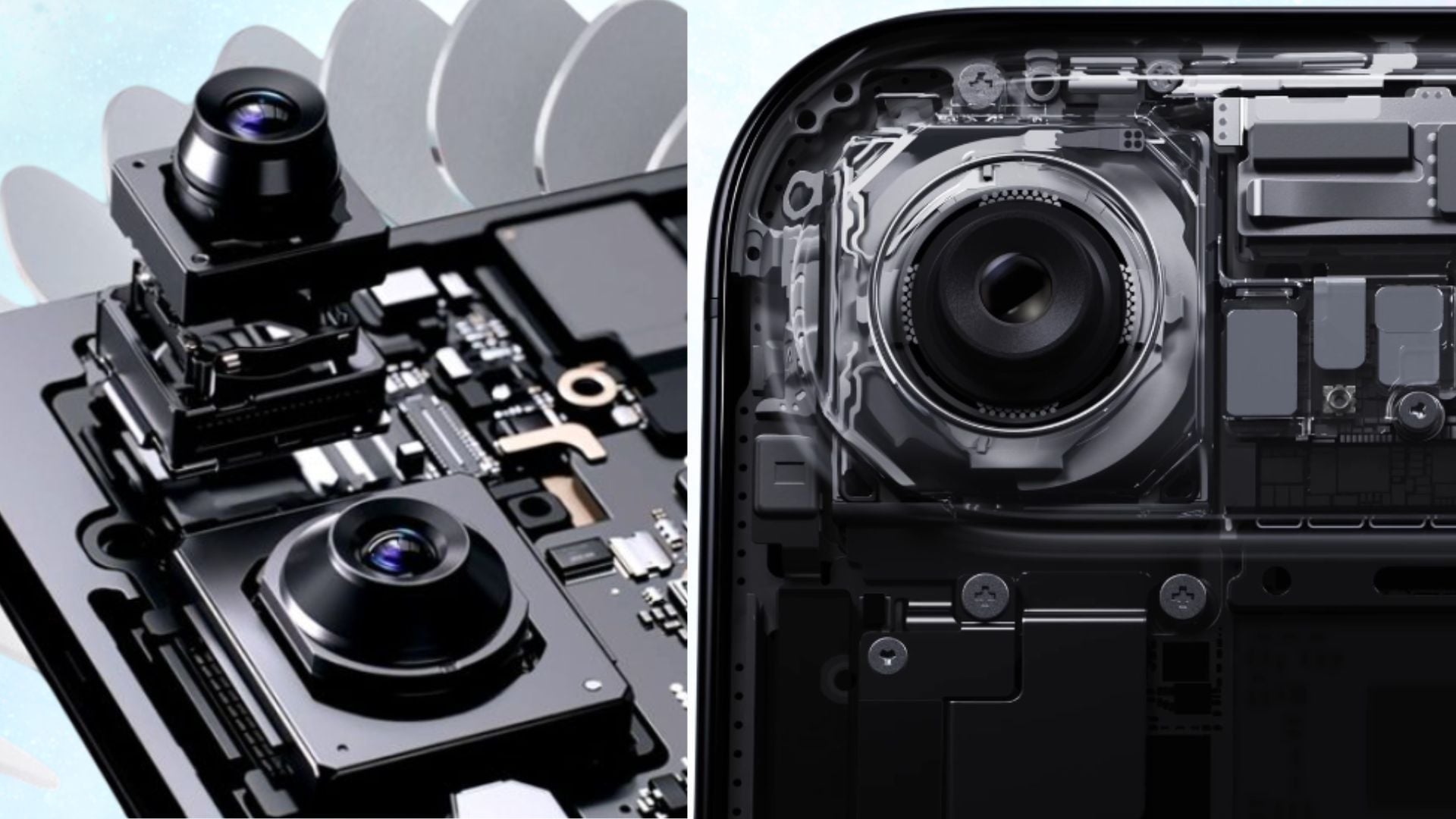
As for the iPhone Air, it features a single 48MP Fusion camera. According to Apple, it works as multiple cameras in one and gives the power of four cameras in one. It enables the popular 28mm and 35mm focal lengths. The phone can provide 2x optical quality images, and with the updated Photonic Engine, the images tend to appear natural and detailed. For selfies, the phone features a square-lens 18MP camera that lets you take horizontal images, good for group selfies.
Having a dedicated camera is always beneficial, but with so many advancements in image processing, things have changed. Brands can do more with a single lens instead of multiple lenses. Still with a 200MP flagship-grade camera, Galaxy S25 Edge shines ahead of iPhone Air.
Here’s a comparison:
Feature |
Galaxy S25 Edge |
iPhone Air |
|---|---|---|
Rear Camera(s) |
200MP main (ISOCELL HP2), 12MP ultra-wide |
48MP Fusion main |
Aperture (Main) |
f/1.7 |
f/1.6 |
Sensor Size (Main) |
1/1.3″ |
1/1.56″ |
Pixel Size (Main) |
0.6µm-2.4µm pixel binning |
2.0µm quad-pixel |
Autofocus |
Multi-directional PDAF (main), Dual Pixel PDAF |
Dual Pixel PDAF, Focus Control |
OIS |
Yes (main camera) |
Sensor-shift OIS |
Ultra-Wide Camera |
12MP, f/2.2, macro, autofocus |
Not available |
Telephoto/Zoom |
2x “optical-quality” crop, 10x AI digital zoom |
2x Telephoto (crop) |
Front Camera |
12MP, f/2.2, Dual Pixel PDAF |
18MP Center Stage |
Main Camera Modes |
Portrait, Macro, HDR10+, Expert RAW, AI ProVisual Engine |
Portraits, Night Mode, Deep Fusion |
Video Recording |
8K@30fps, 4K@120fps, 1080p@240fps slow-mo |
4K Dolby Vision up to 60fps, Spatial Audio |
Pro/Manual Video |
Expert RAW, Dual video, Pro mode, Bokeh video |
Cinematic stabilization, Action mode |
AI Enhancements |
Galaxy AI, Object-Aware, AI Zoom, scene optimization |
Photonic Engine, Focus Control, Clean Up |
Additional Features |
HDR, Night, exposure/ISO control, touch to focus |
Night Time-lapse, Portrait Lighting |
Winner: Galaxy S25 Edge
Battery life
This year’s iPhone lineup has received a big boost in terms of battery. However, this is the first year for the iPhone Air, so it will be interesting to see how long the phone will last. Continuing its tradition of not revealing battery details, Apple claims that the iPhone Air features an all-day battery. Thanks to the EU norms that require Apple to list battery specs, it is now known that the iPhone Air features a 3,149 mAh battery. iPhone Air is claimed to offer 22 hours of video playback, less than the 27 hours claimed by the regular iPhone 17.

In contrast, the Galaxy S25 Edge comes with a larger 3,900 mAh battery. It is again the optimization that matters, and based on the reviews of Galaxy S25 Edge users, the battery performance is quite weak on the slim phone from Samsung. Now, it will be interesting to see how far Apple’s claim of all-day battery goes for the iPhone Air when it comes into the hands of reviewers. For this phone, Samsung claims that the Galaxy S25 Edge could last for 24 hours of video playback.
As for charging, the iPhone Air supports 20W of wired and wireless charging. Whereas the Galaxy S25 Edge is slightly better, with 45W of wired charging and 15W of wireless charging. Though the S25 Edge seems to have an edge over the iPhone Air, it gets the points.
Feature |
Galaxy S25 Edge |
iPhone Air |
|---|---|---|
Battery Capacity |
3,900 mAh |
3,149 mAh (global eSIM) |
Battery Life (Video Playback) |
Up to 24 hours |
Up to 27 hours |
Charging Speed (Wired) |
25W (wired, USB-C PD) |
20W (USB-C, fast charge: 50% in 30 min) |
Wireless Charging |
15W (Qi) |
15W (MagSafe, Qi2) |
Battery Expansion |
Not available |
Optional MagSafe Battery; up to 40 hrs playback |
Charger in Box |
No |
No |
Battery Management Features |
AI Battery Optimization, Adaptive Power Saving |
iOS 26 Adaptive Power Mode, Optimized Charging |
Active Use (Benchmarks) |
12:06h mixed-use time |
All-day (above 15 hours typical use) |
Winner: Galaxy S25 Edge
Verdict

If you are looking to stick to the Android world of slim phones and get the best of the best features for customization and whatnot, then the Galaxy S25 Edge should be your best bet. But considering slim phones overall from both the iOS and Android worlds, then again, it is a matter of personal preferences. For now, if you want a slim Android, go for Galaxy S25 Edge, and if you want a slim iOS, then go for Apple iPhone Air, as simple as that. But between the two, based on features and everyday usage, the Galaxy S25 Edge seems to have an edge over the iPhone Air. It will be interesting to see how the iPhone Air performs in the real world.

