

In Summary
- Apple recently launched its affordable, colorful MacBook Neo notebook. Although not as powerfully specced as the MacBook Air or the MacBook Pro, it is designed to handle most basic tasks easily.
- In many regards, the MacBook Neo is a little like the netbooks that were immensely popular in the 2007-2010 period, but were overwhelmed by the iPad and improved smartphones.
- It may come with a premium price for its specs, but the MacBook Neo could well signal the return of the netbook era, with brands returning to making affordable notebooks designed mainly to work on the move for mainstream users.
In the period from 2007-2010, a number of compact, light, and low-priced notebooks suddenly became the rage. These were generally very portable, and although they did not come with top-end hardware, were adequate for what was becoming very important for many people – browsing the Web. This was the period in which the Internet was slowly becoming an integral part of our lives, with surfing the Web, using messengers, and email gaining importance. As Internet access rates came down, a computer needed to be online too.

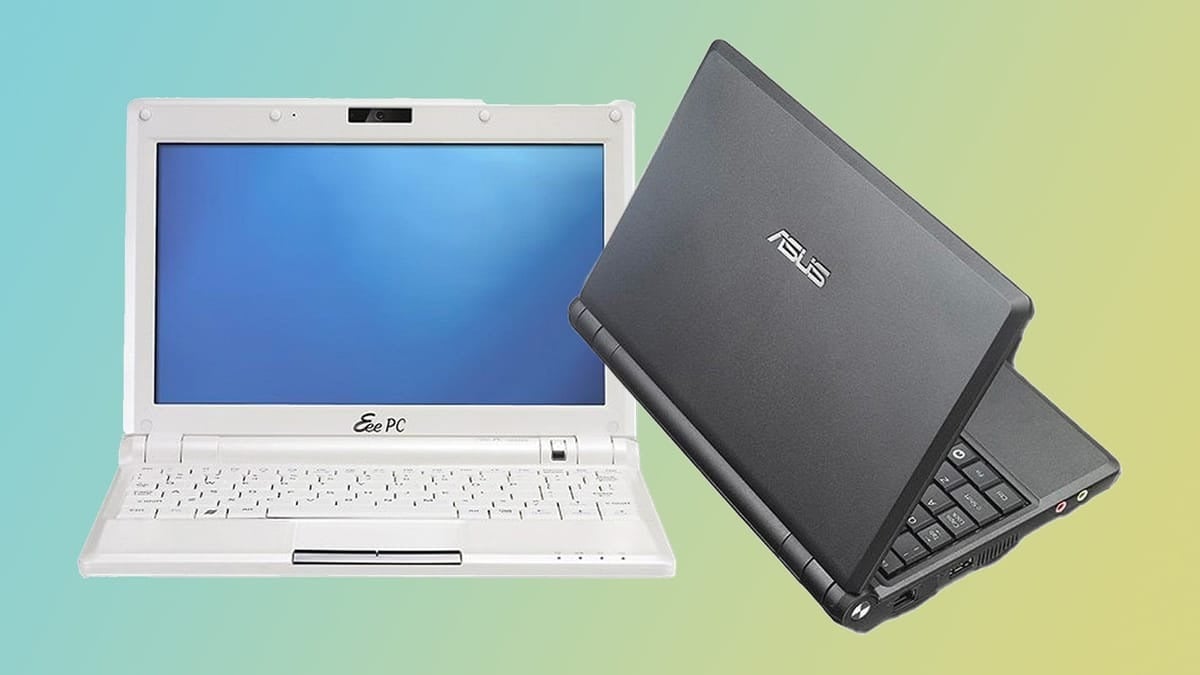
2007-2010: The netbook era (remember the Asus eeePC?)
While all this could be done on most notebooks, notebooks by default tended to be bulky and expensive. It was very troublesome to carry a hefty notebook to just keep track of your mail and messages – smartphones existed (BlackBerry, iMate, Palm, and the Nokia E series were around) but were not too good at dealing with attachments, and browsing on them was largely basic, as most websites were not optimised for mobile displays.
In 2007, Asus surprised everyone when it launched the eeePC, a small notebook with a low-end processor and a relatively small display. It was not as powerful as most of the notebooks in the market, but it was capable of easily browsing the Internet and doing most basic tasks like composing documents and even watching videos. Most important of all, it was barely a kilogram in weight and came with a price tag that was less than that of a high-end smartphone.
Although many criticized its specs, many more were quick to realise its value. Although of very little use in gaming and high-end tasks (even presentations were a challenge), it was perfect for those who needed a low-priced notebook on the move that could let them access the Web. They were particularly popular among students, who wanted a not-too-pricey notebook that they could easily take around and do “basic work” on. In short, they were great for mainstream users.
A new word was added to the tech dictionary: netbook. As its name indicated, it was basically a notebook that was designed to let the user access the Internet at a super affordable price (generally around Rs 15,000 – around USD 160-175 by modern standards).
Tablet (more specifically, the iPad) killed the Netbook star
It was the rage in tech for a while, but the netbook lost momentum after a few years. The reason for it was the emergence of better smartphones with larger displays, which were much more convenient to use for those who wanted to access the Web on the move. Netbook manufacturers also made the mistake of losing sight of the device’s main USP and instead ended up trying to make it a lightweight notebook instead of sticking to its online strength.
And then came Apple and the iPad.
With the launch of the iPad, Steve Jobs pretty much did to the netbook what he had done to styluses with the iPhone. He mocked them at a high-profile event while providing a powerful alternative. The tablet era began even as the netbooks ended.
But even though the netbook’s popularity declined, the concept of a notebook that was light in weight and on the wallet and yet was ‘good enough’ to access the Internet refused to die. In 2011, Google revived it with the Chromebook, a notebook that basically ran a browser and allowed users to do everything from word processing to presentations to watching films on it. If it could run in Chrome, it could run on a Chromebook.
Neo – the One for the return of Netbooks?
While Chromebooks did not quite attain the popularity of netbooks, they found a lot of takers in the student community because of their lightweight and price. But while Chromebooks did decent numbers, they were not as handy as netbooks, simply because they were out of sync in an age where many users needed tools like video and image editing, and were increasingly using AI. Chromebooks were simply not designed to handle the new, socially networked, AI-powered Internet.
The MacBook Neo is.

Apple’s new notebook, priced at USD 699 (Rs 69,900 in India) reinvents the netbook. Like the OG netbook, it makes no pretenses to being as good as Apple’s other notebooks, but it brings its essence to the table – you get a notebook that is capable of doing pretty much everything you need to do on the move, especially online, at a relatively lower price. Like the OG netbook, it is likely to get criticised for its specs (“a mobile processor,” “8 GB RAM is not enough,” etc), and its price, but the simple fact is that like the OG netbook, it is designed to just work for a particular audience. An audience that is more concerned about working effectively on the move than it is about specs.
As handy as before…and now aspirational too!
There is one massive difference between the OG netbook and the MacBook Neo – while the netbook was seldom seen as a premium device, the MacBook Neo is unabashedly so. Its pricing is low by MacBook standards, but it is considerably more than most netbooks and Chromebooks. But even that is likely to add its appeal – it comes with a lot of design flair, especially in terms of color, something that netbooks and Chromebooks have generally lacked. Both factors make it something that the original notebooks and Chromebooks have rarely been: aspirational.
One bought a Chromebook or a netbook when one needed to get things done but was on a tight budget; the MacBook Neo does not fall into that category. The Chromebooks and original netbooks were like those sporty bicycles that one got when one moved up a few grades in school. The MacBook Neo is more like a first car, the one that one gets when one goes into college. Not everyone gets one, but it is something that many hope to get. And like the original netbook, the Neo is designed for mainstream users rather than specialists. In many ways, it follows Apple’s template when it designed the first iPhone: a touchscreen that everyone could use, but at a premium price.
Of course, only time will tell whether the MacBook Neo will succeed. But given how the industry gets “inspired” by Apple (check the non-cosmic but very orange phones around), we can safely assume that we will suddenly see a surfeit of notebooks with snazzy colors, designed more for work on the go, rather than busting benchmarks. And not all of them will be expensive. Who knows, even Google might be persuaded to reinvent Windows and Android? The coming days could be interesting.
The netbook could be back, thanks to Neo, and the company that killed it more than a decade and a half ago.

