

In Summary
- Apple recently increased the prices of a number of its products. The increase was a significant one, and this was particularly in the case of the iPad range.
- While all iPads got a price rise, this increase was particularly spectacular in the case of the base iPad. Priced since its launch in the region of Rs 30,000, its price was increased to Rs 49,900.
- At its old price, the iPad was the albatross around the neck of all Android tablets in its segment for more than a decade, but at its much higher price, it is tough to recommend it, especially against Android tablets that more than match it, not just in specs and accessories, but actually beat it on AI!
Since the inception of this segment, the tablet market has seen more ups and downs than a yo-yo in the hands of a 12-year-old, or, if you wish to be more contemporary, more ups and downs than the stock market through the Iran-Israel war. When introduced, tablets were supposed to be the third screen – between smartphones and laptops. But as smartphones got bigger and laptops more portable, the need for that third screen shrank very quickly, leading to a dip in tablet demand. But then came COVID, and people being stuck at home meant that tablets became a convenient option for video conferences, online classes, and endless binge-watching. Which led to a tablet comeback.
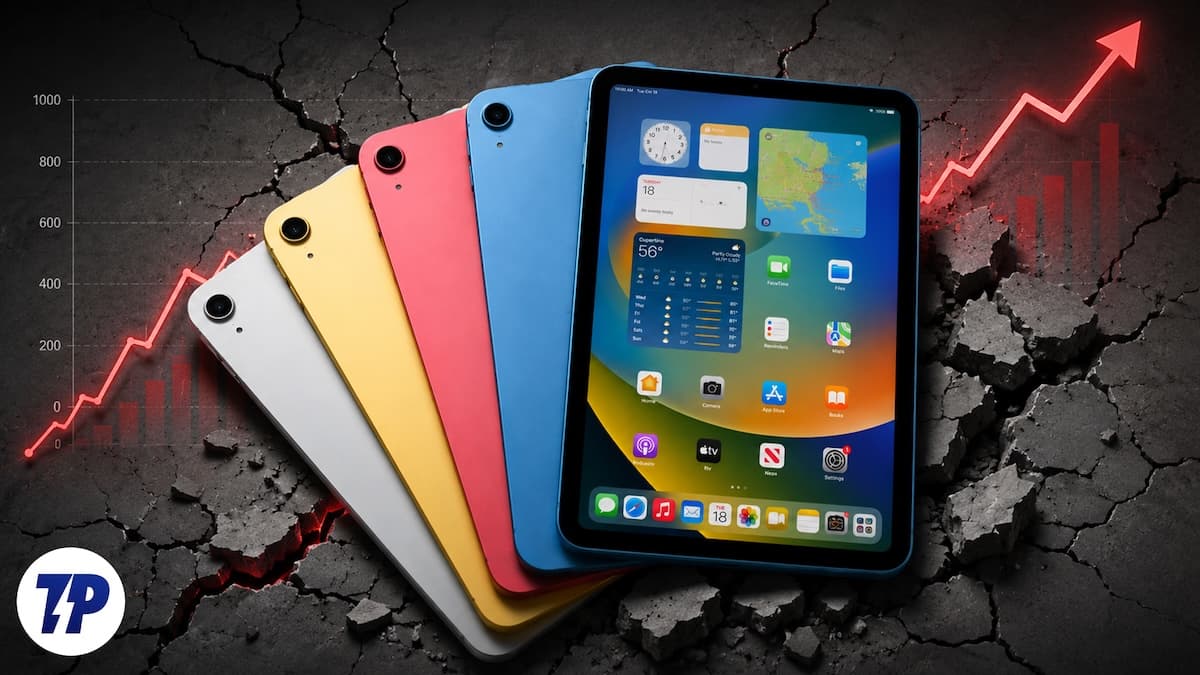
But through this hot and cold scenario, there was one tablet that remained that seemed relatively untouched, which stood the test of time – the iPad. Not its Pro, Air or Mini variants, but the base iPad that started the whole tablet revolution.
A huge price bump for the first time in more than a decade
For years, when friends asked to buy a tablet for a budget of around Rs. 30,000, I used to just tell them to get the base iPad without thinking twice. Such was its dominance that those even with lower budgets (say of Rs 20,000) would often end up asking me, “or should I spend a little more and get an iPad?” And in one of the miracles of modern gadget pricing, Apple managed to keep the price of the iPad in India in the vicinity of Rs 30,000 for more than a dozen years. Even when it did edge past the Rs 30,000 mark (the iPad 11th Gen debuted at Rs 34,900 in India in 2025), there were always dealers offering discounts to make it more appealing.
No matter what Android threw at it, the base iPad seemed unbeatable. Well, Apple recently took the price of the base iPad way up to Rs 49,900. And that means that for the first time, I will not be recommending it to anyone.
Why the base iPad was (WAS) a good choice
For more than a decade, Apple enjoyed the sort of advantage which rarely comes by in the tech universe – it had a device that literally dominated and defined its segment, and was well ahead of the competition. So much so that any device in its vicinity had to deal with the “shouldn’t I just get an iPad” query.
The reason for this was simple. The plain iPad, in spite of being right at the base of the iPad pyramid, had great software support, good hardware, a very premium Apple design, consistent performance, truckloads of apps, and of course, blended seamlessly into Apple’s ecosystem. Android tablets in its segment, on the other hand, tended to lose out on interfaces, apps, and even when they did boast higher resolution displays and faster processors, had erratic update cycles. Android tablets dominated the sub-Rs 25,000 segment, but simply could not match the iPad in the zone above it.
It was not as if the base iPad was super-cheap – it was always more expensive than similar (and often even some better) specced Android tablets, but it never seemed unreasonably so. Even when Xiaomi released its much better specced Xiaomi Pad 8 at Rs 33,999 a few months ago, we were besieged by “is it as good as the iPad” questions. The iPad seemed to be in a zone of its own. All of that has changed with the recent price hike.
No longer a no-brainer
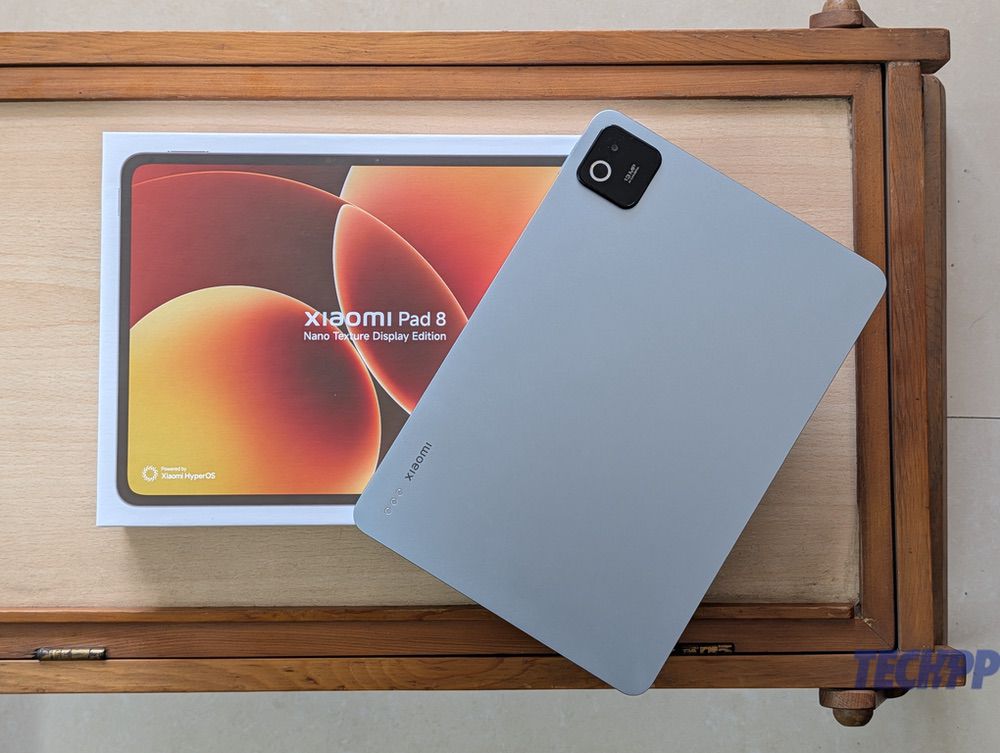
Its massive price – it has gone from Rs 34,900 to Rs 49,900 – has made it impossible for the base iPad to remain a no-brainer that it once was. Yes, it is still the most affordable iPad of them all, but its new price puts it far ahead of not just budget flagship tablets like the Xiaomi Pad 8 (Rs 38,999) but also very close to flagship ones like the excellent OnePlus Pad 4 (Rs 59,900). Barely a month ago, the OnePlus Pad 4 was challenging the iPad Air (which has now shot up to a monumental Rs 89,900). Now, the base iPad has to deal with it.
Android tablet manufacturers have also started to bundle styluses and sometimes even keyboards with their flagship tablets, even while keeping the prices relatively low – the Lenovo Tab Pro (2nd generation) comes with a bundled stylus for as little as Rs 40,999, and offers a bigger display than the iPad. And this is not a one-off: one can get tablets with big displays and styluses at lower prices than the new price of the base iPad. In the past, one could put up with the iPad’s relatively smaller display with a 60 Hz refresh rate as well as the relatively slow charging and absence of a charger, because of its still-relatively-affordable price. That “suraksha kavach” (protective armor) has now been well and truly ripped off.
Android has closed the UI and app gap too
While Android tablets have often been able to serve up better hardware than the iPad basically since the beginning of time. But software remained a challenge. For a long time, Android tablets seemed to look and work like huge Android phones, and looked almost clumsy in front of the sleeker, cleaner interface on the iPads. Apps on Android tablets also seemed like stretched-out avatars of their phone versions. “Great hardware, but the software is far behind” is something I often ended up writing in my Android tablet reviews.
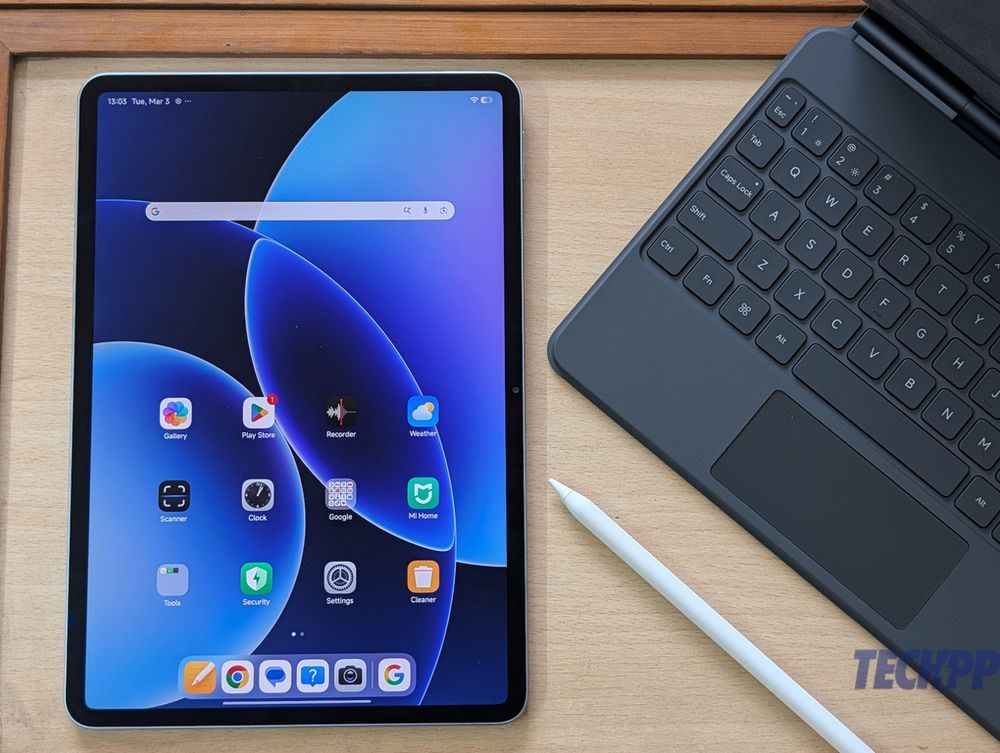
Recent years have seen that change. Android tablets have cleaner interfaces that are more at home with larger displays, and apps too now work more smoothly. Features like stylus support, split screen functionality, file management, smooth sharing and handwriting recognition are available across the board for most Android tablets, and most major apps work on Android tablets as smoothly as they do on iPads. Yes, the iPad Pro and iPad Air range are still on a different level, but their prices are now in the high-end laptop category. The base iPad now has to contend with high-end Android tablets.
What’s more, Apple is still trying to get up to speed in AI. While brands like Samsung, OnePlus and Xiaomi are integrating AI features on their tablets, the base iPad does not even support Apple Intelligence at the time of writing. That did not matter quite as much when the iPad was priced at close to Rs 30,000, where it had to compete with Android tablets that had rather basic AI onboard. At Rs 49,900, however, the base iPad is not in the AI league of the Xiaomi Pad 8 or the OnePlus Pad 4.
Android brands have also taken another page off the iPad book and managed to build seamless integration between their smartphones, accessories and tablets. It might not be as smooth as Apple’s ecosystem, but the connectivity between OnePlus and Xiaomi’s tablets and their TWS and phones is very impressive. Add to that the fact that most of the accessories of Android tablets are way more affordable than those for the iPad, and you will understand why the iPad is a difficult tablet to recommend after its price hike.
In fact, so far has the pendulum been swung by its price hike that I am not even sure on what grounds I can recommend the base iPad at its new price. It is not as if the iPad has suddenly become a bad tablet. If you are not too keen on AI, it is still a superb, consistent performer and remains the best tablet option for those who are deep into the Apple ecosystem and cannot let go of the seamlessness that comes with it. But perhaps for the first time since its launch in India, the basic iPad does not seem good value for money. The base iPad’s long reign as king of the Indian tablet market might have just been ended by a price hike.

