

In Summary
- On the eve of the launch of the CMF Phone 1 from Nothing, a fresh debate has erupted over the usefulness of 2-megapixel portrait cameras on the back of phones. The brand, which had earlier mocked low-megapixel cameras on other devices, comes with a 2-megapixel depth camera, although it claims it contributes to portrait photography.
- Almost all smartphones these days come with multiple cameras on the back. However, in a large number of smartphones, most of the photography is handled by a ‘main’ camera, with most of the other cameras (often labeled depth, macro, or mono cameras) not doing much and seemingly only existing to make up numbers.
- Considering that most of us are mainly using only a single sensor on most phones, it is perhaps time that smartphone brands stopped charging consumers for cameras that barely work.
A fresh debate has started over one of the most contentious specs of phone cameras – the 2-megapixel depth sensor. And as it often does these days, it all began on Twitter (now known as X) when Nothing’s sub-brand CMF revealed that its forthcoming Phone 1 would have a 2-megapixel depth sensor.

While such sensors are not unusual in the mid-segment, many were quick to point out that executives from the brand had pointed out that 2-megapixel third camera sensors were a scam. One of the brand’s co-founders’ replies was that two sensors were necessary to optimize portrait results, to which many replied that even phones with single cameras (like the Pixel 4a) had delivered excellent portrait shots.
All of this has drawn attention to an issue that has been bothering us: just how much do secondary cameras, whether 2-megapixel, 5-megapixel, or 8-megapixel, contribute to our phone photography experience? And honestly, should they be there at all?
Cameras on smartphones – “The More the Merrier”
To be fair, cameras on smartphones have come a long way. So much so that they have managed to replace actual cameras in our daily lives. Smartphone cameras are efficient, quick, and, best of all, are almost always close at hand. And thanks to the multiple camera trend, they have become very versatile too, offering you a host of shooting options from the same device – you can get macro, telephoto, and ultrawide snaps without the fuss of removing and fixing lenses. Smartphones now seldom come with a single or even with two cameras. In fact, there are just a handful of smartphones with a dual camera set up in the market unless you get to the sub-Rs 10,000 (USD 130) zone.
“The more, the merrier” seems to be the camera mantra for many brands, especially in the mid-segment. So much so that when Nothing made its first phone (the Phone (1)) with ‘only’ two cameras in 2022, it was considered quite a bold move, one that only daredevils like Apple and Google could pull off. And although some brands are moving to the two-camera formula (the recently released OnePlus Nord CE4 Lite has only two snappers), most are still piling on the cameras on smartphones. The idea of not having secondary cameras basically does not exist anymore in the smartphone world, so much so that even consumers expect multiple cameras on smartphones.
All of which should be good. After all, this particular tech trend has taken smartphone camera performance leaps and bounds ahead of where it was earlier and gives users many more shooting options.
Well…not quite. The multiple-camera rose has its thorns too.
Not ALL cameras on a phone are good
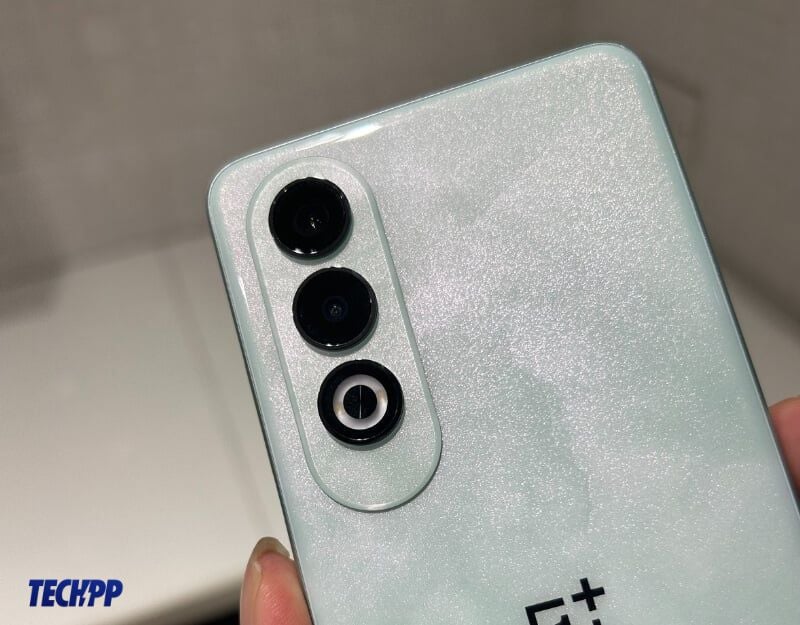
Before you label us pessimists, we, in no way, claim that there have not been any improvements. As we mentioned above, multiple cameras have immense potential. They add an almost DSLR-like quality to a phone, letting you switch between different lenses and perspectives. The problem is that unlike DSLRs, which have only one sensor in front of which lenses are fitted, each camera on a phone has its own sensor and own lens, and in many cases, these sensors are, to put it mildly, not of very good quality. And that makes the multiple cameras feature, more often than not, remains…pointless.
This is usually not the case in the premium segment where almost all the cameras, even the secondary ones, come with some serious photography muscle – there is a main sensor, but the secondary ones (generally an ultrawide and/or a telephoto) are very good cameras in their own right, so much so that in devices like the iPhone 15 Pro, the Pixel 8 Pro, and the Galaxy S24 Ultra, it is difficult to tell the difference between them on first glance. However, as you come down from the price peak, while the main cameras remain good ones, secondary cameras start becoming increasingly ordinary and finally end up being bad at the lowest price points.
Most secondary cameras in devices that are not in the premium segment often come with much smaller sensors and apertures and lack even basic features like autofocus, which can help with better photography. These cameras claim to provide versatility on paper, but in reality, they more often than not just act as number makers on spec sheets, limited to making the smartphone camera set up ‘look’ and ‘sound’ good. Brands, more often than not, crowd the camera cluster on the back with these (often single-digit megapixel) cameras that take up space, both on the spec sheet and on the phone as well.
Mid-segment smartphone cameras: one great sensor with forgettable companions

We have seen smartphones that come with main sensors in triple-digit megapixels bring along such lightweight, menial secondary sensors that are basically good for very little, especially when compared with the performance of the main sensor. These secondary cameras generally tend to be ultrawide, macro, depth, or monochrome, with 2-megapixel, 5-megapixel, or 8-megapixel sensors that offer results that are neither useful nor pleasant to look at. Not only do they fall far behind their main sensors, but they also lose out on modes and features.
For instance, the OnePlus 12 comes with a 50-megapixel main sensor with OIS, a 64-megapixel telephoto sensor with OIS, and a 48-megapixel ultrawide. Its more affordable sibling, the OnePlus 12R, has a very good 50-megapixel main camera with OIS, but what about the supporting cast? An 8-megapixel ultrawide and a 2-megapixel macro sensor! Or take the Redmi Note 13 Pro+, which features a very impressive 200-megapixel main sensor with OIS, but its supporting acts are an 8-megapixel ultrawide and a 2-megapixel macro sensor. Even the recently released OnePlus Nord CE4 Lite comes with a very impressive 50-megapixel Sony sensor with OIS, but its companion is a very modest 2-megapixel ‘mono’ sensor!
Not surprisingly, switching to these secondary shooters results in photographs and videos that are quite subpar and not even usable, not just in comparison with the main sensor but even in general. Sometimes, even reasonable megapixel counts cannot save them. We have lost count of 8 and 12-megapixel ultrawide cameras that do provide a wider perspective but are of such poor quality that details are lost. These cameras may expand your horizon (literally the case with the ultrawide sensor) but are of such poor quality that using them is a waste of time.
As for depth sensors, we are often told that 2-megapixel depth and mono sensors add to the portrait photography experience. Perhaps they do, but the likes of Google and Apple have shown that you can take good portrait shots even with a single camera years ago with the iPhone SE and the Pixel 4a. What’s more, in many cases, simply using a camera in normal mode delivers better portrait shots than we get from the hyped portrait mode, which, in the mid-segment, often results in very artificial-looking bokeh with poor edge detection.
We cannot remember the number of times we have praised the main camera on a smartphone in a review, only to point out that the supporting camera(s) on the phone exists only as a showpiece. This is also the reason why we find ourselves telling readers to stick to the main camera for all their photography needs.
Cameras are for shooting, not for decorating phones (or their spec sheets)

We understand that phones at lower-than-premium price points come with greater budget constraints, but we cannot understand why brands bother adding a sensor(s) that is likely to lie dormant on the phone forever. Why take that space on a smartphone? Or why even put all that energy into creating sensors that will add little to no value to an otherwise great camera setup? Would it not make more sense to add cameras that actually delivered some value or maybe put the same energy, resources, and efforts into improving another aspect of the smartphone? Secondary cameras that can look good and shoot badly are basically ways of fooling users and even literally making them pay for it.
Having a multiple-camera setup in which only one camera is used makes very little financial sense for both brands and consumers. If there are budgetary constraints, instead of going into the triple, quadruple cameras zone, why not stick to just two sensors and make both of them usable, as Nothing (yes, we get the irony) has shown in the Phone (1) and Phone (2)? Some brands do seem to understand this – Xiaomi has brought good secondary sensors with its Xiaomi 14 Civi, and so has Vivo with its Vivo V30 Pro – but secondary cameras, by and large, remain superficial in terms of performance in the mid-segment zone. We are not sure that the CMF Phone 1‘s secondary 2-megapixel depth sensor will change that, although we would be delighted if it does!
Secondary cameras have immense potential and can totally change one’s photography experience, whether it is in terms of better portrait photography, ultrawide and macro snaps, or zoomed-in telephoto shots (you can even take snaps of the moon with phone cameras now). They deserve better than to be reduced to being spec sheet numbers. Better secondary cameras could take the ability to take the smartphone photography game to another level in the mid-segment and bring it closer to the premium one. But for that to happen, brands need to say three words to those extremely nominal secondary cameras that often possess neither photographic megapixels nor muscle to deliver even usable images or videos – Rest in Peace.

