

We are going to be honest: when we first heard of legendary camera brands tying up with phones to improve phone photography (the Huawei- Leica tie-up in 2016), the whole thing seemed to be more about marketing than photography. Even though we were very impressed with the dedicated monochrome sensor on the Huawei P9, which was quite unlike anything we had seen before, the impression that the tie-up was more terminology than technology did not quite fade away. Perhaps because such tie-ups were limited to a very small number of devices that seemed to be designed more for being showcased rather than for mainstream audiences.

And when OnePlus’ Hasselblad initially seemed as skin deep as beauty is generally supposed to be, there was a lot of wise nodding along the lines of “they just tied up with Hasselblad to charge a premium, you know” logic. Vivo’s collaboration with Zeiss also got off to a relatively quiet start, further fuelling this belief that most brands tied up with camera brands just to slap on a well-known logo on their devices and add a zero or two to price tags rather than actually change or improve photography.
Well, almost eight years after that first tie-up, we are going to put up our hands and admit we were wrong. They might have gotten off to a less-than-smooth start and not been too noticeable in non-marketing ways initially, but phone tie-ups with camera brands do seem to make a massive difference to phone photography.
Being beyond hardware and getting to interface and effects
A key reason for this, we think, is that the involvement of camera brands has moved from being mainly about hardware, which appears on the spec sheet but is otherwise invisible to the user, to moving into camera UI and software elements, too. We all knew Nokia had Carl Zeiss optics on many of its flagship phones, but there was no significant mode that seemed to draw inspiration from Zeiss.

Similarly, Leica’s initial efforts with Huawei did give us a monochrome mode, but this was again more of a matter of a lens, and there were not too many Leica-specific features that were visible while using the phone itself. The general approach seemed to be “images will be good because there is a camera brand collaboration,” and things were left at that. There was no simple way of telling that an image or a video came from a Leica or Zeiss camera apart from the odd watermark. We remember some people scoffing at the monochrome sensor on the Huawei P9, saying that it was basically a “black and white filter.”
Xiaomi was one of the first brands to significantly change this approach when it launched the Xiaomi 12S in 2022 with not just Leica lenses and cameras but also a number of special Leica shooting modes and even two distinct color signatures – a realistic Leica Authentic and a slightly more poppy Leica Vivid. The brand also brought what it called a Master Lens system, where users were able to not just switch to different focal lengths but also take pictures with a very distinct Leica flavor to them. Finally, it turned the watermark concept on its head by bringing in “art framing,” in which images appeared framed in specially designed Leica frames, complete with image details and the iconic Leica watermark and Red Dot logo. The Xiaomi 12S was, therefore, not just a phone with Leica branding and Leica cameras and Lenses but also a way of taking very Leica-like photographs – photographs that any other phone’s camera could not take.
And Leica said
Let there be light.Captured by the Xiaomi 14. 75 mm
Leica Black and White filter pic.twitter.com/9FG3cRpfrq— Nimish Dubey (@nimishdubey) March 5, 2024
Got a phone with a legendary camera tie-up? Very good (and different) photography is guaranteed now
The period that has followed has seen Vivo and OnePlus (as well as Oppo) also bring greater elements of Zeiss and Hasselblad respectively, to the photography on their phones.OnePlus has added special portrait modes with bokeh and flare effects that mimicked those from the legendary Hasselblad XCD 30 mm, 65 mm, and 90 mm lenses. The brand also added three special color styles developed for it by Hasselblad ambassadors – Serenity by Yin Chao for portraits, Radiance by Ben Thomas for humanity and cultural photography, and Emerald by David Pesken for landscapes. There is also a Hasselblad Master mode for tweaking settings (although it does strike some as a sort of rebranded Pro/Manual mode).

Vivo, for its part, has come out with three photographic styles – Vivo Textured Color for those who love details, Vivo Vivid Color for fans of slightly richer colors, and Zeiss Natural Color for those who worship at the altar of photorealism. Vivo also brought its own innovative take on portrait photography with Zeiss Multifocal Portraits that let us take portrait snaps at different focal lengths and also brought a special Zeiss floating telephoto camera that allowed users to even use the telephoto lens for macro-like snaps. Both the Vivo X100 series and the Vivo V30 Pro also come with Zeiss’ very striking filters. And “art framing” is now a staple feature, giving users not just some very striking framing aesthetics but also gloating rights over having used a phone with a legendary camera tie-up. Xiaomi, for its part, is continuing to tweak and improve its Leica color, filter, and portrait settings.
Leica, Hasselblad, and Zeiss have come to the phone party – now go more mainstream, please!
The net result of all this? We are seeing photography from phones that actually seem close to those that could have been taken by cameras of the brands with which they have tied up for photography. It is not just a matter of better colors and more detail, as seen in most smartphone battles, but actually, pictures that have a very distinct style and flair. And this is adding a new element to phone photography, which has been frankly reduced to a pixel-peeping contest of late.
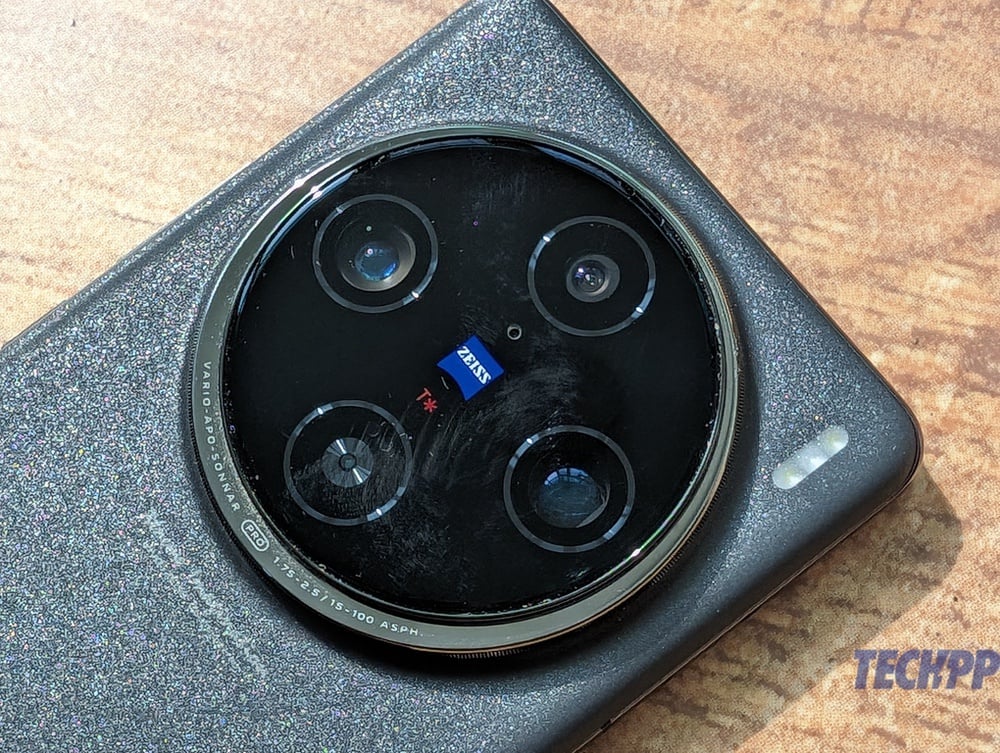
It makes a world of difference to see people trying to do different things with their phone cameras. For instance, black and white photography has enjoyed a renaissance of sorts with Leica’s special filters on Xiaomi, many users are experimenting with Hasselblad’s legendary XPan mode on the OnePlus, and if you are seeing portrait shots with a variety of focal lengths and blur effects, it is a fair chance that the user has got a Vivo phone with some Zeiss in it!
Yes, phone-camera brand collaborations do seem to result in innovative and often very different photography. What’s wonderful is that such tie-ups might no longer be limited to flagships and the premium mid-segment if Vivo’s decision to use Zeiss cameras in its Vivo V30 Pro is any indication. Will we see a Redmi Note Pro+ with some sort of Leica optics or a OnePlus Nord with Hasselblad in the coming years or even months? We do not know as of now. What we do know is that we are not going to be cynical when a phone brand announces a tie-up with a camera one. Those associations can make and are making a huge difference to photography.

