

In Summary
- OnePlus recently announced its decision not to release a foldable phone in 2025. The decision has surprised many as OnePlus’ only foldable so far, the OnePlus Open, was seen as a success and attracted very positive reviews.
- Some believe that OnePlus has decided not to release a foldable phone in 2025 so as to leave the field open (pun intended) for its parent/partner brand Oppo, which itself is scheduled to launch a foldable soon, the Oppo Find N5.
- Whatever the reason for OnePlus’ decision, we think it is a sound one, as it makes to take a break and come out with a truly innovative device rather than another “spec and price” top-up, which has become a fashion of sorts these days.
So OnePlus is not going to release a foldable in 2025. While the decision seems to have sent shockwaves through some parts of the tech community, we are going to be blunt: WE LOVE IT!
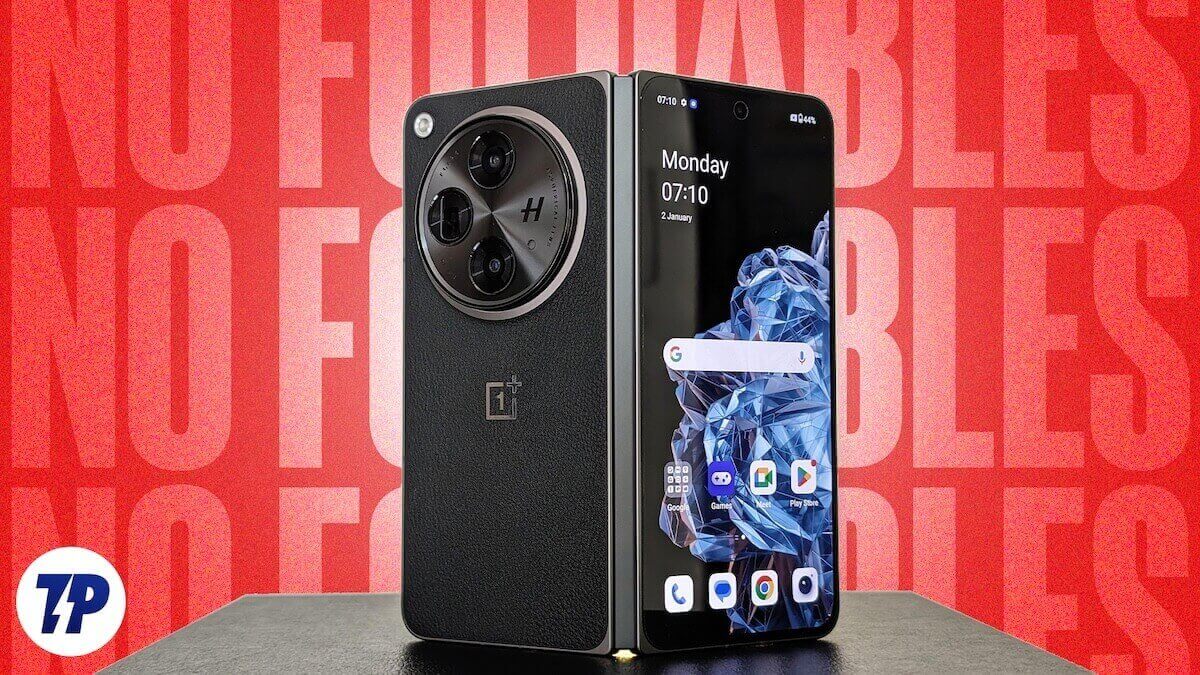
Do not get us wrong. We are all for having more brands and devices in the foldables market. More than half a decade after being hailed as the ‘future,’ foldable phones have not even made it to the mainstream of the present. And in the flurry of foldables that open into tablets that we have seen in this period, one of the best devices that we used was the OnePlus Open, which was released in 2023 and, by all accounts, did very well indeed.
The reason for its success was incredibly OnePlus-like: it was a bit of a flagship fold killer, it gave consumers a high-quality foldable option that almost matched the performance of prevailing flagships (read “the Galaxy Z Fold series”) and even bettered them in some regards (a MUCH better cover display, surprisingly decent cameras, and fast charging) at a lower price. The OnePlus Open was launched at Rs 1,39,999 (USD 1699 in the US), while the Galaxy Z Fold 5 was launched at Rs 1,54,999 (USD 1799 in the US), and the Galaxy Z Fold 6 at Rs 1,64,999 (USD 1899 in the US). It was not perfect (no foldable is) but in many ways, it rattled the existing foldable cage.
“Updated specs, higher price…”: Innovation has left the foldable building
All of which might make people wonder as to why we support OnePlus’ decision to dodge foldables this year. Well, it is dreadfully simple: we did not want another brand following the “this is the same device with a new processor” route that has been the foldable (and even the flagship) fashion in recent times. That might sound harsh to some, but the simple fact is that innovation seems to have left the foldable building a while ago. Pick up a foldable device from 2023 and it is a fair chance that its 2024-25 successor would sport largely similar functionality, with slightly improved hardware, and sadly, a higher price tag.
What’s worse, this trend seems to show no sign of changing. The promotions of a number of forthcoming foldables seem to revolve around how thin they are, how much more power they pack in, and how their cameras are better than before – pretty much along the lines of the conversations around regular flagships. We are not saying that a slimmer and more powerful foldable phone is not a good thing. Of course, it is. It is just that, these are not really critical issues for foldables, whose main challenges are durability, prices, and the ability to actually deliver significant value through the form factor, which currently is more like two phones in one, rather than a phone and a tablet in a single package.

It was not always this way, to be fair. In the early days of foldables, there had been some innovation around form factors, with brands coming out with different ways to folding devices with Oppo itself coming out with a rollable concept in 2021, but those seem to have faded away. Now foldable brands too seem to have got into the flagship phone habit of making a few (if any) design tweaks, updating hardware, and slapping a slightly heftier price tag on the whole package while claiming that it is “revolutionary, magical, and amazing” (or whatever the hype machine – often high on AI – says). It might hurt some when we say this, but the simple fact is that we are using foldables today in pretty much the same way in which we did about three years ago, with largely similar issues. Judging by what we have seen and heard so far, OnePlus is unlikely to have brought anything revolutionary to this foldable table, not even a significantly lower price than its predecessor.
OnePlus Open 2’s absence: the Oppo Find N5 conspiracy angle
In fact, OnePlus seemed to indicate just as much in its post on the subject on its community page. It said that its core strength and passion lay in setting new benchmarks and challenging the status quo across all categories, and with that in mind, it had made a decision not to release a foldable this year. In simple terms, OnePlus was conceding it did not have a foldable that could either set a new benchmark or rattle the status quo cages in the foldable world. It did, however, make positive references to the Oppo Find N5, Oppo’s forthcoming foldable, praising its materials and engineering, adding that it would incorporate these in future OnePlus products.

This praise of its parent brand’s foldable has fuelled speculation that the reason why OnePlus is not launching a foldable in 2025 is actually because its parent/partner Oppo was already planning to launch one of its own, thus sacrificing its own share, like a good sub-brand. While this theory sounds dramatic, it actually does not make too much commercial sense. After all, OnePlus and Oppo attract different audiences. While the Oppo Find N5 and OnePlus Open 2 would potentially compete with each other, the sales of both devices would actually benefit Oppo (as OnePlus is its sub-brand or partner of Oppo). What’s more, the combined sales of the Find N5 and the OnePlus Open 2 are likely to generate far more revenue than the sales of just one of them.
Also, while it would make sense for OnePlus not to release a foldable within a few months of the launch of the Find N5, a OnePlus Open 2 launched in the third or fourth quarter of the year is unlikely to have hit the sales of the Find N5. So why skip the entire year? Most importantly, it would be a little silly to assume that if a OnePlus device is not released, those who like OnePlus will simply transfer their loyalty to an Oppo device. Or vice versa. It never works that way, which is why sub-brands exist and often compete with each other – witness Vivo and iQoo, Samsung’s Galaxy M series and F series, and Redmi and Poco.
Take a gap year in foldables, OnePlus, but please (PLEASE) come back stronger
So, while conspiracy theorists go out and talk about how Oppo is scuttling OnePlus, we are going to be happy enough to applaud the Never Settling brand’s decision to take a gap year in the Great Foldable Phone Race. OnePlus has clearly stated that its decision “does not signify a departure from the category,” and is not a step back, but “a recalibration.” Given the brand’s track record, we are willing to believe it. In fact, it would be awesome if other brands followed its example and also focused on foldables that actually made a significant difference to the user experience rather than to their spec sheets. There is no law that says that every foldable needs to have an update every year. In fact, that applies to every device – ask Nintendo!
So take a year off, OnePlus. And thanks for not joining the “incremental upgrade” foldable brigade in 2025. Just make sure that whatever you unfold in 2026 is REALLY unsettling for the segment.

