

In Summary
- When Samsung revealed the first Galaxy Z Fold in 2019, many felt that it heralded a revolution in mobile technology, blending phone and tablet functionalities into one pocketable unit.
- While foldables have improved significantly in terms of hardware and design (the recently released Vivo X Fold 3 Pro is perhaps one of the best in that regard), a number of old issues persist, and foldables are nowhere near going mainstream.
- As sales of foldables stagnate, we take a look at what foldables lack and what they need to fulfill their undoubted potential.
Five years ago, in 2019, Samsung unveiled the Galaxy Z Fold. And we were told by tech experts and pundits all over the world that a new revolution had begun and that the future had arrived in our world, one in which smartphones would replace tablets and perhaps even notebooks. Five years down the line, we are still waiting for these predictions to come true. For no matter how many research agencies bombard us about the potential of foldables and how popular the form factor is, the fact is that foldables have not progressed too far from where they started that day in 2019. Ironically, we realized this when we saw perhaps the best foldable we have seen in our lives so far – the Vivo X Fold 3 Pro.
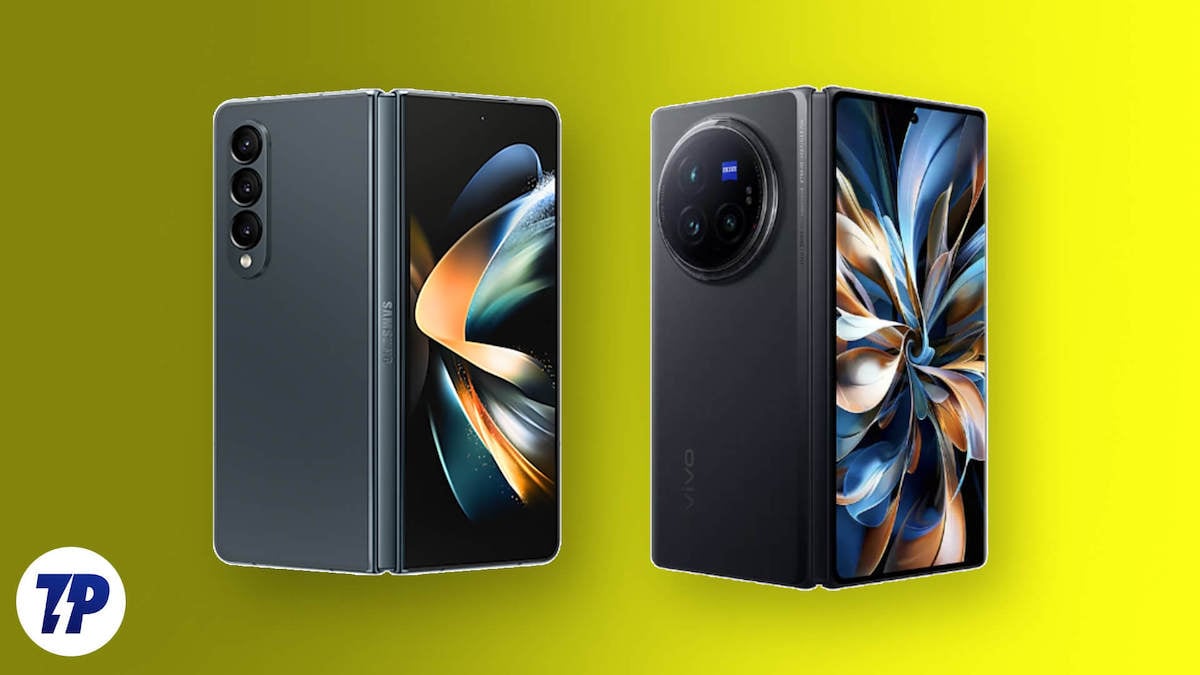
You will be reading our (very) detailed review of this device in the coming days. However, based on its spec sheet and our initial experience, there is no doubt that the Vivo X Fold 3 Pro is the best foldable we have used. It comes with a reasonably large 8.03-inch internal display while retaining a 6.53-inch external display, both of very good quality, which means it can be used easily when open as well as when shut (a complaint we have had with the slightly long-ish cover display of the Galaxy Fold series). It is also the slimmest and lightest foldable we have used in the phone-plus-tablet form factor, which has been the form factor that has been heralded as revolutionary in foldables (the flips are largely style statements, although, by all accounts, they are doing reasonable numbers). It also is the first foldable we have seen with a reasonably large battery (with super fast wired and wireless charging, too), sports good cameras, and runs on a flagship-level processor.
New folds, old problems…and sales are dipping
The problem is that the Vivo X Fold 3 Pro also comes with all the baggage that other foldables have carried over the years. Amazingly, the questions which we have been asked about the latest and (what we think is) the greatest fold phone are the same that we were asked about the first one: is it strong enough (we will find out for sure only after a while), can you feel the crease in the middle (you can), is it still heavier and thicker than most phones (yes, it is), can you easily get cases and screen protectors for it (erm…not quite)…and of course, does it come with an eye-watering price tag (yes, it does!).
This is not to say that no progress has taken place on the fold phone front. Designs have gotten sleeker and tougher, cameras (a problem area early on) are improving by the day, battery life (another problem area) is getting better, and display quality is improving so much that you can use devices like the OnePlus Open and the Vivo X Fold 3 Pro like a normal phone (when shut) and like a tablet (when open).
And yet, the fold form factor shows no sign of going mainstream or even close to it. In fact, 2023 was a disastrous year for foldables in general. “Foldables were a hard sell in 2023, as many vendors struggled to move significant inventory,” said Anthony Scarsella, research director with IDC’s Worldwide Quarterly Mobile Phone Tracker, in a report. “Our previous forecast had 2023 finishing with 20.4 million units but finished 11% short with only 18 million. Despite the 45% growth in the fourth quarter, the market has not fully embraced the form factor.” He said that “High prices” and “longevity” were a challenge not just for consumers but also for vendors. All of which is actually so 2019, and just like in 2019, consumers are not too keen to spend a bomb on a device whose biggest USP is a foldable display that is expected to break within a couple of years or so or end up with a very deep crease in the middle (the display issues around the first few generations of the Galaxy Z Fold have created a very negative perception as regards durability).
The Fold puzzle: A phone and a tablet or just two phones, one big and one small?

Foldables have also failed to emerge as a separate device category in their own right. For all their claimed potential, they are still largely perceived as quirky devices rather than genuinely productive ones. This is because unlike in tablets and smartphones, where brands brought in software innovations, UI touches, and special apps to make the most of bigger and smaller displays respectively, most phones with fold form factors are, to use the term of a colleague, “A smaller phone outside and a wider phone inside!” Samsung has added S Pen support to its Z Fold series, but that is a feature that was seen on its phones and tablets, not an exclusive Fold feature. Most foldables, even now, do not always switch smoothly between displays, and although many brands that make foldables have separate interfaces for tablets, they seldom bring them to the internal displays of their fold devices. The result quite often is that the large, internal display feels more like a stretched-out phone than a tablet – it is more of a big display than a productive instrument like, say, the iPad or the Galaxy Tab series.
This leads to a very odd situation – the internal display, which is the USP of the device, gets ignored because the external display is often easier and more familiar to use! A lot of us end up using the internal display basically for viewing content like videos or reading a long mail or documents, and not for the productive tasks that it can potentially handle. And often just stick to the external display for routine tasks, like social networking and even WhatsApp. And, of course, using a foldable in ‘shut’ form is more convenient for phone calls and often even video calls- a folded device is easier to prop up than an open one. Even something as basic as typing seems easier on the smaller external display simply because so many of us are used to it and can manage it one-handedly. The big display is at the heart of a foldable, yet it is a bit of an albatross.
This fact hit us particularly hard when we were using the OnePlus Open, which had a much more normal external/cover display as compared to the unusually tall one on the Galaxy Z Fold. We found ourselves hardly ever opening the phone and doing most of our tasks on the cover display, which hardly ever got opened. Imagine paying a bomb for a device with a special feature that you end up not using too often. The stark fact is that thanks to a distinct lack of software innovation, most folds behave like two phones – one large and one small – rather than a phone and a tablet!
The price continues to hurt!
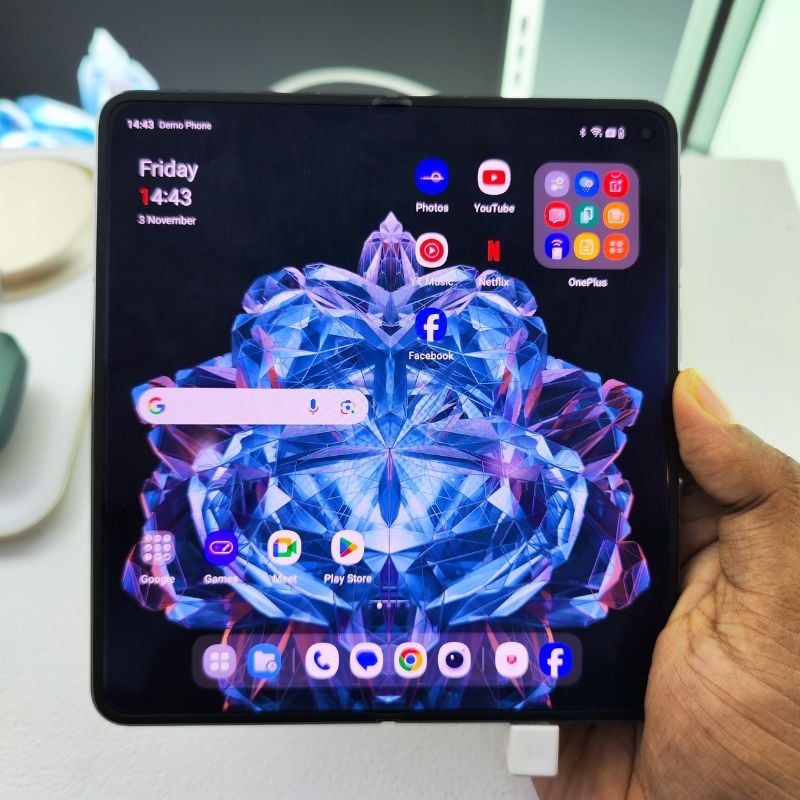
While durability and software innovation issues have hampered foldable growth, there is no doubt that the biggest stumbling block in the foldable revolution’s path is the price tag associated with them. While Tecno did manage to come out with a folding phone for under Rs 1,00,000 (about USD 1100), it had limited success by all accounts because of brand trust issues (as per our retail sources – Tecno chose not to send us a device for review, for reasons best known to them), most others have been well above that price.
What’s more, unlike seen in other premium devices, the fold phones have not had ‘lite,’ ‘SE’ or ‘FE’ editions and even their older models come with hefty price tags – the Samsung Galaxy Z Fold 4 is still sold for well over Rs 1,00,000 and officially starts at Rs 1,24,999.
To give you a sense of proportion, you can currently purchase a Samsung Galaxy Galaxy S24 and a Galaxy Tab S9, or an iPhone 15, an iPad, and an Apple Pencil for about the same amount or even less. That is not a healthy state of affairs. When it comes to prices, foldables are stuck in a vicious circle – as long as prices do not fall, consumers will not invest in foldables in large numbers, and as long as consumers do not invest in large numbers, prices are unlikely to fall as economies of scale (made possible by mass production) will not kick in.
After being considered revolutionary a few years ago, foldables are in danger of becoming confined to a tiny, expensive niche and not fulfilling their true potential. What’s more, they seem to have been trapped in the smartphone spec race, focusing on better hardware instead of bringing more innovative functionality to the table. Mind you, that could change. IDC’s Anthony Scarsella feels that “Price cuts, increased durability, and perhaps a certain brand joining the party could be the catalyst in the years to come.” The ‘certain’ brand remains standoffish as of now, but we think lower prices and functionality could revive the stalled foldable revolution.

