

In Summary
- Nothing has recently announced that it will not be launching a new flagship phone in 2026.
- Given how predictable flagship phones have been getting, we think other phone brands would do well to follow Nothing’s example, instead of serving up slightly better but largely similar iterations of their previous flagships.
- This is not as revolutionary as it sounds – for a long time, flagships were not a regular annual affair, and were launched only when the brand felt it had something really new to offer. We would love a return to those times.
So it is official – Nothing will not be launching a flagship phone in 2026. The news is not very surprising, given the fact that the brand had taken a ‘gap year’ after the Phone (2) as well. Of course, there are many reasons being put forward for this. The official one from co-founder Carl Pei on Nothing’s official YouTube channel is:
“We’re not just going to churn out a new flagship every year for the sake of it; we want every upgrade to feel significant. Just because the rest of the industry does things a certain way, it doesn’t mean we will do the same.”
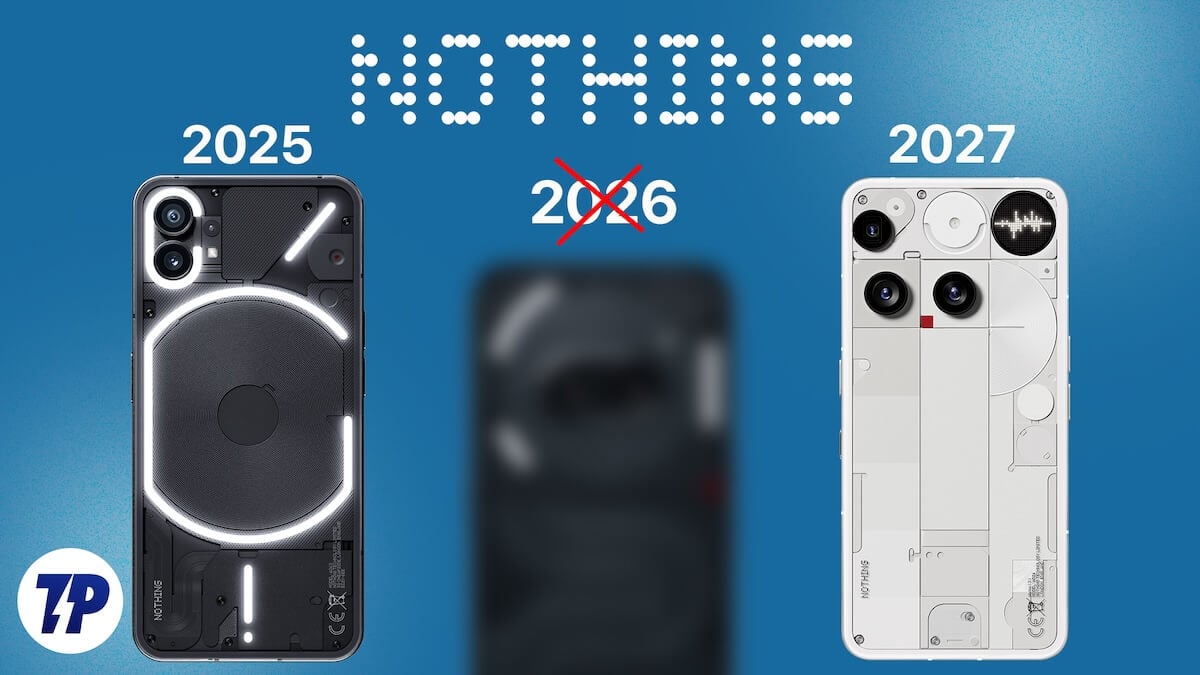
Many industry observers, however, feel that the move is more of an attempt to recover from the damage caused by the very divisive Nothing Phone (3), which was launched at a very premium price but is now available for almost half that price, evidently because of very poor sales. Whatever the reason, we do wish that other brands would follow Nothing’s example and give their flagships a “gap year.” It certainly worked for Nothing – love it or hate it (and we have seen both sides), the Nothing Phone (3) was nothing like the Phone (2)!
Going from being different to being better
Let’s face it: innovation in the flagship sector has plateaued to the level of almost being comatose. Flagships, which used to be the pinnacle in high tech and innovation, are now largely predictable, with each new flagship basically being a ‘plus’ or “better” version of its predecessor. Whereas innovation revolves around new features, flagships over the past year have tended to stick with being “better” rather being radically new – each flagship comes with a “better” display, a “better” processor, “better” RAM and storage, “better” cameras,” “better” battery life and charging speeds, and “better” hardware and software support.
The worst part of all this is that even all this “better”ness does not seem to be making a significant difference to our user experience. One of our colleagues is happily using a Pixel 9 and was, until late 2025, using an iPhone 14 Pro, without any major complaints (apart from the odd whinge about AI being slow). They are not a one-off either. There are plenty of people who are sticking to older flagships, simply because the new ones do not offer anything that is too different, and in many cases, even look the same!
While we appreciate the fact that radical innovation is not easy, the current state of flagship affairs is such that one can actually predict the kind of flagship that will be released. Almost every new flagship basically comes with a bright, high resolution display with a high refresh rate, the latest flagship chip from Qualcomm, Apple, Google or MediaTek, 12 GB – 16 GB RAM, 128 GB – 1 TB storage, two or three cameras (one main, one telephoto and/or one ultrawide), a selfie camera with high megapixel count, a battery that is around 5000 – 8000 mAh with support for wireless charging, and the latest version of Android or iOS, with support for future updates.
We used to have innovative flagships…used to!
Such is the state of innovation that now, having a slightly more compact or slimmer is considered an innovation. We are aware that radical innovation is not easy, but, at the cost of betraying our age, we need to point out that things were rather different a decade ago. The period from 2015 to 2020 changed the way we used phones with tall AMOLED displays with high refresh rates, notches, AI assistants, mods (remember them?), in-display fingerprint sensors, displays that responded to touch pressure, multiple cameras, bigger and faster charging batteries, and interfaces that might have been cluttered, but came packed with features.

Fast forward to today, and the only major innovations we have seen on the smartphone front in recent times have been the attempts of brands to popularize “action buttons,” Google’s AI-driven interface, Apple’s “Dynamic Island” effort (which some say it will abandon soon), and Nothing’s own effort to introduce a Glyph UI. Even foldables, which were supposed to change the way we used phones, seem to be stuck in the same “better” groove.
Remove the shape of the camera unit on the back, and most flagships today do not look or work too differently from their predecessors half a decade ago. It is like the same apartment being given a fresh coat of paint and slightly better versions of the same beds, chairs, and tables. Even the efforts at innovation are relatively half-hearted – CMF’s rather odd mod attempt and the impractical cigar-like zoom lenses of Oppo and Vivo.
Take a break from sailing in the sea of sameness, flagships
The fact that this relative absence of innovation has been accompanied by the presence of rising prices has made this lack of innovation even more obvious. We are pretty much using our smartphones in the same way and getting a broadly similar experience to what we got a few years ago, and are paying a higher price for it. It is not as if the user experience is perfect – some of us miss “real” keyboards, some of us would prefer metal backs or bright carbonate colors, many wonder why Face ID is not secure on all phones, and still others would like multiple front-facing cameras too, and much more besides. The options are there, but brands seem to be content with giving us a better, shinier wheel rather than reinventing it.
Which is why we think that perhaps it is time that smartphone brands took a page out of Nothing’s Flagship Launch manual and gave their flagships a “gap year.” Or even better, go back to the time when launching a new flagship every year was not an unwritten rule – Nokia released only five of its legendary Communicators between 1996 and 2007, and there was a three-year gap between the legendary MOTO RAZR and RAZR 2 (although there were many minor variants in the middle).
Mind you, we know this is wishful thinking. Given the economics of the industry and the pressure of the stock market, this is unlikely to happen. It is also notable that when Nokia and BlackBerry took a break from the market to radically reinvent their devices (Nokia, to move to Windows Phone, and BlackBerry to move to Android), the consequences were disastrous, with consumers moving to other platforms. That said, we are not asking brands to take a total break from making phones as Nokia or BB did, but to just give their flagships a well-earned rest from sailing in the seas of sameness. The lower and mid-segments of the market are more about regular performance than innovation, and are more suited to incremental updates. But we do expect innovation from flagships, especially when we are being asked to pay a bomb for it!
Will a break guarantee that the next batch of flagships will be radically different from the current ones? Duh, of course it won’t. But at least we will get a year’s break from the “similar but better” routine that seems to be the flagship cycle these days. And will at least hope to see a radical change in a new flagship.
Go ahead, brands, give your flagships a break. Come back not just better but actually refreshed, with changes that are fundamental rather than incremental (which are making us go mental).

