

In Summary
- At its recent Galaxy Unpacked event in Paris, Samsung unveiled a number of new products, most notably the Galaxy Z Fold6 and Galaxy Z Flip6.
- Although both foldable phones came with hardware improvements, Samsung chose to talk about their functionality and features (mostly powered by Galaxy AI) rather than their specs (unlike other brands).
- By focusing on function rather than design or specs, Samsung seems to be actually following the footsteps of its famous Cupertino rival. Will the move work?
When Samsung took the wraps off the latest editions of its Flip and Fold series of foldable smartphones at the Galaxy Unpacked event in Paris, many were surprised to see the electronics giant sticking broadly to the same design and similar specs as in the past, although with a few tweaks here and there.

Yes, both got the new Qualcomm Snapdragon 8 Gen 3 chip, the Fold6 got a slightly larger cover display, and the Flip6 got a 50-megapixel main sensor, but by and large, there was a sense of ‘tech deja vu,’ especially among those who measure the value of smartphones by their spec sheets.
In many regards, the Galaxy Z Fold6 and Flip6 seemed very similar to the Fold5 and Flip5. In fact, the Flip6 and Flip5 even had the exact same proportions and weight. The fact that the new foldables seemed to be like slightly enhanced clones of their predecessors but still came with high price tags led some to conclude that Samsung had taken its foot off the foldable innovation button and was content to rest on its laurels rather than wresting share from new players such as OnePlus and Vivo.
Based on our interactions with Samsung executives at the Indian edition of the Galaxy Unpacked event (in Delhi), we do not think this is the case. Samsung has not taken its eyes off the foldable market at all. However, it has significantly altered its approach towards foldables and, in doing so, has actually taken a page out of the book of its arch-rival, Apple.
Now, the thought of Samsung trying to follow Apple’s path might strike many as sacrilege. While the two companies have been accused of drawing “inspiration” (the polite term for “copying” in tech circles) from each other, their product approaches have been as different as chalk and cheese.
Apple has generally tried to stress the experience and steered clear of spec talk while until recently. Samsung has unabashedly flaunted its spec muscle. Note the ‘until recently,’ though. Something has changed in Samsung of late. We saw the first hint of this in the first Galaxy Unpacked event of the year when it launched the S24 series and did so without any major spec talk, preferring to instead highlight AI features and Google tie ups.
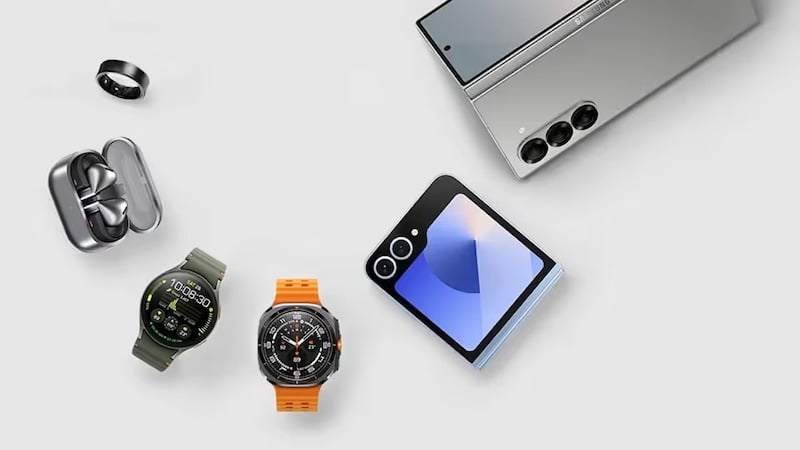
We saw the same script being repeated at the recent Galaxy Unpacked as well. While Samsung did highlight the spec side of its wearables (the Ring and Watches) and hearables (the TWS), it avoided specs so markedly when it came to its foldables that when the launch was over, most people had no idea of the processor driving the new Flip and Fold or the configurations of different cameras, or even the resolutions of the four displays they had between them. What they DID have more than an idea about was the truckload of AI features on the two devices, ranging from translation abilities to summarising PDFs to AI portrait editing to solving math problems to a whole lot more.
Samsung was also clearly pulling out all stops to add features that were designed to make the most of the foldable functionality of both devices instead of just upping the spec ante as in the past. One of the methods of translating was what Samsung called the Dual Screen Interpreter – in which one kept the cover display facing the listener, showing them what you had said in their own language – something not possible with a ‘normal’ non-foldable phone.

The Flip6 also comes with a special Flex Camera, which automatically zooms in and out to keep the subject in the frame when half-folded and kept in selfie mode – again, a very ‘fold functionality.’
The Fold6, on the other hand, has the Sketch to Image functionality, which converts a rough sketch into a proper image and even lets you insert objects into a photograph by sketching them roughly on the photograph.
Similarly, the Gemini overlay is designed to make the most of the large display on the Fold6 – you can watch a video and ask Gemini about it at the same time. Small wonder that the press release for the Galaxy Unpacked read: “Samsung Galaxy Z Fold6 and Z Flip6 Elevate Galaxy AI to New Heights“. There was no mistaking it – Galaxy AI was the real star of the show rather than the hardware running it.
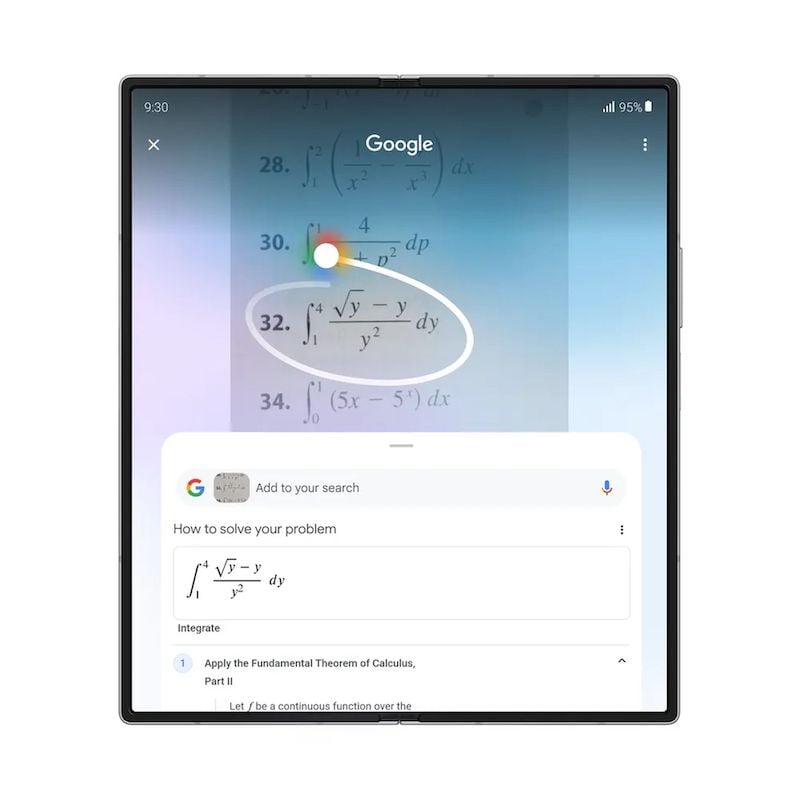
By following this, Samsung had borrowed a classic Apple move.
For the longest time, the Cupertino brand would not talk too much about the processor or RAM on its phones or tablets, stressing instead on what the devices could do. “The cores and Ghz on a chip do not matter. What matters is that the phone works smoothly…” an Apple executive had said on the briefing. We found an echo of it during a product preview before the launch when one of our colleagues asked a Samsung executive doing a Sketch to Image demo about the processor and RAM on the Fold6. “Why?” he replied. “Does it seem slow to you?” It was a classic Apple answer. But it came from a Samsung executive.
When Samsung had stressed on AI rather than tech specs during the launch of the Galaxy S24 series earlier this series, we had written:
In astronomical terms, if the Galaxy S24 series launch was the big bang that created Galaxy AI, the coming days will tell us how it will evolve. And indeed, whether it will survive, especially as galaxies from other brands enter the AI universe.
Almost six months after the Galaxy AI Big Bang, it is becoming clear that AI is pretty much becoming THE feature to have on smartphones, especially premium ones.
Even as this was being written, Oppo had launched its Reno 12 series of phones, highlighting their AI features. We expect other brands to harp on the same. What marks Samsung’s efforts as different, however, is the fact that the brand is focusing on AI to the extent of actually excluding specs from launch presentations. Not too long ago, we would have expected a senior executive from a processor company to appear on the stage for a flagship phone launch. In Galaxy Unpacked in Paris, executives from other companies appeared, but they were from Google, and they talked about the Search Giant’s partnership with Samsung for Galaxy AI! Shades of app developers coming on stage at iPhone and iPad events.
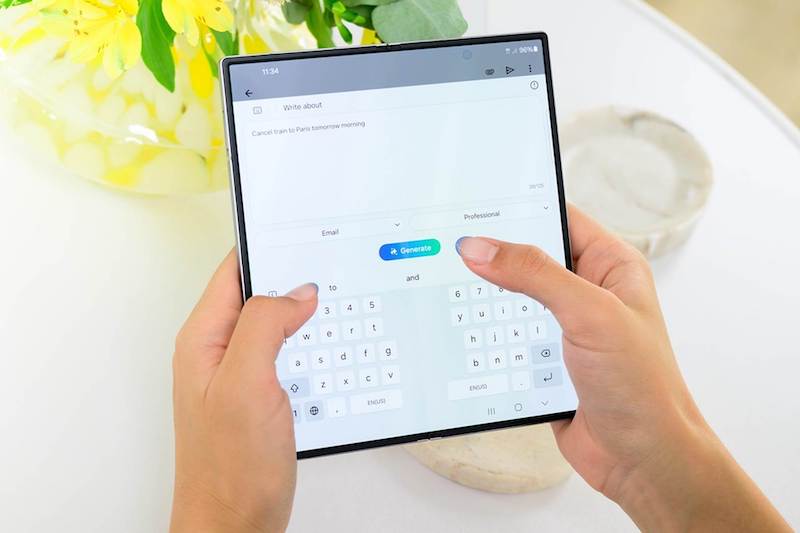
This is a very bold step from Samsung, not just in foldables but in the premium segment in general, given just how much attention is paid to specs in this zone. If it is able to pull it off, Samsung could well emerge as being different from its competitors, as Google has to an extent. “The thing about specs is that they are figures. Figures can be compared very easily. Features and functions are more subjective, making comparison more difficult,” an Apple executive had once told us. It certainly worked for the Cupertino giant.
Will Samsung be able to stick to its AI guns as its competitors up the spec ante? Only time will tell us. As of now, however, we have the rather odd feeling that Steve Jobs himself would have approved of Samsung’s approach. Although known for his keen sense of design, Jobs also was clear in his mind that design was not just about appearance. He once said famously:
Most people make the mistake of thinking design is what it looks like. People think it’s this veneer — that the designers are handed this box and told, ‘Make it look good!’ That’s not what we think design is. It’s not just what it looks like. Design is how it works.
They began by mainly talking about what they looked like. But the new Fold and Flip are about how they work. So so, Steve, Sammy! We are not complaining one bit. The spec spectacle was becoming a little tiresome. Well played, Samsung.

